Event 1
Winning the Stockholm Museum of Science Competition
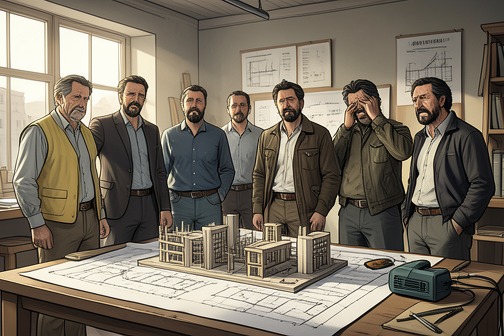
[Winning the Stockholm Museum of Science Competition](entity:event-recall-event-c6b07a5c2fb9) marked a hard-won breakthrough for [Bea](entity:character-recall-character-bea-992cee8d7f81) and her colleagues after years of precarious, demanding work. Their victory against much more prestigious competitors gave the studio a major success; it also set in motion a celebration at which [Víctor](entity:character-recall-character-v-ctor-3abf4a529848) proposed marriage to Bea, linking professional recognition with an unexpected change in her private life.
## A Breakthrough After Years of Uncertainty
The competition was to reconstruct the [Stockholm Museum of Science](entity:organization-recall-organization-1614e46df90e). Bea described it as a project that had consumed their eyes, patience, and even their health. Five of Europe’s most prestigious architectural studios were among the entrants, alongside less prominent firms such as theirs. Against expectations, Bea’s team won.
The victory came after two years of intense work and a stream of competitions, including proposals for a bus station in Soria, an airport in Chicago, and a wing of the Contemporary Museum in Santiago de Chile. The studio had been facing a delicate period, with rumors of staff cuts growing more frequent, while many of its competition entries led nowhere. In that context, the [Stockholm](entity:location-recall-location-9563d9338d63) result was more than another project: it offered a rare payoff after weeks of work that had often seemed wasted.
## Recognition and Celebration
The win did not bring Bea the recognition she might have expected. Her name, once again, was not included. This time she felt a brief sting of anger, but it soon passed; she decided that winning mattered more than the omission. Her response holds the personal slight beside the collective achievement: the studio had prevailed, even if credit did not fully reflect her contribution.
The firm’s bosses were delighted and planned a large party for the visit of the Stockholm representatives to Spain. After years spent struggling through minor projects or pouring effort into ambitious competitions, the team finally felt close to a professional high point. The celebration was intended to make that success visible and shared.
## A Personal Turning Point
During the festivities, Víctor asked Bea to marry him and presented her with a ring. The proposal may have drawn on the general mood of optimism, Bea reflected, or Víctor may simply have been waiting for the right moment; the scene does not settle which. What is clear is that the achievement’s celebration became the setting for a major turn in their relationship.
Bea had not been especially eager to marry. She had never treated it as a priority, nor imagined herself planning a wedding, choosing bridesmaids, or dreaming of a white dress. Yet when Víctor proposed, her initial attempt at cynical detachment gave way almost immediately to an intense, surprising happiness. The contest’s victory therefore carries two distinct outcomes: professional success for a team long accustomed to disappointment, and an engagement that revealed how strongly Bea could respond to a future she had not thought she wanted.
Event 2
Víctor Proposes to Bea

[Víctor](entity:character-recall-character-v-ctor-3abf4a529848)’s proposal to [Bea](entity:character-recall-character-bea-992cee8d7f81) begins as a declaration that seems to confirm their love and becomes a test of whether a romantic gesture can remain intimate when one partner has made a consequential decision alone. Set against the exhilaration of professional success, it prompts an unexpectedly intense response from Bea, then acquires a second meaning when Víctor reveals that he also hoped marriage would shield her from losing her job.
## Celebration and Proposal
After years of subsisting on modest projects or exhausting themselves pursuing ambitious competitions, the bosses at Bea’s firm are elated by a success connected to [Stockholm](entity:location-recall-location-9563d9338d63). They plan a major party for the arrival of the people from Stockholm in Spain, treating the achievement as a rare chance to celebrate after a long stretch of professional struggle. The proposal comes amid this atmosphere of shared optimism: Víctor asks Bea to marry him and presents an engagement ring.
The proposal catches Bea completely off guard. She had not particularly wanted marriage, made it a priority, or imagined herself as a child planning a white dress and wedding ceremony. Yet the moment overturns her own assumptions about her response. She first tries to meet the proposal with a cynical show of detachment; almost immediately, her composure gives way to a rush of happiness so strong that she imagines herself jumping and shouting with gratitude. In that private outburst, marriage seems to answer fears that she might remain alone or be unwanted. She is surprised not only by Víctor’s proposal but by how much she wants to accept it.
Bea says that she did not voice those thoughts in quite that form, though her actual response was far from restrained. Later, Víctor recalls how readily she shared the news: she told strangers in a Chinese shop, called her mother, sisters, brother, and father, informed much of her office, posted on Facebook, and opened an Instagram account to show the ring. The contrast between her claim not to have gone wild and the scale of her announcement gives the proposal a comic afterlife, while confirming how completely its happiness took hold of her.
## The Wedding Bea Imagines
Her response quickly turns into preparations marked by the same comic gap between a modest intention and the reality that follows. Bea and Víctor decide on a discreet wedding with no more than a hundred guests, but invite 215. The numbers make the expansion tangible: an occasion that is supposed to be restrained becomes more than twice the agreed limit.
Bea applies a similar standard to her dress. She insists she will not spend a fortune she does not have and treats anything above 800 euros as excessive; the dress she chooses costs 2,853 euros, without even a three-euro reduction. She considers borrowing money or using crowdfunding to pay for it. Her efforts to disavow wedding extravagance therefore become part of the extravagance itself: the proposed limit does not hold, and her own excitement carries her beyond it.
The ring, meanwhile, becomes something she cannot help displaying. Bea jokes that she dislocated her arm from repeatedly extending it to show the ring in a supposedly casual and subtle way. The physical exaggeration condenses the event’s transformation: the engagement is no longer simply a private question and answer, but news she wants others to see. Together, the guest list, dress, and ring show how far the proposal travels into her sense of the future before she knows the full reason Víctor made it.
## A Practical Motive Comes to Light
The proposal’s meaning changes during a later confrontation. Víctor admits that he knew about the risk of Bea being fired and says he proposed because he thought marriage might prevent the firm from dismissing her. He believed he himself would not be let go and assumed that, if they married, the people responsible would not dare fire her either. His explanation makes the engagement both an expression of affection and an attempted safeguard against unemployment.
Víctor insists that the proposal was intended to protect Bea, not to cause her dismissal. But he did not explain that calculation when he offered the ring. He says that he meant to tell her just after giving it to her, then changed his mind when he saw how excited she became because he did not want to spoil the moment. Her delighted reaction thus helps explain his silence, but does not undo its consequence: she was left to understand the proposal without knowing that it had also been shaped by the threat to her job.
## The Cost of Deciding for Two
Once Bea learns the motive, the issue is not simply whether Víctor loves her. She acknowledges that he has said he loves her, but tells him that she now doubts everything, especially because he did not trust her with the real reason. Her objections focus on both concealment and agency: he neither told her what was at stake nor planned with her as part of the team and couple they were supposed to be. From her perspective, he decided on his own to try to save her from unemployment by proposing marriage.
The event therefore turns on a sharp difference between intention and partnership. Víctor regards the proposal as a way to protect someone he loves, and postpones his explanation to preserve her happiness. Bea sees that the protection was also a decision made without her knowledge. What began as an ecstatic answer to a marriage proposal consequently becomes a question about whether love justifies acting on another person’s behalf. The ring remains bound to both meanings: Bea’s genuine, startling joy at being chosen and Víctor’s undisclosed attempt to make marriage a defense against the loss of her work.
Event 3
Breakup at the Casino Victory Party
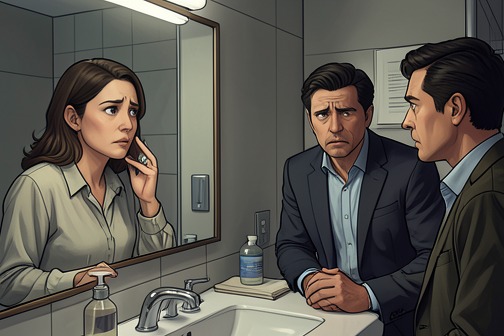
[Breakup at the Casino Victory Party](entity:event-recall-event-6c1475af944f) is the moment [Bea](entity:character-recall-character-bea-992cee8d7f81)’s engagement to [Víctor](entity:character-recall-character-v-ctor-3abf4a529848) turns from apparent security into a rupture. The scene joins private humiliation to professional resentment: first Bea overhears colleagues weighing whose work is valued and whose career survives, then she sees Víctor kissing the [TV News Presenter](entity:character-recall-character-0642b18cf083). Her engagement ring, admired moments earlier, becomes the instrument of a decisive rejection.
## Causes and Background
Before confronting Víctor, Bea is in a bathroom with her dress hitched up, sitting on the toilet and looking at how well her engagement ring sits on her finger. The small, private gesture makes the ring seem reassuring; it is also the object through which the scene will soon make the engagement’s collapse unmistakable.
Two women from Bea’s architecture studio are talking about her. One suggests that the proposal was a masterstroke. Their conversation turns to work: Bea devised solutions for the buttresses and for a structure that was to stand in the water, while, in their view, Víctor would not have thought of those solutions. They contrast her technical contribution with the clients’ admiration for him, then question who gets dismissed and who keeps the work. Their remarks do not establish Víctor’s motive for proposing, but they give Bea a reason to hear the engagement against the unequal recognition of their professional lives.
Bea responds by opening the bathroom door wide and dramatically taking off the ring as she faces her colleagues. The gesture comes before the discovery at the party, so the break begins not with proof of Víctor’s conduct but with the collision of her engagement and the suspicion that his public success rests on work she has done. The ring changes meaning in stages: from something she studies with pleasure, to something she removes in front of witnesses, and finally to something she uses in the confrontation with him.
## The Search and Discovery
At the casino, Bea spends time asking waiters on all three floors where Víctor is. When she finally finds him, he is leaning against a column. She recognizes his back even in a suit, though he is not usually someone who wears suits. These details sustain her expectation that the encounter can still be managed: she takes a breath, tries to calm herself, and plans to let him explain. She assumes the situation must be a misunderstanding and approaches to see him face to face.
That expectation breaks when she reaches him. Víctor has just separated his lips from those of the TV News Presenter. The narration presents the kiss as a sight Bea fears will feed her nightmares, making the discovery the scene’s sharp turn: her deliberate effort to remain calm is displaced by an immediate response. The evidence establishes the kiss, not what preceded it or the nature of any continuing relationship between Víctor and the presenter.
## The Confrontation and Rupture
Bea opens her bag, takes out the engagement ring, and puts it in Víctor’s mouth. The action converts the ring from a private sign of their future into a public answer to what she has just seen. Earlier, she removed it before her colleagues; now she returns it directly to Víctor, in a gesture that makes the breach between them visible without requiring a long explanation. The scene gives the ring a changed function each time it appears, linking the professional doubts she overhears to the personal rejection that follows.
Víctor replies that Bea had given him permission. His brief protest introduces a complication without resolving it: the evidence does not specify what permission he means, and his words do not undo what Bea witnessed. The exchange leaves a gap between his justification and her discovery, rather than supplying a full account of the encounter. In the scene’s immediate terms, the attempt at explanation arrives after the visible breach and cannot restore the trust the kiss has broken.
## Narrative Significance
The episode is structured as a sequence of reversals in what Bea expects from the ring, from the conversation, and from Víctor. She begins by admiring a promise of commitment; overhears colleagues recast that promise as possibly strategic; removes the ring in a dramatic response; and then encounters the kiss she had hoped would prove a misunderstanding. The movement from bathroom to casino turns private unease into a confrontation witnessed by Víctor and the presenter.
The professional and romantic conflicts sharpen one another without becoming identical. The colleagues’ remarks raise questions about credit and job security, while the kiss supplies the immediate cause of Bea’s response to Víctor. Together, they make the engagement appear vulnerable on two fronts: Bea’s work may be overlooked in favor of Víctor’s client-facing reputation, and the intimacy represented by the ring has been contradicted by what she sees. The ring’s journey—from admired object to removed token to forceful return—provides the scene with its clearest measure of that change.
Event 4
Bea Is Laid Off by the Architecture Firm
[Bea](entity:character-recall-character-bea-992cee8d7f81)’s dismissal becomes official in two stages: an accidental disclosure at a party, followed by a subdued confirmation at work on Monday. The gap between the estimated and actual severance, and between her initial anger and eventual acceptance, gives the layoff its particular shape.
Event 5
Bea Confronts Víctor
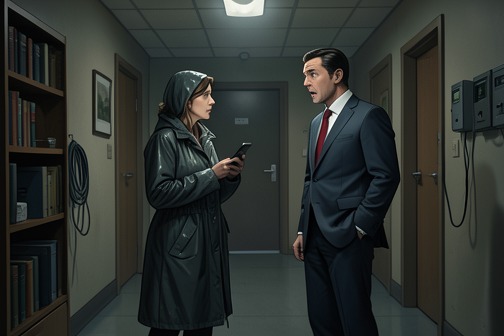
[Bea Confronts Víctor](entity:event-recall-event-bea-v-ctor-f311600e3d78) is the encounter in which an accusation about the [TV News Presenter](entity:character-recall-character-0642b18cf083) gives way to a more consequential discovery: [Víctor](entity:character-recall-character-v-ctor-3abf4a529848) says that he proposed marriage partly to protect [Bea](entity:character-recall-character-bea-992cee8d7f81) from losing her job. His declaration that he wants to marry her does not settle the matter. Instead, the confrontation exposes a breach of trust over a decision he made without her, while desire briefly pulls the couple together before Bea chooses to leave and think.
## The accusation and the proposal
The scene begins after Bea gets out of a taxi and Víctor opens the door of the house. She confronts him with what she believes she has seen: him becoming involved with the TV News Presenter. Víctor is taken aback and asks why Bea thinks he has been with her. Bea answers that she saw him. The exchange establishes the emotional force of the accusation, but it does not confirm that an affair took place; what the scene makes clear is that Bea believes she has grounds to challenge him.
Víctor wants a direct account of what is happening between them. Bea turns the confrontation toward the proposal itself and asks why he asked her to marry him. His first answer is simple: he loves her and wants to marry her. That answer does not satisfy her, because the question has acquired a second meaning. Bea is trying to find out whether the proposal expressed a shared commitment or concealed a practical calculation that Víctor had already made on her behalf.
## A practical motive and a breach of trust
Víctor admits that he proposed after learning about Bea’s employment situation. He says he knew he was unlikely to be dismissed and assumed that, if they married, the people responsible would not dare dismiss her either. In his account, the proposal was meant to help her keep her position, not to cause her to lose it. The revelation changes the argument: Bea had understood the proposal as a declaration of love, whereas Víctor had also treated marriage as a way to protect her from unemployment.
Bea objects not simply to the practical motive but to being left outside the decision. She tells him that she wants to be asked to marry for love, not for an economic or employment-related reason. Even after he insists that he loves her, she says she now doubts everything, especially because he did not tell her the real reason. She asks why he did not confide in her, or at least plan with her as a team and a couple, rather than deciding by himself to save her from unemployment by proposing.
Víctor explains that he meant to tell her just after giving her the ring. He says that her excitement about the wedding made him reluctant to spoil the moment. His explanation offers a reason for his silence, but it also confirms the imbalance Bea objects to: he chose when she should learn the truth and made that choice without involving her. Her response is therefore more complicated than simply rejecting a marriage of convenience. She is trying to judge whether his loving words can be trusted when the proposal itself began with a motive he withheld.
## Desire interrupts the argument
When Bea cannot give him a clear answer, Víctor makes his commitment explicit. He says he would ask her to marry him again, now or on another day, and that he wants to marry only her. He contrasts Bea with the famous women on a list they know about, insisting that the person who matters is not on that list because it is Bea who matters. The declaration reassures her emotionally, but it does not erase the unresolved question of why he kept his employment-related reasoning from her.
Bea kisses him and begins undressing him. The scene’s physical turn is sudden: she is still trying to think clearly, yet the renewed attraction is strong enough to carry her into intimacy before she sees that Víctor is not wearing underwear beneath his tracksuit trousers. At that point she stops herself. The interruption matters because it makes the conflict bodily as well as verbal: her desire pulls toward reconciliation while her doubts require distance.
She tells Víctor that she is leaving and that they can continue the conversation later. When he protests that she is leaving him in the middle of the moment, she asks him not to pressure her, tells him to get dressed, and asks him to move away. She insists that he promise; he does. Bea thus ends the encounter without either accepting the proposal anew or treating the attraction between them as proof that the underlying problem has been solved.
## An apparent resolution gives way to doubt
Bea returns to [Chavela](entity:character-recall-character-chavela-2f7412e5acfb)’s house feeling happy and intensely aroused. For a moment, she interprets Víctor’s practical nature and his clumsy handling of the proposal as compatible with the essential fact that he loves her. She tells herself that the episode was a misunderstanding and that she needs only to organize her thoughts before going back to him. The confidence is real, but it is short-lived.
That night, on the sofa where Chavela has relegated her, Bea begins questioning the explanation again. She wonders whether Víctor really went with friends to the other woman’s house, whether he really proposed in order to protect her job, and why the whole office believed something different. She also asks where the rumor began. These questions keep both the accusation and the proposal’s motive unsettled; the confrontation has produced an explanation, not certainty.
By morning, Bea decides not to rush back to Víctor’s home. Having already been away for a week, she reasons that she can wait another two or three days, despite Chavela’s displeasure. The decisive outcome is therefore a pause rather than a breakup or reconciliation. Víctor’s declaration and Bea’s desire briefly make a return seem possible, but her demand to be treated as a partner, and her continuing suspicion about what happened, leave the relationship unresolved.
Event 6
Víctor's Relationship with the TV Presenter Is Revealed
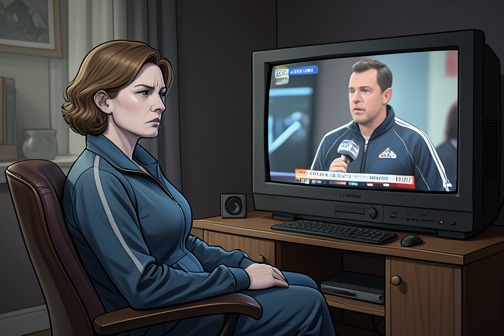
[Víctor](entity:character-recall-character-v-ctor-3abf4a529848)’s relationship with the [TV News Presenter](entity:character-recall-character-0642b18cf083) is revealed first through gossip coverage and then amplified by television, social media, hidden-camera footage, and national reporting. What begins as [Bea](entity:character-recall-character-bea-992cee8d7f81)’s painful confirmation of an intimate betrayal becomes a public narrative about her and her family; in its final turn, that attention converges with the biomass controversy and carries consequences beyond the romance itself.
## Rumor Becomes Confirmation
Eight days after Bea had been told that Víctor and the TV News Presenter were living together in a difficult domestic arrangement, a report in [Cuore](entity:organization-recall-organization-cuore-5522a3e0e4f2) supplied the confirmation she feared. It described a handsome young man leaving the presenter’s apartment at eight in the morning, a detail Bea treated as conclusive evidence that the two had become lovers. Her certainty rests not on a private conversation with Víctor but on the timing and framing of a tabloid item. The relationship reaches her through the same public machinery that turns personal intimacy into a story.
Bea’s response is physical and extreme: she imagines herself collapsing into fever and illness, while [Chavela](entity:character-recall-character-chavela-2f7412e5acfb) answers coldly that Bea has brought this upon herself. The exchange leaves the revelation double-edged. Bea is devastated by the apparent betrayal, but Chavela refuses to treat her as an innocent observer; the pain arrives alongside a judgment about Bea’s own conduct and choices.
The TV News Presenter’s public appearance gives the story a second, more intimate form of evidence. Bea sees her interviewed outside an ordinary housing development, a setting that unsettles her expectation that a celebrity would live in a mansion. Asked about a man with whom she had recently been seen, the presenter calls him a friend, but her smile appears suspicious to Bea. The interviewer presses the point and alludes to a photograph the presenter had shared on social media, turning the image into material for speculation about Víctor’s body. The exchange treats the relationship as a public tease rather than a private matter, and Bea lunges for the television remote to raise the volume.
Bea then searches the presenter’s account and finds the photograph for herself. Víctor is unmistakable in his gray tracksuit trousers; the image’s prominent outline seems to Bea to explain the television reporter’s insinuations. Her anger erupts, and the sequence of watching, checking, and recognizing makes the public evidence feel personal: the photograph is not merely gossip about an unnamed man but a trace of the fiancé Bea believes she has lost.
## Private Conduct Becomes Public Evidence
The later hidden-camera footage at [Hotel Cantábrico](entity:location-recall-location-084db7420b4f) broadens the exposure. The picture is blurred and oddly framed, showing a man in a black-and-gray uniform with his head cut off, but Bea recognizes the voice as that of the hotel receptionist. He confirms that the TV News Presenter and her boyfriend stayed at the hotel, while claiming professional discretion about whether they shared a room. He then recounts an incident from two nights earlier: a woman identifying herself as Víctor’s ex-girlfriend entered the young man’s room, threw a shoe at the receptionist, and was not seen leaving during his shift. He names Beatriz, making clear that the woman was Bea.
This disclosure changes the public story. Bea is no longer only the displaced former fiancée watching Víctor’s new relationship from a distance; she is now presented as the volatile ex who entered his hotel room. The broadcast supplies a vivid, humiliating anecdote, and Bea’s nephew recognizes her in it. The footage does not establish what happened in the room after the receptionist’s account ends, but its insinuations are enough to make Bea’s private encounter available for public judgment.
A national newspaper then turns the incident into a profile. It identifies Bea as the former partner of the TV News Presenter’s boyfriend and as the woman described by the hotel receptionist, and sets out her background: she studied architecture in [Madrid](entity:location-recall-location-madrid-8acd4123f416), met Víctor there, and had nearly married him before the TV News Presenter entered the picture. It also frames her return to her family home as refuge after the breakup. The article widens its lens from Bea to her relatives, presenting her mother as a popular local healer and her sister [Irene](entity:character-recall-character-irene-317f252d24ac) as a controversial mayor whose support for the biomass plant has divided the town. It alleges that Irene arranged work for Bea with a favored businessman, and brings in Débora’s separation from [Juan](entity:character-recall-character-juan-08eb0a988bb3), her pregnancy by a dwarf stripper, and the Civil Guard officer’s unofficial work for the mayor. Personal relationships, family reputation, and local politics are compressed into one sensational portrait.
## From Celebrity Story to Political Attack
The media’s attention does not stop at the newspaper profile. The TV News Presenter approaches Irene through flattery, but once the cameras are recording she attacks her with a barrage of data, opinions, and hostile questions. The interview challenges the environmental and economic claims made for biomass power: the fossil fuel consumed by transporting forest material, the waste left after combustion, carbon emissions, the amount of forest required to supply a plant, the reliance on subsidies, and the gap between promised and actual employment. It then shifts from the project’s viability to the political compromises behind its approval, leaving Irene struggling to defend herself.
During the public demonstration against the plant, the coverage folds Bea back into the story. She sees television cameras and outside broadcast vehicles, as well as [Pacheco](entity:character-recall-character-pacheco-078b007135ff), who points her out to the assembled journalists. Reporters converge on Bea and ask whether Irene secured her a job at the biomass company. Bea’s exposure is thus made to serve a political frame: the question suggests that the family’s private entanglements and Irene’s public decisions belong to the same story, whether or not the implication is fair.
Bea’s outburst against the famous reporter succeeds in making her a fixture on celebrity programs. For a week, the insults she hurled at the journalist fill hours of coverage and provoke heated, absurd studio debates. Yet the attention does not accomplish the diversion Bea hoped for. The demonstration is too large to ignore, and, although it does not open the news bulletins, it becomes a story across them. The press spectacle around the relationship and Bea’s confrontation cannot displace the protest’s central message.
## Consequences and Significance
The relationship’s exposure therefore ends in a reversal: the attempt to turn the cameras toward Bea and away from the demonstration leaves the larger political story intact. Irene had feared that the publicity could damage the project, and [Emerge](entity:organization-recall-organization-emerge-6e0cf339a090) ultimately breaks its contract with the Andrada family and chooses another power plant. The decision threatens [Diego](entity:character-recall-character-diego-619035ec498e) with financial ruin. Bea is left unsure whether he deserves that outcome after having acted against her sister, a doubt that marks the cost of the scandal without resolving the competing claims of loyalty and blame.
Across its successive stages, the episode shows how little control Bea has over the meaning of her own story. A tabloid’s early-morning photograph-like detail confirms the affair for her; a television interview turns a social-media image into sexual gossip; hidden-camera footage recasts her as a disruptive ex; and national reporting connects her breakup to the reputations of her relatives and the politics of the town. The coverage keeps changing its subject—from Víctor’s new relationship, to Bea’s hotel visit, to Irene’s biomass policy—while preserving the same appetite for personal exposure. The result is not simply that Bea learns Víctor has moved on: private hurt becomes a public resource, and the attention surrounding it helps intensify a conflict with material consequences for the town and for Diego.
Event 7
Bea Emails to Cancel the Wedding
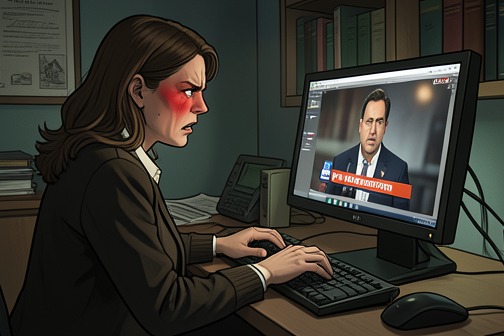
[Bea Emails to Cancel the Wedding](entity:event-recall-event-bea-e2b093213504) is the decisive break in [Bea](entity:character-recall-character-bea-992cee8d7f81) and [Víctor](entity:character-recall-character-v-ctor-3abf4a529848)’s engagement: a photograph of Víctor with the [TV News Presenter](entity:character-recall-character-0642b18cf083) turns suspicion into a rupture, and Bea makes that rupture public by emailing every wedding guest. The cancellation is impulsive and blunt, but it also marks a practical separation. She will retrieve her things from the apartment, and Víctor is not to be there.
## The Photograph and the Decision
Bea found the TV News Presenter’s account and looked through her latest photographs. One had been posted the previous day. It showed the presenter with Víctor, recognizable in his grey tracksuit trousers. The image supplied a concrete answer to the question Bea had been circling: Víctor was with the woman whose public remarks had already drawn attention to him. The photograph did not arrive as a private confession or explanation from Víctor; Bea encountered it on the presenter’s account, where it was visible to others as well.
Her response was immediate. Bea later admits that she was blinded by anger and had not yet processed what she was doing. At [Chavela](entity:character-recall-character-chavela-2f7412e5acfb)’s computer, she opened her email and wrote to all the wedding guests, who were easy to reach because they were already grouped in the wedding invitation list. The shared list made the decision collective in its consequences: a private discovery became an announcement to everyone invited.
## A Public Cancellation and a Private Boundary
The email said the wedding was suspended for reasons beyond Bea’s control, but not beyond her fiancé’s or his conspicuous physical endowment. Its bitter joke folded the photograph’s most visible detail into the cancellation itself. Bea did not reread the message before sending it. The lack of revision underscores the speed of the break: she acted before anger gave way to deliberation, and the guests learned of the cancelled wedding through the message she sent in that state.
Víctor called her about twenty times; Bea answered none of the calls. He then messaged to ask whether she had lost her mind, why she had cancelled the wedding, and what she meant by the reference to his body. Bea replied not with an explanation but by forwarding the photograph. The image therefore served as her evidence and her answer: she left Víctor to interpret the public proof for himself rather than opening a conversation.
She followed it with a separate instruction about what would happen next. The following day, she would collect her belongings from the apartment, and Víctor was not to be there. If he was, she would call the police. The threat establishes a boundary around the former shared home and signals that the cancellation concerns more than the ceremony. Bea is preparing to leave the life they had arranged together, while refusing a face-to-face encounter on her return for her things.
## From Engagement to Public Story
Chavela watched Bea with concern as the consequences began to unfold. Her question about whether the situation was getting out of hand registers the difference between cancelling a wedding and managing the aftermath: Bea had made a definitive announcement, but the conflict with Víctor was not settled by sending it. Her refusal to answer his calls kept that conflict at a distance for the moment; the message about the apartment made the next practical step unmistakable.
Later coverage recast the broken engagement as part of a broader public narrative. A hidden-camera segment shown to Bea’s family included a hotel receptionist describing a woman who had entered Víctor’s room claiming to be his ex-girlfriend. The broadcast named Beatriz and recalled that she had thrown a shoe to stop the receptionist following her. A subsequent newspaper profile identified Bea as the former fiancée of the presenter’s boyfriend and recounted that she and Víctor had nearly married before the presenter entered their story. It also connected the breakup to Bea’s return to her family home. These later accounts do not change what Bea’s email did, but they show how a relationship-ending decision became material for public scrutiny.
## Significance
The cancellation moves Bea from discovery to action without an intervening reconciliation or explanation. Its form matters: instead of telling Víctor first, she sends a single message to the entire wedding group, then uses the photograph as a direct reply to him. The gesture is both an ending and a declaration of control over its terms. The engagement ends in a message sent before it has been checked, but Bea’s next instruction is precise: she will collect her belongings, and Víctor must not be present.
Event 8
Bea Returns to Her Family Home in Cantabria
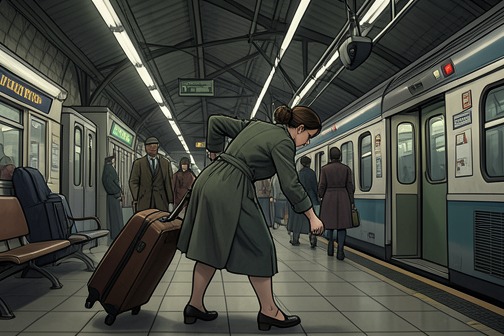
[Bea Returns to Her Family Home in Cantabria](entity:event-recall-event-bea-c0f77c1bd74d) marks the shift from the wreckage of [Bea](entity:character-recall-character-bea-992cee8d7f81)’s life in [Madrid](entity:location-recall-location-madrid-8acd4123f416) to an uncertain retreat among her family. After the wedding is cancelled and her relationship with [Víctor](entity:character-recall-character-v-ctor-3abf4a529848) has broken down, she takes a train to her parents’ house. The return offers shelter, but not uncomplicated comfort: [Santander](entity:location-recall-location-santander-e0c5d79ea8af) is at once her place of origin and a powerful reminder of the younger self she fears she has never fully outgrown.
## Causes and Background
The journey follows a confrontation over Víctor’s relationship with a television news presenter. Bea’s sense that everything has deteriorated from that point is compressed into the decision to take the train home. Her departure is an immediate response to upheaval, not the result of a settled plan for what should come next. Madrid has ceased to offer a workable place to remain, while her family home is the refuge she can reach.
The physical journey makes that vulnerability concrete. At the station, Bea struggles to lower her twenty-kilogram suitcase from the train’s overhead rack after other passengers leave her to manage it alone. She injures her back, feels pain and numbness in her right hand, and then discovers that a wheel has broken as she drags the case onto the platform. The luggage that carries her out of her former life is therefore not an effortless symbol of freedom: it is heavy, damaged, and difficult to move.
## Arrival in Santander
On reaching Santander, Bea recognizes the humid air and familiar smell of the Cantabrian city. Homecoming brings two opposing responses. She is glad to return to her place of origin, to see her family and the few friends she may still have, yet she also feels as if a force has drawn her back before she managed to advance. The city awakens the sense that she is again the adolescent who needed affection, esteem, and approval. She wonders whether this return is less an exhibition of strength than a willingness to fall back into that earlier self: sometimes apathetic, sometimes dreamy, and persistently angry.
The station offers no reassuring welcome from strangers. Bea notices people looking at her as an unwelcome presence, and their complaints about the pace at which she moves the broken suitcase add to the humiliation. She expects no practical rescue from a red-haired man who passes with a little girl and two small backpacks, but had hoped for a smile or a few words of encouragement. He does not notice her. The episode sharpens the solitude of her arrival: Bea is back among familiar landscapes, but begins the return feeling conspicuously unsupported.
## The Family Home and What Remains Unsaid
Before opening the door with keys still on the same ring as those to her Madrid flat, Bea hesitates. She anticipates the old family quarrels, reproaches, and rivalries between sisters, and wonders whether coming home was a mistake. Her doubts make the house a refuge that also threatens to return her to familiar roles. Inside, Débora announces Bea’s arrival by remarking on the enormous suitcase. A three-legged dog approaches to sniff her; [Ángela](entity:character-recall-character-ngela-17b3a15ed0ce) has a habit of adopting old, unwanted dogs, a household practice that has made the children familiar with death while teaching them not to become too attached.
Bea’s family already knows that the wedding cancellation is serious and that she has left her home: Víctor has called and told them. Bea has not, however, told them anything beyond the group email cancelling the wedding, and she does not want pity or an interrogation. Her reserve is not simply an absence of trust; she insists on the right to seek shelter without being made to account for every detail. Ángela’s manner of caring helps explain why that seems possible. She loves her daughters but does not hover over them, and her apparent unconcern keeps a crisis from becoming a family spectacle. [Irene](entity:character-recall-character-irene-317f252d24ac) has taken on more of the responsible, matriarchal role, while their mother’s refusal to treat every trouble as a catastrophe gives Bea space to begin recovering.
## The Beach and an Unsettled Future
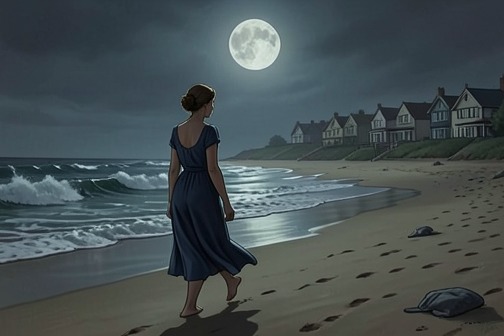
After leaving her old bedroom, Bea walks to the beach, hoping the night air will calm her and help her put Víctor out of her mind. Instead, the scale of her grief surprises her: it is difficult to think, and at moments even to breathe. The walk distinguishes the impulsive acts she has already managed—packing, leaving, and sending an angry email cancelling the wedding—from the harder work of accepting that her life has changed. She has no clear answer about where she will live or how she will find work as an architect.
The crisis also reaches beyond the engagement. At thirty-one, Bea questions whether she still wants to spend herself on megalomaniac architectural projects that rarely come to fruition, especially after she was dismissed when one finally did. She wonders whether she might choose another profession and jokes to herself about designing lamps, but the possibility remains unsettled. The beach gives her space to face that uncertainty rather than resolve it. Its sand, sea, and winter solitude are among the things she missed most in Madrid, and the frozen water forces her back after only a few seconds. Returning barefoot, with sand still on her feet, she looks toward the [Andrada Family Estate](entity:location-recall-location-51413c5a5bed). The episode ends not with a new direction secured, but with Bea back in familiar surroundings and newly aware that neither the relationship nor the career she left behind can simply be resumed.
Event 9
Diana Dies in a Car Accident
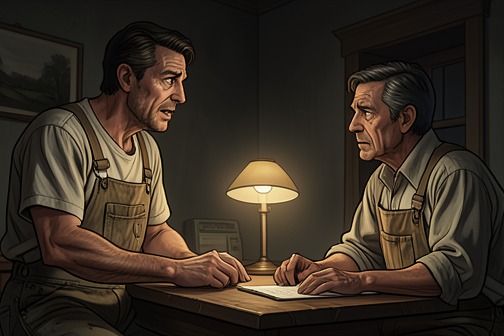
[Diana Dies in a Car Accident](entity:event-recall-event-diana-92de75e17d67) is disclosed not through a dramatized crash scene but through a blunt exchange that reframes [Diego](entity:character-recall-character-diego-619035ec498e)’s life. A conversation about his biomass project turns abruptly to the fact that he is a widower: Diana, his wife and the younger daughter of the Andrada family, died in a collision shortly after receiving her driving licence. The account makes her death the beginning of a chain of losses and care that continues to shape the household left behind.
## Causes and Background
The conversation begins with a defense of the biomass project and of Diego’s role in it. The speaker insists that support for him is based on the project rather than personal sympathy, then challenges the listener for having been away from home and out of touch with what has happened in the village. Diana’s death enters as the news the listener has missed. This conversational setting matters: the event is initially embedded in present-day argument, and the revelation changes how Diego’s apparent reserve and circumstances can be understood.
The account supplies no mechanical explanation for the collision and assigns no blame. Its few concrete details instead establish the abruptness of the loss: Diana had obtained her driving licence only the previous day, and a truck struck her at an intersection. The short interval between a new licence and the fatal accident makes the transition from ordinary anticipation to bereavement especially stark, without suggesting that Diana’s inexperience caused the crash.
## The Accident and Its Revelation
The death is announced in a terse sentence, prompting the listener to repeat Diana’s name in disbelief. Only then does the speaker give the circumstances: the car accident, the truck, the intersection, and the timing. The exchange moves from a general claim that Diego is a widower to a specific account of how he became one. Its broken rhythm preserves the shock of receiving news rather than smoothing the death into distant background information.
The scene also corrects the listener’s incomplete picture of Diego. He is not simply the wealthy, emotionally dry man described earlier in the conversation. He was married to Diana, and her death left him a widower. The revelation does not erase the earlier criticism of his character; instead, it places that judgment alongside a loss the listener had not known about. In that way, the conversation complicates the image of Diego without claiming that grief explains or excuses everything about him.
## Consequences for the Household
The speaker describes Diego as bringing up his young daughter, who does not speak, while also caring for Diana’s mother, who can barely move. The mother’s condition followed Diana’s death: she suffered a stroke that left her partly paralysed. The account therefore presents the accident as more than the loss of a spouse. In its aftermath, Diego is left responsible for a child and an impaired older relative, within a household where the consequences of bereavement are shared across generations.
These details are reported in quick succession, but they mark distinct circumstances. The daughter’s silence is part of Diego’s ongoing parental reality; the mother’s limited mobility is linked to a stroke after her daughter died. The exchange does not explain either condition further, nor does it describe the family’s daily routines. What it does establish is the scale of the responsibilities surrounding Diego and the way one sudden death is followed by continuing needs that remain present in the household.
## Narrative Significance
The accident is a past event recalled in dialogue, and its importance lies both in what happened and in when the reader learns it. The discussion begins with local politics and Diego’s project; the disclosure of Diana’s death interrupts that frame and makes personal loss part of the context for judging the public dispute. Rather than staging the crash, the narrative lets the consequences arrive through another person’s speech, as information the listener—and, with them, the reader—has lacked.
The listener responds with disbelief, then compares the revelation to a tragic sequence in which calamities do not arrive alone. That response gathers the accident, the daughter’s silence, and the grandmother’s stroke into a single account of upheaval, while the details remain distinct. Diana’s death becomes a defining absence in Diego’s family life: it explains why he is a widower and identifies the vulnerable household members for whom he is responsible, without reducing their circumstances to a simple lesson or resolving the grief that the conversation has brought into view.
Event 10
Bea Falls from a Wall at the Andrada Estate and Meets Diego
[Bea Falls from a Wall at the Andrada Estate and Meets Diego](entity:event-recall-event-bea-diego-11ccdc01ad48) is the chance encounter that brings [Bea](entity:character-recall-character-bea-992cee8d7f81) and [Diego](entity:character-recall-character-diego-619035ec498e) into direct contact. What begins as a solitary walk beside the sea becomes a humiliating fall, an awkward rescue, and the recognition that Diego’s daughter has already formed an impression of Bea. The scene turns Bea’s curiosity about a stranger into an encounter neither of them can treat as entirely anonymous.
## Setting and Approach
Bea is walking on the beach at night, carrying the disappointment of her recent experience in architecture. At thirty-one, after two years that seemed to have taken her further from what once drew her to the profession, she is wondering whether to choose another future; designing lamps has even crossed her mind. The beach offers a different kind of attachment. She misses it in a way that cannot be answered by a telephone call, unlike her intermittent longing for her family or her accustomed life in [Madrid](entity:location-recall-location-madrid-8acd4123f416).
The cold water sends her back from the shoreline almost as soon as she steps into it. Now barefoot, with sand on her feet and no way to shake it off, Bea looks inland at the houses close to the beach. Her thought about coastal restrictions is not presented as a considered environmental objection: she admits that envy is closer to the truth. She resents that other people live so near the sea while her family does not. That glance leads her to the [Andrada Estate](entity:location-recall-location-andrada-9403e7ba3091), whose proximity to the water makes it an object of attention before Diego himself appears.
## The Estate at Night
Under the full moon, Bea can see the large early-twentieth-century house clearly. She regards it as the most beautiful building in [Cantabria](entity:location-recall-location-cantabria-c21d914d3fc8): stone walls, broad white wooden galleries, and grounds extending across hundreds of hectares. The galleries are painted and repaired each year to resist the salt air. The estate’s carefully kept grounds include centuries-old chestnuts, cedars, oaks, and other trees Bea cannot identify. These details make the property seem composed and enduring, in contrast with the disquieting activity she notices beside it.
A pink Mercedes parked near an oak catches Bea’s attention. She has seen the car before and connects it to the man with the child in his arms, the man she remembers from a puzzle, but she is certain that he is not part of the Andrada family. She wonders whether the estate has been sold and thinks that [Irene](entity:character-recall-character-irene-317f252d24ac), as mayor, might know. When the house door opens, the man comes out wearing a tracksuit and carrying an enormous plastic bag. He puts it in the car’s trunk, gets into the vehicle, and then does not drive away. Bea watches for several minutes. His stillness leaves her without an explanation, and the unanswered question draws her closer.
## The Fall and Rescue
Bea knows that investigating is none of her business and that she has other problems to think about, but curiosity wins. The stone wall blocks her view of the car, so she climbs it barefoot. The uneven, pointed stones hurt the soles of her feet as she tries to get high enough to see over. From there she can watch the man strike the dashboard in anger. The sight frightens her, but not enough to make her leave. Instead, she climbs farther, and the man turns towards her.
Trying to retreat before he sees her, Bea steps back, loses her balance, and falls from the wall. She hits her head and body, badly hurts her back, and catches her trousers and sweater in a bramble. Her right foot slips into a gap after she steps on something that breaks. When she hears the gate opening, she assumes the man is coming to find her. Pain and panic make it difficult even to get her sweater off, and she ends up pretending to be unconscious, her face hidden beneath the fabric. The pose is both an attempt to avoid the consequences of being caught and an absurd extension of her paralysis.
Diego finds her and asks whether she is all right. Bea remains silent at first, then describes her pain as being everywhere: her foot, back, backside, and head. He helps her stand, lifting her carefully and using his foot to free the trousers from the brambles. The fabric tears in the process, costing Bea a pair of trousers she says were worth two hundred euros. Once upright, she feels her injured back and sees blood on her fingertips; she is also slightly dizzy. The stranger’s practical assistance turns a trespass into an intimate, if uncomfortable, moment of dependence.
## Recognition and the Encounter’s Turn
After Bea says she lives nearby and declines his offer to get alcohol, Diego studies her and recognizes her from the train. The recognition is confirmed through his daughter: she has drawn the woman from the train with horns and a tail. The detail gives Bea an unexpected place in Diego’s family life before she has even learned why he is at the estate. It also makes the encounter more pointed than a meeting between two strangers; Diego’s household has already carried an image of Bea forward, in a child’s unflattering but memorable form.
Their exchange does not resolve the questions that first brought Bea to the wall. The scene does not explain why Diego sat in the car or what the plastic bag contained. Instead, it changes the immediate question from what he was doing to what Bea herself was doing there. Diego asks whether she often climbs other people’s walls, then presses her to explain her purpose. Bea considers the moment an opportunity to be clever and answers by identifying herself as an architect. The reply does not undo the fall or provide a practical explanation; it converts her profession into a comic response to a plainly incriminating situation.
The scene’s movement is from distance to exposure. Bea begins alone, watching the Andrada Estate from the beach, and ends injured under Diego’s attention, unable to hide either her presence or her curiosity. Her bruised body, torn clothing, and bloodied fingertips make the intrusion materially consequential; the daughter’s drawing gives the meeting a personal afterlife beyond the rescue. The chance encounter is therefore both comic and consequential: Bea falls while trying to observe Diego, but the fall brings them into conversation and establishes that he already knows who she is.
Event 11
Ingrid Invites Bea to Present Her Architectural Work
[Ingrid](entity:character-recall-character-ingrid-168d239eeb80)’s invitation to [Bea](entity:character-recall-character-bea-992cee8d7f81) to present her architectural work turns a tentative family introduction into a test of professional possibility. Bea arrives at the meeting neither confident nor prepared: she has been laid off, has no portfolio ready to show, and has spent years doubting whether she should continue in architecture. Ingrid nevertheless asks to see the project Bea made at the end of her degree, setting in motion a search that leads Bea back to the work she considers most representative of her ambitions.
## The meeting and the invitation
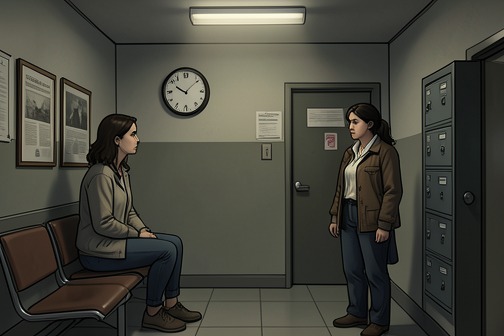
Ingrid arrives at five o’clock at the consultation where Bea’s mother is being seen. Bea had not planned to be there, but curiosity brings her to the office half an hour early, where she waits with her sister Débora. Débora introduces Bea as her architect sister, describing her as on vacation and as someone working for an important [Madrid](entity:location-recall-location-madrid-8acd4123f416) studio. The description makes Bea’s actual circumstances difficult to evade: she corrects it by saying that she is not on vacation and has been dismissed.
The exchange establishes the unease surrounding the meeting. Débora is trying to present Bea favorably, but the introduction rests on a version of Bea’s career that is no longer true. Ingrid’s response is direct rather than reassuring. After leaving the consultation fifteen minutes later, she turns to Bea and asks whether Bea has work she can show. Bea has neither a portfolio with her at her parents’ home nor a website or other online work to offer.
## A professional opportunity, not a favor
Ingrid has heard from Bea’s mother about Bea’s final-year project and asks her to bring it the next day at eight in the evening. The request gives Bea a specific opportunity, but it also sharpens her resistance: she had just objected to her family trying to secure work or favors for her and does not want the meeting to look like an appointment obtained through connections.
Débora distinguishes the objection from a refusal to work for Ingrid. In her view, Bea has said she does not want to be placed in a job or given special treatment, not that she refuses to show what she can do. That distinction recasts the invitation as a chance to be assessed on her work. Bea still says she will not go, but her mother settles the matter by insisting that, as her daughter, she will attend. The family pressure does not remove Bea’s uncertainty; it sends her toward the work with a deadline and a reason to look again.
## Revisiting the final-year project
Bea spends half the afternoon and half the night trying to locate her final-year project. She cannot remember which computer file contains it or where the paper copy is, and the search ends with a painful reassessment. She had remembered the project as excellent; looking at it again, she finds it pretentious, empty, and amateurish. Its apparent inadequacy seems to confirm her fear that she should not pursue architecture, and she wonders whether it represents the highest level she can reach.
Her mother finds the project beautiful, but Bea dismisses that judgment because she does not think her mother can read a plan. This difference in response leaves Bea alone with the harder question: whether the work is genuinely poor, or whether her own memory had made it better than it was. Rather than take the project to Ingrid unchanged, she decides to look for something else—something that could represent her more accurately, and that might also show her that she was capable of more.
## The treehouse model and Bea’s architectural impulse
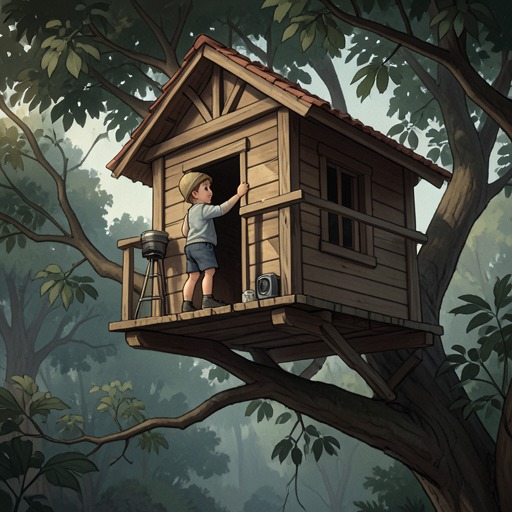
Bea searches the attic, where she remembers keeping work from her degree. She empties boxes of clothes and toys before finding three models, all somewhat crushed and worn by time. Two seem nearly as bad to her as the final-year project. The third, however, still works for her: she recognizes it as a model that can represent her and as an early expression of what she had sought in architecture.
The model depicts a wooden house built on a chestnut tree. Its sheltered position among the branches imagines a refuge from everyday problems and a chance to see life differently, in closer relation to nature. The design takes account of the tree changing through the seasons: red leaves in autumn, green ones in spring, and bare branches in winter. The chestnut is also a fruit-bearing tree, producing large chestnuts, so the setting is not an abstract backdrop but part of the project’s conception.
The compact house makes those ambitions practical. Its twenty square metres include a bed, a table, and even a shower; a broad lookout and a skylight open the small interior to its views. A low terrace offers space to sit in the spring sun or dance in autumn rain. In recovering this battered model, Bea finds more than a presentable object for Ingrid: she finds evidence that her interest in architecture has had a coherent purpose, even if she had not fully understood it when she designed and built the model.
## Significance of the encounter
The invitation does not yet establish that Bea will obtain work from Ingrid, and the evidence ends with Bea preparing to take a piece of work to her. Its immediate effect is more personal and provisional. Ingrid’s request gives Bea a reason to inspect work she had left behind; that inspection first deepens her shame and self-doubt, then leads her to a model that restores a connection between her professional training and the kind of buildings she wants to create.
The encounter also turns the question of merit into the center of the opportunity. Bea rejects the idea of being helped through family favor, while Débora argues that presenting her own work is different. The recovered treehouse model makes that distinction tangible: Bea is not being offered proof of success in advance, but a chance to show work that she herself believes expresses her architectural aims. The meeting’s decisive outcome is therefore not a job offer, but Bea’s rediscovery of a reason to present herself as an architect.
Event 12
Víctor Publicly Declares the TV Presenter the Woman of His Life
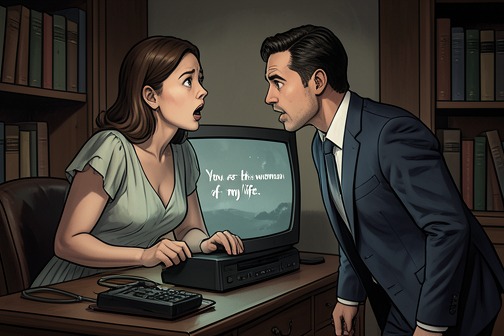
[Víctor Publicly Declares the TV Presenter the Woman of His Life](entity:event-recall-event-8e2774933155) is the moment a television interview turns [Víctor](entity:character-recall-character-v-ctor-3abf4a529848)’s new relationship into a public declaration and makes [Bea](entity:character-recall-character-bea-992cee8d7f81)’s private heartbreak impossible to keep at a distance. The presenter says that Víctor is the man of her life, and Víctor echoes her claim: they describe their feelings as unprecedented and present themselves as certain. For Bea, watching him say this is not simply news of another relationship. It forces a brutal comparison with the five years they spent together and the marriage he had asked her to enter.
## The Broadcast and the Declaration
The disclosure arrives through a moving image: [León](entity:character-recall-character-le-n-72da7eaadacb) presses play, and Bea watches a journalist ask the presenter whether the man accompanying her is her new partner or only a friend. Bea answers before the presenter can, insisting that he is just a friend. Her attempt to define the relationship is immediately overturned when the presenter says that Víctor is much more than that. The exchange shifts the scene from speculation about a companion to an unequivocal public claim.
Asked whether it is too soon to make such a declaration, the presenter says it is not. She explains that, when such feelings happen, a person knows; she does not intend to disguise her certainty and calls Víctor the man of her life. The timing makes that certainty especially jarring: in Bea’s account, the presenter had kissed a stranger at a party, the stranger was about to marry someone else, and less than a month later the presenter was confidently describing him as the love of her life. The broadcast gives this rapid transformation the polished assurance of a television interview, while its circumstances expose how little time has passed.
The journalist then asks what the young architect thinks. Víctor answers that the presenter is the woman of his life, that he has never felt anything like this before, and that he is happy. His words do not merely confirm that he is involved with someone else; they claim a singularity of feeling that Bea had associated with their own imminent marriage. The two declarations mirror one another, making the new couple’s certainty sound mutual and complete. On screen, Víctor speaks with ease; for Bea, the confidence of his performance only sharpens the injury.
## Bea Watches the Comparison Become Personal
Bea’s first response is to correct the presenter’s account on Víctor’s behalf, calling the man beside her only a friend. Once the presenter contradicts her, Bea’s attention fixes on the words that follow. The repeated claim that Víctor has never felt anything like this becomes the point she cannot get past. She measures it against the five years they had been together and the fact that he had proposed to her, asking what his present declaration could mean about the feelings he had professed in their relationship.
The shock registers physically before Bea can settle it into an explanation. She feels as if she cannot breathe, as though there is no oxygen in the world and her lungs cannot fill. She looks toward her brother and resolves not to collapse or scream; instead, she decides to react more coldly. Yet that resolve does not make the words harmless. She wonders how Víctor can speak this way when she might be watching, and whether he cares about the pain his declaration will cause. The interview makes his new happiness visible to her while leaving her to confront, alone, what she believes his words erase.
## From Shock to No Contact
After the broadcast, Bea considers calling Víctor or contacting him through WhatsApp or Facebook. With her mobile already in her hand, she has a brief moment of clarity and changes course. She deletes his number and removes his Facebook account; she also deletes her own account. Then she asks her friends to delete his number too, making access harder even if she later wants to reach him. Her decision turns an inward refusal into a practical barrier, extending beyond her own phone to the people around her.
[Chavela](entity:character-recall-character-chavela-2f7412e5acfb) has seen the video and recognizes that Bea is devastated. She offers to come and says she could request a couple of days off work. Bea refuses the offer on the grounds that Chavela should not leave her patients without their best psychologist, but asks her to delete Víctor’s number. The exchange shows both Bea’s attempt to manage the crisis without summoning her friend and the continuing effort to prevent contact. Her insistence that she is fine sits beside the evidence of how carefully she is trying to protect herself from acting on impulse.
The surrounding aftermath also gives the broadcast’s emotional force a dangerous edge: Bea goes to bed wishing not to wake, and tries unsuccessfully to suffocate herself with a sock. The gesture does not succeed, and she subsequently redirects herself toward removing Víctor from reach rather than contacting him. The event therefore moves through a stark reversal: the presenter and Víctor make their relationship publicly certain, while Bea’s own future with Víctor collapses into the immediate work of surviving the hurt and severing access to him.
## Significance
The declaration matters because it recasts the break not as an uncertain separation but as a public contrast between two accounts of love. Víctor and the presenter present their feelings as immediate, mutual, and unlike anything they have known; Bea watches those claims collide with the years and proposal that had defined her understanding of her relationship with him. The broadcast does not explain what Víctor felt before or resolve the contradiction for her. Instead, its repetition of unprecedented love intensifies the question Bea is left asking about their past.
Television also makes the injury unusually direct. Bea is not merely told that Víctor has moved on: she sees him answering a journalist and hears him declare his happiness in his own words. Her initial attempt to label the presenter a friend lasts only until the screen supplies a different account, and the scene’s emotional turn is inseparable from that reversal. By deleting the contact information and asking Chavela to do the same, Bea turns the moment of exposure into a deliberate break in communication. The broadcast announces Víctor’s new relationship; Bea’s response establishes that she will no longer make herself reachable to him.
Event 13
Óscar Is Diagnosed with Achondroplasia
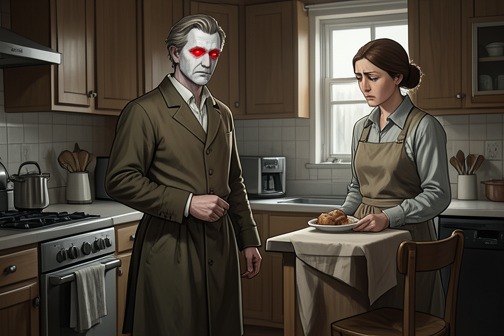
[Óscar Is Diagnosed with Achondroplasia](entity:event-recall-event-92ac755653b6) is a family revelation in which the diagnosis itself is quickly overtaken by the question of why [Juan](entity:character-recall-character-juan-08eb0a988bb3) was not told. When Juan learns that [Óscar](entity:character-recall-character-scar-7e080ad5f9a0) has achondroplasia, he is confronting both an unexpected account of his child’s future and the claim that the condition was diagnosed at birth. The scene turns a medical disclosure into a crisis of trust: Juan seeks an explanation for the silence, while Débora and the others face his distress without resolving what he believes has been hidden.
## The News at Home
The disclosure follows an ordinary return home. [Bea](entity:character-recall-character-bea-992cee8d7f81) and her sister have been bargaining over a purchase, with Bea aware of their strained budget and the money already taken from the joint account. At home, the change in atmosphere is immediate: Juan is in the kitchen with red eyes, and [Ángela](entity:character-recall-character-ngela-17b3a15ed0ce) looks troubled. Juan tries to explain what has happened but cannot initially get the words out. Ángela says Óscar is not sick and asks them not to wake him; Juan answers that what is wrong is worse.
Bea does not understand his first description. To her, calling a baby a dwarf sounds absurd: Óscar is an infant, not someone whose adult stature can be inferred from his present appearance. Juan then names achondroplasia and gives the estimate that Óscar may grow to only about 1.10 or 1.20 metres. The exchange records the distance between the diagnosis as Juan has received it and Bea’s immediate, uncomprehending response. What is an established medical fact to him has not yet become intelligible to the rest of the family.
## A Diagnosis Already Made
Juan says the diagnosis came from Óscar’s pediatrician, not from Ángela. More consequentially, the pediatrician had reportedly identified achondroplasia when Óscar was born. Juan therefore understands the news not as a newly discovered condition but as information withheld from him for months. The pediatrician’s account gives the scene its sharp reversal: the uncertainty concerns not whether the diagnosis was made, but why Juan was not told when it was.
Juan connects the silence to Débora’s earlier behavior. He asks why she would not let him bathe Óscar and recalls Bea remarking that the baby’s head seemed very large and that he looked frail. Bea says her observation was a thoughtless guess, not knowledge; she insists she knows too little about babies to have recognized a condition. Even so, she feels guilty without understanding what she has done wrong. Her response shows how the diagnosis begins to reorganize earlier family moments: remarks and acts of care that had seemed ordinary are retrospectively treated as possible signs that someone knew more than they admitted.
## Confrontation and Competing Explanations
Débora challenges the source of the diagnosis, asking whether Ángela made it. She accuses their mother of interfering and of letting her feelings lead her into mistaken conclusions. Juan rejects that explanation and returns to the pediatrician’s report. His anger is directed less at Ángela’s sensitivity than at Débora’s failure to tell him, and his questions turn repeatedly on the same absence: why did she say nothing when he returned from Turkey?
Débora answers that Juan should not have gone while she was close to giving birth. Juan counters that he was needed there after an earthquake and could not schedule the disaster around the expected date; Óscar arrived early, and Juan says he is not to blame for that. The exchange sets two grievances beside one another without settling either. Débora invokes his absence at a vulnerable moment; Juan defends the obligation that took him away and argues that the early birth does not justify keeping the diagnosis from him afterward.
When Juan calls the situation strange, he clarifies that the concealment is what he cannot accept. He wonders whether achondroplasia is genetic and treats that possibility as a reason Débora must be hiding another explanation. Bea follows his suspicion to its implication: he may believe Débora had sex with a dwarf. She finds the suggestion nearly impossible to credit, but her disbelief does not answer Juan’s demand for an explanation. The scene presents this as his suspicion, not as a confirmed account of Óscar’s parentage or of Débora’s conduct.
## What the Revelation Leaves Open
The episode ends with Juan still asking Débora to tell him the real reason, convinced that the unanswered questions are making him lose his grip on events. No reconciliation or explanation is supplied in this scene. The diagnosis is clear, as is the pediatrician’s reported timing; what remains uncertain is why Débora kept it from Juan and whether his speculation about a genetic cause has any basis beyond his own attempt to explain the silence.
The event’s force lies in that distinction. Achondroplasia changes the family’s understanding of Óscar’s physical development, but the immediate rupture concerns knowledge, responsibility, and trust between his parents. The discussion of his expected adult height is concrete, yet the scene is organized around the missing conversation: a diagnosis made at birth, a father who says he was away when the baby arrived early, and a family suddenly rereading earlier interactions as evidence. Because the scene withholds a definitive answer to Juan’s accusation, it establishes a crisis rather than resolving one.
Event 14
Deborah and Juan Briefly Reconcile
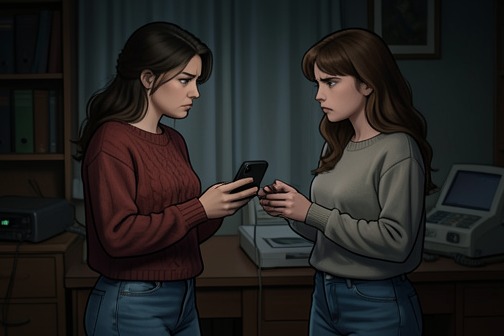
Débora and [Juan](entity:character-recall-character-juan-08eb0a988bb3) briefly reconcile after [Bea](entity:character-recall-character-bea-992cee8d7f81) forces a conversation between them, but their hopeful reunion does not hold. The episode’s decisive turn is the contrast between Débora’s radiant return after a night of talking and renewed intimacy, and her later report that Juan’s anger has returned when confronted with the child. Forgiveness appears possible, then proves unable to survive the pain attached to what happened.
## The Conversation Bea Forces
Bea’s intervention begins with anger and impatience. When she tells Débora that Juan wants to speak, Débora gestures that she does not want to take the phone. Bea is furious with her and determined to end the situation, so she puts the phone to Débora’s ear despite her resistance. Débora looks at her with hatred, but answers Juan and agrees to meet him. Their short exchange does not yet disclose what they will decide; its immediate significance is that a meeting becomes possible because Bea refuses to let Débora avoid the call.
After hanging up, Débora repeatedly tells Bea to go to hell, then asks her for clothes. She does not want to see Juan in the clothes she is wearing, and the sisters choose an outfit together: faded blue skinny jeans torn at the knees and a violet, somewhat low-cut sweater. Bea suggests dyeing Débora’s hair to make her look healthier, but Débora refuses chemical products; she uses some kind of natural dye, which they do not have there. These practical negotiations mark the shift from resistance to preparation, without implying that Débora has already decided how the encounter will end.
Débora asks Bea to look after the child because she would rather meet Juan alone. Bea observes that, now that everyone knows what is happening, Débora has less difficulty being separated from the child. The request also gives the meeting a clear boundary: it is an encounter between husband and wife, away from the child whose presence will later prove so painful for Juan.
## A Night of Apparent Forgiveness
Débora does not come home to sleep. At midnight she sends Bea a message saying that the meeting will take a long time and that she will explain the next day. At eleven the following morning, she appears radiant despite having been awake all night. Her account makes clear that the night was not simply a negotiation about the future of the marriage: she and Juan talked for a long time about many things, and they also had sex twice.
Débora says that Juan wants to try again and has forgiven her. She acknowledges that the conversation was difficult and that at moments she thought it would not work, but now believes the crisis has passed. Most important to her is Juan’s promise that he will love the child as his own. Bea answers that he already does: although he is not the child’s biological father, he has loved the child from the first day, and that love is not easily changed. The exchange distinguishes biological parenthood from the attachment Juan has already built, while showing how much Débora’s renewed hope depends on his willingness to remain a father to the child.
Débora’s happiness carries into the afternoon. At the clinic she is all smiles and even treats a grave diagnosis that [Ángela](entity:character-recall-character-ngela-17b3a15ed0ce) has given an elderly woman as less weighty than she might otherwise have. Bea is glad for her, but the scene also sets their emotional states against each other: while Débora seems to see light after days of darkness, Bea glances at her phone hoping [Diego](entity:character-recall-character-diego-619035ec498e) will call. No call comes. Débora’s apparent good fortune is therefore not shared by Bea, a contrast that keeps the reconciliation from becoming a simple, universally happy resolution.
## The Reversal
The promise lasts only briefly. In a later conversation, Débora closes the door and tells Bea she is not going back. Asked what happened, she explains that Juan says he cannot do it, even though he tried. Seeing the child makes him think about what Débora did, and he remains too angry to understand how she could have hurt both him and the child. He believes that her actions have condemned the child to a miserable life.
Bea remembers the earlier assurance that Juan would get over it, but Débora describes the afternoon as horrible. She had not known that Juan could express so much hatred, especially Juan. The abrupt change does not erase the tenderness or intimacy of the night before; rather, it shows that those moments have not resolved the injury that returns when he sees the child. His stated inability is not presented as a settled decision about the marriage’s entire future, but Débora’s immediate conclusion is definite: she will not go back now.
## Hope Without Resolution
The episode is structured around a reversal in value. Débora first resists contact, then accepts the meeting; she returns from it exhausted but joyful, convinced that Juan has forgiven her and will continue to love the child. Later, the child’s presence brings Juan’s anger back to the surface, and Débora’s confidence gives way to uncertainty. Reconciliation is therefore real as a night of conversation, sex, and renewed promises, but not yet durable as a repaired marriage.
Bea’s role is both practical and emotional. She compels the call, helps Débora dress, and watches the child, making the meeting possible; afterward, she listens as Débora describes both the relief of forgiveness and the shock of its collapse. The closing question of what Débora will do next remains unanswered. The episode ends not with a final separation or a lasting reunion, but with the recognition that a promise to try again cannot, by itself, settle the hurt that the family’s circumstances keep bringing back.
Event 15
Ángela Admits She Was Once Engaged to Jonas's Brother
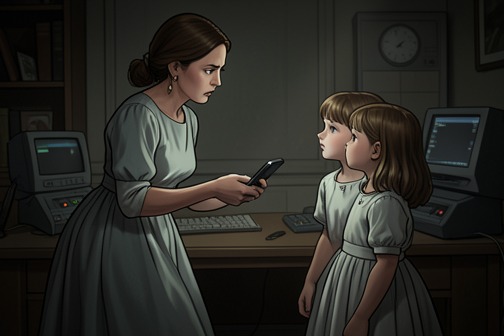
[Ángela](entity:character-recall-character-ngela-17b3a15ed0ce)’s confession that she was once engaged to [Jonás](entity:character-recall-character-jon-s-7c3b2ff2ccf0)’s brother Tomás overturns the family history her daughters thought they knew. What begins as a tense comparison with Débora’s recent mistake becomes a disclosure of a hidden courtship, a canceled wedding, and a rupture that drove Ángela and Jonás away from his family. The revelation also recasts the marriage at the center of the household: it began not with an uncomplicated courtship, but with a painful betrayal whose consequences Ángela says she carried for years.
## The Family History Comes Apart
The disclosure follows the daughters’ doubts about whether they can move past Débora’s conduct. Ángela responds by asking why they have never known anyone from their father’s family. [Bea](entity:character-recall-character-bea-992cee8d7f81) repeats the explanation she and her sisters had accepted: Jonás’s parents died when he was young, and he was an only child. Ángela says that neither part is true. Jonás is not an only child, and his parents are not dead. In one exchange, the family’s inherited account changes from a settled explanation into a deliberate concealment.
Ángela acknowledges that sometimes a lie is easier to live with, but the daughters do not know what to make of her disclosure. Their astonishment is sharpened by the scale of the revision: this is not a missing detail about a distant relative, but a false account of why their father’s family is absent from their lives. The confession recasts that absence as the aftermath of a specific conflict, one tied to Ángela’s earlier engagement and the relationship that displaced it.
## The Engagement and the Secret Relationship
After taking a substantial drink of herbal orujo and pouring herself another, Ángela explains that she had been due to marry Jonás’s brother. Tomás was about twenty-four, around Ángela’s age; Jonás was seventeen. The age difference between Jonás and Ángela, which Bea had not previously connected to their history, now becomes part of the story’s context. [Irene](entity:character-recall-character-irene-317f252d24ac) resists the implication that her father’s image should be disturbed, while Bea initially doubts that Ángela’s account can be true.
The relationship with Jonás had begun before the confrontation. Ángela says they had been seeing one another secretly for a couple of months. Tomás caught them together a week before the wedding, when they were having sex. The detail makes the timing decisive: the engagement was not ended after a vague suspicion or a gradual estrangement, but when the bridegroom discovered his fiancée and his younger brother together on the eve of the marriage.
Ángela recalls that after the discovery she and Jonás sought out any opportunity to be together. She describes the feeling as real, profound, and powerful enough to govern her, even as guilt made her wish she could die. The account does not present the affair as a clean escape from an unwanted engagement. Her sense of its emotional force exists alongside her recognition of the injury it caused, and her daughters hear both aspects in the same confession.
## Discovery, Rupture, and Exile
When Tomás caught them, the consequences were immediate and severe. Ángela describes the confrontation as horrible and acknowledges that Tomás was deeply hurt. He canceled the wedding and repudiated both her and his brother. The rest of Jonás’s family took Tomás’s side, leaving Ángela and Jonás with no alternative, as she tells it, but to leave. Her account thus supplies the cause behind the daughters’ estrangement from their father’s relatives: the family did not simply disappear through death or lack of siblings; the couple’s relationship ended in a breach that separated them from that side of the family.
The confession changes the daughters’ understanding of their parents’ marriage as well as their family history. Ángela and Jonás ultimately married, but that outcome does not erase the canceled wedding or the rejection that preceded their life together. Débora calls the story an extraordinary one and contrasts it with her own affair, suggesting that her parents’ relationship seems beautiful because it led to marriage. Irene, by contrast, objects to romanticizing it. Their different reactions keep the story from settling into a simple tale of forbidden love rewarded.
## Guilt and the Daughters’ Responses
Ángela herself rejects the idea that what happened was simply beautiful. She says her conscience tormented her every day and that the weight of guilt left her unable to breathe. She credits Jonás with staying beside her constantly; without that support, she believes she might have done something reckless, because she thought she could not live through what she had done or recover from it. Her recollection gives the family rupture an intimate aftermath: the couple’s departure was not the only consequence; Ángela continued to experience the affair as a moral burden even after she and Jonás made a life together.
Débora continues to measure the story against her own conduct, insisting that Ángela did not cheat on Jonás with a dwarf. Ángela answers by distinguishing the situations: she had betrayed the man she was about to marry with his younger brother. That response refuses to turn the confession into a contest over which transgression was worse. Instead, it names the particular betrayal at its center and leaves the daughters to absorb the difference between a secret relationship and the family-wide consequences of its discovery.
## Significance of the Revelation
The scene transforms a familiar family explanation into a concealed history of engagement, infidelity, rejection, and departure. Ángela’s repeated drinking as she tells it underscores the strain of continuing, while her candid account of guilt prevents the revelation from functioning as mere romantic legend. For her daughters, the decisive new fact is that their father had a brother and living parents; for Ángela, the story remains bound to the pain of Tomás’s discovery and the burden she says she never escaped. The confession therefore enlarges the family’s past while complicating its present judgment of betrayal.
Event 16
Chestnut Grove Logging Dispute and Family Arrests at the Protest
The [Chestnut Grove Logging Dispute and Family Arrests at the Protest](entity:event-recall-event-ee0c022be3f2) turns [Bea](entity:character-recall-character-bea-992cee8d7f81)’s treehouse project into a direct confrontation with logging operations and the [San Esteban Biomass Plant](entity:location-recall-location-cfa5b30d5dcf). What begins as an attempt to protect the chestnut where she is building becomes a family protest, an arrest, and a reversal: the trees Bea believes are hers have already been sold by her father. By the time she accepts the legal position, the grove—and the tree carrying her unfinished project—has been felled.
## The grove under threat
The conflict begins when the forest track leading to the chestnut grove and Bea’s treehouse is blocked by logging trucks. Bea and the others have to continue on foot for roughly four or five hundred metres. Asked why so many trucks are there, someone answers that they have come to load timber. Bea’s alarm sharpens into urgency as she realizes the operation is not limited to removing dead trees: excavators are pulling up rotten chestnuts while workers use chainsaws on living ones, including the tree she has chosen for her house.
Bea runs toward the work until she is nearly unable to breathe. She tries to stop a chainsaw operator by standing in front of him and gesturing for him to halt. Once he removes his hearing protection, she insists that the tree is private property and hers, pointing to the boards she is using to build the house. The worker counters that the trees belong to the sawmill. The dispute is therefore not simply about whether logging is happening, but about competing understandings of ownership: Bea sees a family tree and the foundation of a personal project; the workers act on the basis of a timber purchase that gives the sawmill rights to extract the wood.
## Protest and confrontation
Bea identifies [Diego Ariza](entity:character-recall-character-diego-ariza-ff2f32ce9e25) as the person behind the order and demands to see the contracts. The worker confirms that [Diego](entity:character-recall-character-diego-619035ec498e) is the boss and that the instruction comes from him. Furious, Bea threatens to pursue the matter and tells Débora to contact the association that chains itself to trees and opposes the plant, bringing its members and the press to make as much noise as possible. Débora hesitates because she does not want to be seen, especially by the press. Bea nevertheless directs her and [León](entity:character-recall-character-le-n-72da7eaadacb) to climb separate trees and protect them, while she leaves for the sawmill to confront Diego.
At the [San Esteban Sawmill](entity:location-recall-location-f29448a3c05d), Bea’s anger remains the force carrying her forward. She has spent the drive feeding it with thoughts of retaliation, determined to confront Diego over what she regards as his destruction of her plans and his refusal to wait until she had finished her own treehouse. At reception, the receptionist begins to telephone Diego. Bea takes the phone from her and tells him that she is the woman whose life he has just ruined, then orders him to come down. The confrontation brings her face to face with evidence that unsettles her certainty: the contract says that [Bea’s father](entity:character-recall-character-bea-1586b04f1949) sold the trees to the sawmill seven months earlier. Timber suitable for lumber would be used and paid for at an agreed price; the remaining wood would go to the biomass plant. Bea admits that she was not planning her treehouse seven months before.
The contract changes the grounds of the dispute. Bea had treated the tree as private property that the workers had no right to cut; the document shows that her father had already transferred the trees and the right to extract them. That does not undo the loss or make the decision emotionally trivial, but it forces Bea to acknowledge that the protest cannot be defended on the ownership claim she had made at the grove. Her determination to mobilize opposition also meets Débora’s reluctance to attract attention, leaving the family protest less unified than Bea’s initial urgency demands.
## Arrests and the loss of the treehouse
While Bea is away, the [Guardia Civil](entity:organization-recall-organization-guardia-civil-268ba482c33f) orders the protesters down from the trees, arrests them, and allows the logging to resume. Débora calls to tell Bea that they have been removed and detained; León is fighting with [Jacobo](entity:character-recall-character-jacobo-9c63accf55d8), who is putting him in handcuffs. The report makes the personal and public conflicts collide: the arrest involves Bea’s siblings, while León’s struggle is also entangled with his relationship with Jacobo. Bea’s attempt to stop the saws has not protected the trees, and the family’s physical presence has instead brought them into custody.
When Bea returns to the grove, her fear that the trees will already be gone proves correct. The chestnuts lie cut down, including the one where she had been building her house. The construction had been under way for only a few days, yet its destruction feels to Bea like the demolition of a finished building. She compares the loss to imagining a future with someone and then watching that possibility disappear. The treehouse had become a project in which she had placed her hopes, and one that had helped her through the weeks after her cancelled wedding. Its removal therefore takes away more than a physical structure: it destroys a source of purpose and anticipation at a moment when Bea already feels bereft.
The detention scene preserves the protest’s disorder rather than turning it into a simple victory. León shouts insults at the Guardia Civil and the workers, while Jacobo stands apart, distressed, embarrassed, and angry as he refuses to listen to León’s protests. Bea, meanwhile, tells her family that they will not take the matter to court or the press and that they must forget it because the trees had been sold to their father’s buyer. León objects that they could still go to the courts and the media, but Bea’s answer is shaped by what she has learned from the contract: the ownership basis for her demand has collapsed.
## Release and aftermath
The siblings are eventually released. Bea tells Jacobo that no charges are being brought and that he can let them go; after speaking with the Guardia Civil officer, he gets the confirmation and tells the detained siblings that their sister has secured their release. Débora protests that there had been no grounds to charge them, and Bea asks her to let the matter rest, pointing out that they could otherwise have spent the night in the cells. Release ends the immediate legal danger, but it does not restore the grove or settle the emotional consequences of the protest.
The episode turns Bea’s confidence into a more painful recognition. She first confronts the logging as though force of conviction could establish her right to the trees; the signed contract defeats that claim, while the return to the flattened grove confirms that her project cannot be saved by arriving at the sawmill or mobilizing her family. The sequence’s final contrast is stark: the family succeeds in getting out of custody, but the treehouse’s chosen tree is gone. The arrests are temporary; the loss that gives the dispute its meaning is irreversible.
Event 17
Bea Accepts the Treehouse Design Commission
[Bea](entity:character-recall-character-bea-992cee8d7f81)’s acceptance of the treehouse commission begins with refusal, pride, and a reluctant return to the work she has been offered. [Ingrid Dvorak](entity:character-recall-character-ac99af05b227) wants Bea to take charge of the project, but Bea first walks away, convinced that she has let a valuable opportunity slip through her fingers. She reconsiders only after her family challenges her decision; even then, she makes her possible acceptance conditional on meeting [Diego](entity:character-recall-character-diego-619035ec498e) and speaking with him. The first practical step toward the commission is not a finished agreement but a site visit, where Bea insists on treating the encounter as a professional transaction.
## The Offer and Its Basis
[Ingrid](entity:character-recall-character-ingrid-168d239eeb80) explains that a sketch alone will not satisfy the client and asks Bea to take charge of the work. Bea raises the possibility that Ingrid has approached her because Diego himself asked her to hire Bea. Ingrid’s account is more qualified: she says she has spoken to Diego about Bea, about her model, and about the possibility that she is the right person to build the house. The offer therefore rests, at least in part, on Ingrid’s assessment of Bea’s work and suitability; the exchange does not establish that Diego personally requested her appointment.
Bea initially declines before hearing Ingrid’s full proposal. Ingrid points out that Bea has not yet heard the terms, but the offer does not immediately overcome Bea’s resistance. The gap between an opportunity being available and Bea being ready to accept it gives the commission its first obstacle: she must decide whether her refusal is a considered boundary or a response she will later regret.
## Refusal and Regret
After Bea says she has work, Ingrid makes a gesture indicating that she should leave. Bea departs stunned and describes herself as deeply upset. In retrospect, she sees the encounter as having cost her a remarkable chance to work with a great architect. She cannot settle on whether pride or dignity drove her refusal, naming both possibilities without entirely resolving the distinction. Her account makes the lost opportunity concrete while leaving her own motive somewhat unsettled.
The reaction at home is blunt. When Bea recounts what happened, a family member agrees that Ingrid was right and calls Bea foolish. The criticism adds to the pressure already created by Bea’s own regret: the refusal is no longer simply a private decision, because her family treats it as an avoidable mistake. Her mother then presses her directly to speak with Ingrid about being hired, even offering to give her a push if necessary. Bea fears that intervention and is tired of having nightmares; she decides to stop resisting what she now regards as the reality of the situation. She reflects that defeat can be less painful than continuing to fight it.
## A Conditional Return
Bea goes back to Ingrid’s studio, but the return does not erase the earlier exchange. Ingrid is cold, as if her previous kindness has run out. Bea says there is a possibility she will accept the offer, but first she wants to see the client and talk to him. The qualification matters: she is not yet agreeing to proceed on Ingrid’s terms alone. She is establishing a condition for her own participation, requiring direct contact with the person whose house is to be built.
Diego is waiting outside the house when Bea arrives with Ingrid, and he is surprised to see her. Bea cannot tell from his impassive expression whether he is pleased. Rather than seek reassurance or reopen the question of how the offer came about, she asks where he wants the treehouse built. She deliberately keeps the exchange cool and professional, with no unnecessary questions, smiles, or gestures of friendliness. In her framing, Diego is buying her work, and nothing beyond that is included in the transaction.
## The Site and the Emerging Commission
Diego leads Bea and Ingrid through an extensive wooded garden, described as covering hundreds of hectares. It contains firs, pines, walnut trees, almond trees, chestnuts, and oaks, ranging from very large trees to smaller ones. Bea acknowledges the beauty of the grounds, with their fountains, wooden benches, and secluded corners, and recalls having imagined walking there and losing herself among the vegetation. The actual visit sharply contrasts with that earlier fantasy: she does not want to be there under these circumstances and makes no effort to hide it.
The tour brings the negotiation down to a particular tree. Diego takes them to a centuries-old oak and explains that his daughter likes it and that he thinks it could also work. Bea’s question about where to build the treehouse has thus led directly to an initial assessment of a possible site. The scene establishes a client, a location under consideration, and a design problem, but it does not describe a completed plan or settle every condition of the commission.
## Significance of the Acceptance
The event turns on a change in Bea’s conduct rather than a sudden change in feeling. She moves from refusing before hearing the proposal to returning because the opportunity matters and her family has challenged her decision. Yet she does not arrive warmly reconciled to Ingrid or eager to please Diego. Her guarded manner preserves distance even as her actions bring her into the project.
That tension shapes the beginning of the work: Bea’s model has helped make her a possible candidate, but the commission now requires her to assess a real site and engage with the client. The garden’s abundance offers many possible settings, while the old oak gives the discussion its first concrete focus. Bea’s return therefore marks the start of practical consideration, not an uncomplicated surrender of her independence or a fully documented final agreement.
Event 18
Teodoro Tells Débora He Is Óscar’s Father
[Teodoro Tells Débora He Is Óscar’s Father](entity:event-recall-event-teodoro-d-bora-scar-4174d974fe64) begins with an unwelcome claim at the family home and develops into a fraught negotiation over what fatherhood means. [Teodoro](entity:character-recall-character-teodoro-9205369e0b58) arrives with flowers and says he is willing to take responsibility for [Óscar](entity:character-recall-character-scar-7e080ad5f9a0); Débora insists that the child is hers and refuses him access. Their later conversation at [Bar Caribe](entity:location-recall-location-083419765cb7) reveals a more complicated motive: Teodoro is trying to claim a place in his son’s life, even as Débora resists making room for him.
## The Unexpected Visit
The announcement arrives in the middle of a strained family gathering. The narrator’s father answers the door, accompanied by [Gollum](entity:character-recall-character-90eaead6cc13), the three-legged dog, whose frantic barking and wagging make him seem like the only happy presence in the house. Returning visibly perplexed, the father reports that a dwarf is outside with a bouquet of flowers, asking for Débora. Her face changes through several colors in seconds, signaling how abruptly the visitor has unsettled her.
Débora goes outside and tells Teodoro that her mother must have caused a misunderstanding. When he says he is prepared to accept his share of responsibility if Óscar is his son, she denies the possibility and says she does not even know his name. The confrontation is private only briefly: the narrator watches from an upstairs window after Débora shuts the door behind her, and the exchange continues within sight of the family home.
## The Disclosure and the Meeting at Bar Caribe
Outside, Teodoro makes the claim explicit: he says Débora paid him three hundred euros for sex, that he did not use a condom, and that Óscar carries his genes. Débora responds by accusing him of having had sex with her without a condom and of having entered her life as a sex worker; she also threatens to report him. The exchange turns the question of paternity into a dispute over both responsibility and consent. Teodoro insists that he has come not to obtain anything from her but to take responsibility. Débora counters that Óscar is hers alone and that Teodoro will get nothing by appearing at her door. When he asks whether he may at least see the boy, she refuses. The roses, he explains, are for her.
The confrontation does not end the matter. A later mysterious package contains a note asking Débora to meet its sender at ten that night at Bar Caribe, with a playful contingency involving a shirt if she has not arrived by half past ten. Débora eventually reads it, and she and her sister head to the bar where she had arranged to meet Teodoro. The note’s teasing tone contrasts with the hostility of their first encounter, but the meeting remains charged: Débora arrives wondering whether he has changed his mind or is already wearing the promised shirt.
At Bar Caribe, Teodoro explains that he is studying psychology and hopes to support himself through that work, although he expects it will take time to earn a living from the profession. He says that, as a nurse, he has struggled to find work because employers see his short stature; meanwhile, he continues performing at hen parties. Débora asks whether that is how he intends to provide for Óscar when he cannot even produce the three hundred euros. Teodoro replies that he can take more bookings, then work in whatever job he can find after finishing his degree, and promises the child will not lack anything. His insistence makes fatherhood an intention he is prepared to work toward, not a claim backed by financial security.
Débora still rejects the role he is asking to take. She says she does not want him to assume responsibility for her son, who already has a mother and a family. While allowing that Teodoro may be a good man, she interprets his determination as a desperate attachment to the chance to become a father, and suggests that he may eventually meet a woman with similar interests and form a family with her instead. Their meeting therefore leaves the central conflict unresolved: Teodoro offers commitment, while Débora treats his biological connection as insufficient reason to admit him into Óscar’s life.
## The Limits of Teodoro’s Claim
The scene distinguishes between biological paternity and an accepted place in a family. Teodoro presents Óscar’s genetic connection to him as grounds for responsibility, but Débora does not treat that connection as an entitlement: she disputes his claim, refuses a meeting with the child, and says Óscar already has a mother and family. Teodoro’s offers—to provide for the boy and to take responsibility—cannot by themselves settle what Débora regards as a decision about access and belonging. The episode therefore stops short of reconciliation or recognition. Its gestures of courtship, from the flowers at the door to the teasing note, make the encounter less forbidding, but they do not resolve the central dispute: Teodoro is ready to call himself a father, while Débora is not ready to make room for him as one.
## Thresholds and the Narrator’s View
The episode is framed through partial access rather than a single private conversation. At the family home, the narrator hears of Teodoro’s arrival and later watches Débora speak to him from an upstairs window, close enough to witness the dispute but not to join it. The later move to Bar Caribe shifts the encounter from the family’s doorway to a place Débora has agreed to meet him, while her sister accompanies her. These changes in setting give the episode its shape: Teodoro can present himself and his claim, but neither the family home nor the bar makes Débora’s acceptance automatic.
Event 19
Jonás Learns Who Óscar’s Biological Father Is
[Jonás Learns Who Óscar’s Biological Father Is](entity:event-recall-event-jon-s-scar-24dc53c8814e) is the family confrontation in which a small physical resemblance exposes [Óscar](entity:character-recall-character-scar-7e080ad5f9a0)’s paternity: the green eyes shared by [Teodoro](entity:character-recall-character-teodoro-9205369e0b58) and [Jonás](entity:character-recall-character-jon-s-7c3b2ff2ccf0)’s grandson. The disclosure jolts Jonás into a public reckoning with Débora’s past and his own, while the argument that follows makes clear that recognizing the child’s father does not instantly settle how the family will accept him.
## The clue and the disclosure
The revelation begins with a visitor whose identity Débora tries to conceal. After the man has left a bouquet of roses and gone, Jonás continues asking who the dwarf was. Débora describes him as a bothersome member of an organic-produce association, claiming that he is taking his frustration out on her because the family refused to buy his tomatoes. The excuse gives Jonás an ordinary explanation for the visit, but the roses make it harder to dismiss as a sales dispute. He observes that the visitor brought flowers and did not have a farmer’s hands.
[Bea](entity:character-recall-character-bea-992cee8d7f81) redirects attention from the visitor’s hands to his eyes. When Jonás asks what is unusual about them, she says they are green, like his grandson’s. The comparison is enough to make him fall silent. The scene does not arrive at the truth through a confession or a formal explanation; it turns on a visible likeness, which makes the implication immediate even as Débora has tried to obscure the man’s identity.
## Jonás’s reaction
A later account of the confrontation describes Jonás’s response as physical as well as verbal. On realizing that Teodoro’s green eyes match Óscar’s, he hyperventilates, clutches his heart, and shouts. [Ángela](entity:character-recall-character-ngela-17b3a15ed0ce) intervenes, using her capacity for empathy and negotiation to calm him. She has already seen Bea prepare to call emergency services, and persuades her to hang up, believing Jonás will recover without an ambulance.
The intensity of the reaction reflects the force of what Jonás has understood: the man he has been told was nobody is connected to his grandson by more than an awkward visit. Yet the episode is also played through family argument and comic escalation. The possibility of an ambulance briefly enters the scene, while the underlying matter—who Óscar’s father is and what that means for the family—cannot be put aside.
## The family’s past enters the argument
Ángela does not try to calm Jonás by pretending that the family has always acted honorably. She reminds him that they, too, have made serious mistakes. The reminder draws on their shared history of infidelity and the betrayal they committed against Jonás’s older brother. Jonás initially denies knowing what she means, but Ángela presses the point: a person can make a mistake and still come through it.
Her intervention complicates Jonás’s position. He condemns Débora’s sexual relationship with Teodoro as a disgrace, but Ángela makes their own past part of the present dispute. The comparison does not erase the difference between the situations or make Jonás’s anger disappear. Instead, it challenges his claim to judge Débora as though her conduct were entirely separate from the family’s own record of hurt and disloyalty.
## Paternity and acceptance
The dispute then shifts from the circumstances of Óscar’s conception to the child’s place in the family. Jonás objects that Óscar already had a father, whom he regarded as perfect, before Débora’s actions disrupted that arrangement. Débora answers that her father’s anger is directed at her having sexual needs, and he responds by attacking her choice of partner and contrasting Teodoro with [Juan](entity:character-recall-character-juan-08eb0a988bb3), a firefighter. The argument exposes the way Jonás’s judgment of Teodoro is entangled with his judgment of Débora.
Débora insists that Teodoro is Óscar’s grandfather and asks whether Jonás will repudiate the child. Jonás’s next objection is framed around Óscar’s short stature: he predicts that the boy will not grow beyond a span. Bea answers that the family has already faced that fact and need not revisit it as if it were new. More decisively, she says Óscar remains their grandson and that they will give him a happy life. Jonás counters that the child will only be happy in a circus, reducing his future to the prejudice that has overtaken the discussion.
Ángela answers that last insult by comparing the imagined circus life with Jonás’s own happiness at sea, which she calls nearly as unusual. The exchange does not establish a neat reconciliation, but it shifts the emotional emphasis away from Jonás’s shock and toward the family’s responsibility to the child. The revelation exposes Teodoro’s biological connection to Óscar; the argument that follows tests whether that knowledge will lead to rejection or to a place for the boy within the family.
Event 20
Jonás’s Drunken Approval Helps León and Jacobo Reconcile
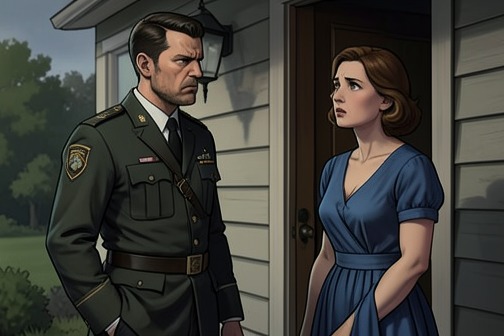
[Jonás](entity:character-recall-character-jon-s-7c3b2ff2ccf0)’s drunken approval helps [León](entity:character-recall-character-le-n-72da7eaadacb) and [Jacobo](entity:character-recall-character-jacobo-9c63accf55d8) move from a defensive argument toward reconciliation. The change unfolds not in private but in the middle of a household roused at three in the morning: Jacobo arrives in uniform, old hurt resurfaces, and Jonás—after previously insulting León—interrupts the quarrel to say that Jacobo is right for him. The family’s joking, imperfect welcome turns approval into a practical invitation: the two men are sent outside to talk, and [Bea](entity:character-recall-character-bea-992cee8d7f81) soon sees them kissing in the garden.
## A Nighttime Visit and a Household Awakened
At three in the morning, persistent ringing brings Bea to the front door. [Gollum](entity:character-recall-character-90eaead6cc13)’s hysterical barking, unfamiliar with callers at that hour, and the noise of the doorbell wake the rest of the household as she opens it. The late interruption promises a bad reception from her father, whose temper is known to flare when his sleep is disturbed. Instead, the visitor is Jacobo, dressed in his [Guardia Civil](entity:organization-recall-organization-guardia-civil-268ba482c33f) uniform. His presence at that hour makes the visit feel urgent, although the scene does not give a separate explanation for his arrival beyond his concern about León.
The encounter gathers the family downstairs before the conversation between the two men can remain private. That setting matters to the reconciliation: Jacobo has come to see León, but the family becomes an audience and, increasingly, a chorus. Their attention exposes what the couple’s argument is about while also giving them a route out of it. The episode’s domestic frame is comic and untidy—late-night irritation, barking, and a father who has been woken—yet the visit carries a serious purpose. Jacobo’s concern has brought him to the house; whether León will accept that concern is still in question.
## From Accusation to Mutual Forgiveness
León initially treats Jacobo’s involvement as interference, pointing out that he is always getting involved in other people’s trouble. Jacobo answers that this is part of being a Guardia Civil. Their exchange keeps the conflict between them in view: León suspects that Jacobo’s actions are calculated to impress him and win forgiveness. Jacobo reverses that charge. He says that he is the one who should forgive León, for being stubborn and speaking out of turn. The argument therefore shifts from a simple demand for reconciliation to an acknowledgment that both men have grounds to feel wronged.
Jonás breaks into the dispute with a command to stop arguing and a plainly stated judgment: he thinks Jacobo is good for León. His intervention does not settle the past between them, and León immediately reminds his father that he called him a slur earlier that night. Jonás does not deny it. Instead, he distinguishes the insulting term from the respectful words León asks people to use, apologizes in a deliberately overformal manner, and repeats his support for Jacobo. The sequence holds two facts together: Jonás has hurt his son, and he is willing, in this moment, to correct himself and affirm León’s relationship. His approval is not polished, but it is explicit.
## The Family Makes Room for the Couple
Jonás’s endorsement changes the temperature of the encounter without making the family’s own relationships seem effortless. He turns to [Ángela](entity:character-recall-character-ngela-17b3a15ed0ce) and insists that their marriage works, even if it is unusual; she agrees, then tells him to stop threatening to return to the sea. Her response answers his joke with equal familiarity. From that exchange, the scene pivots back to León and Jacobo: Ángela suggests that they go to the garden or León’s room and talk. The parents’ own affectionate banter is not presented as a perfect model, but it helps establish the family’s capacity to accommodate an imperfect relationship rather than demand that it look conventional.
León protests that his family is being tiresome, while Jacobo admits that, since he is already there, the suggestion does not seem so bad; he says he has missed León. Jonás then pushes them to stop standing around and go. León takes Jacobo to the garden reluctantly, but sets a boundary on where they should talk: not León’s room, because Jacobo is on duty and might get carried away in his uniform. The remark keeps the scene playful while acknowledging the immediate constraint of Jacobo’s work. Their move outside is therefore not a dramatic escape from the family so much as a small, permitted space in which they can speak without the household gathered around them.
## A Visible Reconciliation
The final image completes the movement the argument began. Ángela asks whether Jonás is snoring and wonders if she has made decaffeinated coffee, having mixed up the Nespresso capsules; Bea identifies the red capsule as extra-decaffeinated. Ángela then looks fondly at her sleeping husband and asks, with hopeful interest, how León and Jacobo are getting on. Bea points toward the garden, where the two men are kissing at length. The long kiss is the clearest evidence that the argument has given way, at least for the moment, to renewed intimacy.
Ángela is pleased, and also relieved that Jonás has fallen asleep before witnessing the kiss. Bea points out that he has already given them his blessing, making the joke affectionate rather than a withdrawal of support. Jonás’s approval has been delivered while he was awake, even if tiredness and drunkenness shape the way he expressed it. The episode thus closes on both reconciliation and family recognition: Jacobo came to check on León, León challenged his motives and recalled his father’s insult, and Jonás nevertheless made his acceptance unmistakable. The garden kiss does not erase the earlier hurt, but it turns the family’s noisy intervention into a passage back toward the couple’s closeness.
Event 21
Diana Calls Her Father at the Treehouse Site
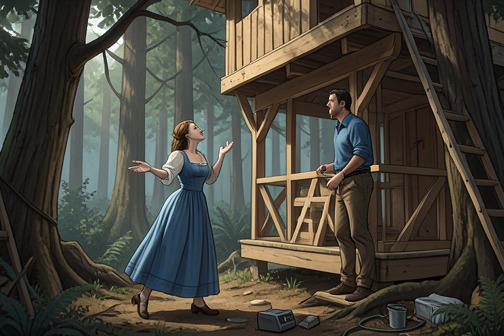
[Diana Calls Her Father at the Treehouse Site](entity:event-recall-event-diana-9b5101795728) is a small but decisive turning point: Diana, who has not been speaking, calls out to her father, [Diego](entity:character-recall-character-diego-619035ec498e), at the place where he is building a treehouse. The call gives new meaning to the construction. Diego has conceived the house as a stimulus intended to draw his daughter into speech, and [Bea](entity:character-recall-character-bea-992cee8d7f81)’s discovery of that purpose changes her understanding of both the project and the father behind it. Yet the scene offers no easy resolution: Diana’s first call is heard, but what follows remains uncertain.
## The treehouse as a deliberate stimulus
Before the call, Diego explains the purpose he has assigned to the house. A therapist they had seen earlier told him that Diana might begin speaking when she truly needed to or felt compelled to. He therefore wants the treehouse to become so appealing that she longs to climb into it, play there, and even live there. His condition is that she cannot enter until she asks in words.
The plan makes the building more than a play space or a generous present. Diego is using Diana’s desire for the house to create a reason for her to speak, and he is prepared to withhold access until she does. Bea is struck by the severity of the method: she weighs whether it is clever or close to tormenting a child. Her uncertainty matters. The scene does not present the strategy as uncomplicated kindness; the same determination that might encourage Diana also makes the house a tool of pressure.
That explanation revises Bea’s initial impression of Diego. She had understood his insistence on the project as the indulgence of a wealthy man granting his daughter an extravagant whim. Learning that he has connected the treehouse to her ability to communicate, she sees him instead as ambitious not only in business but in his approach to his daughter’s education. The physical project remains the same, but its purpose becomes more consequential in her eyes.
## The call at the construction site
The breakthrough occurs while Bea is at the site with Diego. He is massaging her foot, and she senses that the touch may lead to an intimate encounter. Diana’s sudden call to her father interrupts that moment. Bea pulls her leg away and slips farther into the house, hidden from the child by a wall. She has not seen Diana, and she is unsure whether Diana has seen her.
Bea is startled not only by the interruption but by what it implies: Diana has called Diego something like her father, despite having been understood as a child who did not speak. The narration registers the uncertainty of hearing a first attempt, rather than treating it as proof that Diana has begun speaking fluently. Even so, the call changes what Bea thought she knew. The child who had seemed silent has produced a word directed toward her father, at the very site of the project meant to prompt her speech.
Diego responds by asking what Diana is doing there, while trying to conceal his embarrassment. Her grandfather explains that Diana insisted on coming; although he did not know where she wanted to go, she led him there by the hand. He asks whether he can take her up. Diego refuses because there may be a nail or a splinter, and says he will go down himself. The exchange places Diana’s initiative alongside the risks of the unfinished structure: she has brought her grandfather to the treehouse, but the scene does not establish that she enters it.
## What the moment changes—and what it leaves open
The scene links the earlier explanation of Diego’s plan to a concrete, unexpected event. Diana’s call occurs not as the result of a completed lesson but amid an ordinary visit to the construction site, where she has actively led her grandfather. Her own movement toward the house and her call to Diego make the project’s intended purpose newly visible, without proving that his method has worked as he hoped. The evidence supports a first spoken appeal, not a settled change in Diana’s speech or a resolution of the question of entry.
For Bea, the consequence is a sharp change in perspective. She had already begun to reassess Diego after hearing why he wanted the treehouse built; Diana’s call gives that explanation immediate emotional weight. The scene also interrupts Bea and Diego’s private intimacy with the presence of his daughter, bringing the project’s family purpose into the foreground. What began for Bea as an encounter with Diego’s ambition becomes a moment in which Diana’s need, her initiative, and her father’s response cannot be separated from the building.
The ending remains deliberately limited. Diego goes down to Diana rather than letting her climb into a potentially hazardous structure, and nothing here confirms whether she asks to enter in words, whether she is allowed inside, or whether the call becomes the start of further speech. Its importance lies in the threshold it opens: Diana has called to her father at the treehouse site, while the house remains both the object of her apparent desire and the condition Diego has set for her to speak.
Event 22
Bea and Diego Spend Their First Night Together in Santander
[Bea](entity:character-recall-character-bea-992cee8d7f81) and [Diego](entity:character-recall-character-diego-619035ec498e)’s first night together in [Santander](entity:location-recall-location-santander-e0c5d79ea8af) begins with a kiss on the roadside and becomes a secret encounter that brings desire, laughter, and an abrupt decision to part from the experience without pursuing it again. Recalled later by Bea, the night matters not as a promise of a relationship but as a moment when attraction becomes unmistakably mutual—and when both recognize the complications that make secrecy seem necessary.
## From the Roadside to Santander
The immediate turning point comes in a car pulled onto the roadside. Diego switches off the engine and kisses Bea: a long, warm kiss that, in her account, quiets a thirst and seems to undo the meaning of the kisses she has received over the preceding two years. Its effect is physical before it is settled into any explanation. Bea loses her sense of where she is, and when Diego kisses her again, the contact both satisfies and intensifies her desire.
That second kiss leads Bea to suggest going to Santander. The change of destination turns an unplanned pause into a choice to continue together. The encounter’s beginning is therefore not a formal declaration or a negotiated relationship, but a sequence of bodily responses followed by a direct decision to leave the roadside and go elsewhere. The later recollection gives the journey its significance: the night they reach in Santander will be intimate, but it will also remain bounded by an agreement not to make it into a continuing affair.
## The Night in the Suite
In Santander, the pair are together in a luxurious hotel suite. Bea’s later account emphasizes how unusually at ease she feels with Diego. She describes their first sexual encounter as both unfamiliar and strangely familiar: their rhythms and desire seem to match, even as his skin, embraces, and movements are new to her. The comparison she reaches for is a first visit to New York after seeing it repeatedly in films—recognition without prior experience, followed by the force of encountering the real thing. In her telling, Diego surpasses even that comparison.
The night is not described as a single, solemn consummation. Bea remembers three sexual encounters, laughter, and the happiness of desire fulfilled. The recollection holds those details together: intensity does not exclude playfulness, and the novelty of being with Diego coexists with an ease she says she has not expected. Afterward, she comes out of the suite’s luxurious bathroom wearing only her underwear. Being able to appear so exposed after sex feels, to her, like a rare feat; with Diego, she feels comfortable rather than self-conscious.
## An Intimacy Interrupted
The encounter continues into another scene of physical intimacy, then breaks when a familiar voice comes from the television. Bea recognizes it and is startled out of the moment. The interruption brings the outside world into a private room, but it also gives Diego an opportunity to make clear where his attention lies. He takes the remote control from beneath his back and switches off the television, theatrically aiming it at the screen as if firing a revolver.
For Bea, this small gesture changes the emotional charge of the scene. She understands it as Diego choosing to silence the [TV News Presenter](entity:character-recall-character-0642b18cf083), and her desire sharpens into what she identifies as love. The moment is strikingly disproportionate in scale: a remote control and a dark screen, rather than a grand declaration, become the immediate occasion for that feeling. The narrative ties her response to the specific act of turning the television off, making the gesture part of the night’s intimacy rather than a separate public statement about their future.
## Secrecy and the Decision to Stop
Later, Bea explains why she intends to deny what happened. She and Diego had agreed that the hotel night would remain between them and that they would tell no one. Diego did not want his in-laws to learn that he had become involved with the architect living practically in their garden; his wife, Diana, had been dead only two years, a period Bea recognizes may still be too short for those around him. Bea also has her own reasons for silence. She had promised [Ingrid](entity:character-recall-character-ingrid-168d239eeb80) that she would not sleep with a client, and she does not want her family to discover that she ended up in bed with Diego after speaking against him.
The secrecy is reinforced by a second agreement: one night is enough, and what happened is not to happen again. Bea acknowledges that the encounter was extraordinary, but the pair do not treat its intensity as permission to disregard its consequences. Their private formula for the night keeps Santander separate from the life they must return to. The agreement does not erase what Bea felt; rather, it gives the event its defining tension. The encounter brings her closer to Diego while obliging both of them to present it as something that will not continue.
Event 23
Family Discovers Bea and Diego’s Treehouse Affair
[Bea](entity:character-recall-character-bea-992cee8d7f81) and [Diego](entity:character-recall-character-diego-619035ec498e)’s [Treehouse](entity:location-recall-location-3c45c993bef5) affair begins as a private celebration of a business reprieve and ends with Diego’s parents finding Bea alone, naked, and mistaken for their dead daughter. Their encounter breaks the agreement to keep their relationship physical distance, while the discovery brings desire, family grief, and comic misfortune into the same scene. Its central reversal is stark: what Bea expects to be a concealed night between adults becomes a frightening confrontation shaped by Diana’s absence.
## The celebration and the broken pact
Diego arrives at sunset carrying four beers and a large tiramisu. He has remembered that it is Bea’s favorite dessert, a considerate gesture that touches her before he explains why he has come. He has heard that [Emerge](entity:organization-recall-organization-emerge-6e0cf339a090) is close to selecting his business. That prospect means he can repay the loan and begin the power-plant project, and he credits [Irene](entity:character-recall-character-irene-317f252d24ac)’s vision, persistence, presentation to the electricity company, and political support for bringing the opportunity within reach. Bea asks why he is not celebrating with Irene. Diego says he would rather celebrate with Bea and wants to be a little drunk before breaking their pact not to get involved with each other.
The pact makes the encounter a deliberate change in their relationship, not simply an incidental meeting. Diego names the boundary between them, and Bea answers his hesitation by kissing him. They have sex in the Treehouse, still unfinished but already enclosed by four raised walls. The structure offers shelter from other people’s eyes, making it a provisional refuge for their secret; its incompleteness also leaves them exposed to the circumstances that interrupt the night.
The encounter is exuberant and disorderly. Their urgency carries them onto the remains of the tiramisu, staining their clothes, while a whole beer spills onto Bea’s trousers. They laugh at the mess and do not treat it as a reason to stop. Afterward, Bea falls asleep in Diego’s arms. When she wakes, it is night, Diego has gone, her clothes are missing, and a kerosene lamp burns beside her. A quilt he appears to have brought while she slept is her only covering.
## An accidental discovery
At first, Bea tries to make the situation manageable: she assumes Diego will return with her clothes and that nobody will come looking for her in the Treehouse. That confidence collapses when the automatic gate opens and a car enters the estate. The visitors are Diego’s parents, back earlier than Bea expected from their stay at a spa. His father unfolds a wheelchair and helps his wife out of the car. Bea stays hidden beneath the quilt, counting on them to go indoors without noticing the illuminated shelter.
The kerosene lamp defeats that plan. Bea realizes that its light makes the Treehouse conspicuous and hurries to extinguish it, struggling because she has never used such a lamp. Meanwhile, Diego’s father takes it and wanders among the chestnut trees. Bea moves from tree to tree, trying to avoid him while remaining close enough to retrieve the quilt. Once he turns back toward the house, she waits several minutes before returning. The scene’s comic evasions—her hiding, the misplaced clothes, and the lamp—only prolong the exposure rather than preventing it.
A flashlight suddenly catches Bea in its beam. Diego’s mother is pointing it at her from her wheelchair, and Bea freezes, covering herself with her hands. When the older woman calls her Diana, Bea understands that she has been mistaken for Diego’s dead wife. Bea tries to defuse the confusion by telling her that she is dreaming and should go to bed. The recognition does not hold: Diego’s mother looks Bea over, realizes she is not her daughter, and calls her a prostitute. She then throws the metal flashlight, striking Bea hard in the forehead. Bea sees blood and faints, afraid for a moment that she may die from the blow.
## Diana’s shadow and the aftermath
Bea comes to with Diego beside her, smiling in relief; his parents are there too. The quilt covers her, and she takes comfort in the fact that his father did not see her naked. The immediate danger has passed, but the mother’s sudden, beatific smile is bewildering after the insult and blow. Bea cannot tell what to make of the change in her expression. The discovery is therefore not only an embarrassing exposure of the affair: Diana’s name has entered the encounter, and Bea has been placed, briefly and violently, in the space left by Diego’s dead wife.
Later, Bea challenges Diego for letting her fall asleep and for taking her clothes. She also voices the awkwardness of his having become involved with another woman in his parents’ own house. Diego apologizes and says that it was bound to happen, without offering a fuller explanation in the exchange. The affair has now crossed the boundary they had set and has been discovered in the most intimate possible setting. Yet the scene does not show the parents’ settled response to the relationship; its immediate consequence is Bea’s collision with Diego’s family, their grief, and the precarious secrecy of the Treehouse.
Event 24
Romanesque Chapel Returned and Rebuilt
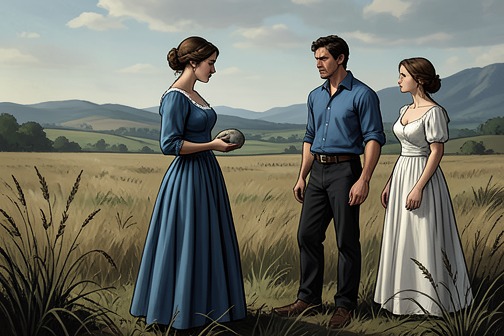
The [Romanesque Chapel Returned and Rebuilt](entity:event-recall-event-91788c747d8e) was [Irene](entity:character-recall-character-irene-317f252d24ac)’s first major achievement as mayor of [San Esteban](entity:location-recall-location-san-esteban-1e61329cf8d0), reversing a long-running loss of local heritage. What began as a disputed monument’s return became something more intimate: while undergoing cancer treatment, Irene invested the chapel’s completion with the hope that she would survive to see it home, and later found comfort there while awaiting medical results.
## Removal and Loss
In the 1950s, plans for a reservoir threatened to cover three villages near San Esteban. The authorities moved the dead from the cemeteries and dismantled two churches stone by stone so they could be relocated. A small Romanesque chapel was also supposed to be moved, but the reservoir was never built. The churches were returned; the chapel was not. It had disappeared from public view, and the community was left without an explanation for its absence.
The later account supplied a history of appropriation rather than simple administrative neglect. A minister under Franco had fallen in love with the chapel and taken it for his estate in Galicia. After Spain’s transition to democracy, people began calling for its return. Yet the village to which it had belonged was empty: its residents had either died or emigrated. Successive governments and mayors did not press the claim firmly, while the minister’s heirs resisted and ambiguous laws offered no clear means either to compel restitution or to punish those who kept it. The chapel’s absence thus persisted through a combination of political reluctance, legal uncertainty, and the disappearance of the community most directly associated with it.
## Irene’s Campaign and the Return
Once sworn in as mayor, Irene decided that the chapel should come back to the region. She kept pursuing the matter and sought a new location that could satisfy everyone. The account presents the return as a practical achievement as well as a symbolic one: the chapel was brought back and its stones assembled again, reversing a removal that had outlasted the abandoned reservoir project and the community’s dispersal.
Irene’s campaign provoked hostile commentary. She kept framed an article by Anselmo, a right-wing journalist at [El Diario Montañés](entity:organization-recall-organization-el-diario-monta-5c4851417f7c), who cast the recovery as a provocation by leftists and objected to the chapel being taken from the Francoist heirs. The polemic reduced her effort to partisan mischief, while Irene described it in civic terms: the chapel was the people’s heritage, the residents wanted it back, and she had promised to govern for all of them. Her atheism made the campaign seem paradoxical to some observers, but her stated claim was not religious. It was about public ownership and a promise made to the community.
The return also illuminates the contested terrain of Irene’s local politics. San Esteban was divided over the biomass plant: Irene supported it as a source of clean energy, electricity, and employment, and rejected the accusation that backing development made her a traitor to [Cantabria](entity:location-recall-location-cantabria-c21d914d3fc8). Later, a television journalist attacked the project’s environmental and economic claims and confronted Irene with a revised agreement she had not known about. In a separate newspaper report, [Pacheco](entity:character-recall-character-pacheco-078b007135ff) presented allegations that Irene had threatened landowners with expropriation. These controversies do not explain the chapel’s recovery, but they sharpen the contrast in her public record: the mayor who championed an industrial project also fought to bring a piece of local history back. Her positions could be recast by opponents as betrayal or political manoeuvring; the chapel, for Irene, rested on the more immediate obligation to the people she represented.
## A Private Meaning
The chapel’s return coincided with Irene’s cancer diagnosis, a fact she had never previously disclosed to [Bea](entity:character-recall-character-bea-992cee8d7f81). She admitted that she might have pursued the restoration so fiercely because she believed, in some unspoken way, that nothing bad could happen to her before the chapel was back and every stone had been put in place. The project had become bound up with a hope that its completion could hold death at bay. This was not a public explanation she had used to justify the campaign; it was a private fear she shared only after the work had been done.
That disclosure changes the emotional meaning of the restoration without cancelling its civic purpose. Irene had acted for the town and because its residents wanted the chapel returned, but her struggle for it had also offered a personal bargain with uncertainty: if she could finish the work, perhaps she would be safe. Bea is struck by this rare, unguarded admission from her formidable older sister. Irene’s pride in the achievement exists alongside fear, not in place of it.
## The Chapel as Refuge
Even after the successful return, the chapel continued to matter to Irene. When she was due to receive the results of periodic medical tests, she found it calming to enter and look through its small window at waves breaking against the rocks. She did not claim certainty about religious belief; she described the place as a balm and said she was proud that it had come back to the town. If its return offered even some of the same comfort to others that it gave her, she considered the struggle worthwhile.
The chapel therefore holds two connected kinds of significance. Its stones embody the recovery of heritage that political convenience and legal ambiguity had left displaced. At the same time, the restored building becomes a place where Irene can face the recurring uncertainty of illness. The account does not turn her into a believer: instead, it shows an atheist finding steadiness in a recovered monument, its small window, and the sea beyond it. The achievement that first established her as a mayor also becomes a setting in which she can acknowledge how frightened she is.
Event 25
Fin’s Motocross Crash and Teo’s Rescue
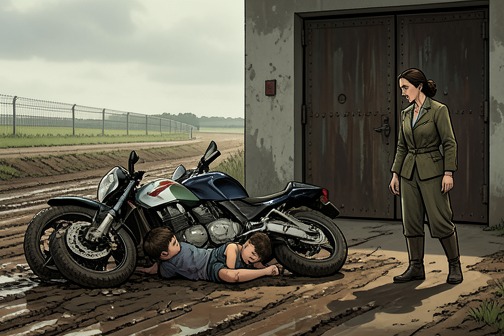
[Fin’s Motocross Crash and Teo’s Rescue](entity:event-recall-event-4b4bf712f580) turns a race into a sudden struggle between life and death, then makes survival the beginning of a lasting bond. When fifteen-year-old [Fin](entity:character-recall-character-fin-d1a67c1fae30) is trapped beneath fallen motorcycles on a muddy course, [Bea](entity:character-recall-character-bea-992cee8d7f81)’s terror is sharpened by the thought that she had urged him to keep racing despite his doubts. [Teo](entity:character-recall-character-e789707df1fd)’s decision to enter the still-active track and free him changes the scene from helpless watching to rescue—and gives Fin a friend who remains part of his life after the immediate danger has passed.
## The Crash and Its Stakes
The crash begins when mud causes Fin to lose control. He strikes the motorcycle ahead, whose rider has also fallen. The impact is severe, and another motorcycle coming from behind cannot stop in time and lands on Fin. It pins his chest and head, leaving him unable to move. The danger is not only the force of the pile-up: other motorcycles are still moving around him, making any attempt to reach him hazardous.
For Bea, the sight turns into a sequence of feared possibilities. She cannot tell whether Fin can breathe or whether he has been fatally injured. Her thoughts keep circling the possibility that he might die, even as she tries to insist to herself that he will get up and that the crash is only an accident. The account holds the uncertainty in that gap between what she can see—Fin motionless beneath the motorcycles—and what she desperately needs to believe.
## Bea’s Fear and Self-Blame
The accident also brings Bea’s earlier encouragement back against her. Fin had been uncertain about racing that day, but she had urged him not to give it up and to continue. As he lies trapped, she imagines the guilt she would carry if he were badly hurt: in her panic, the decision to encourage him becomes a possible cause of an outcome she cannot bear to contemplate. She shakes her head to stop these thoughts, but the fear has already overtaken her ability to reason calmly.
Her alarm draws on two other anxieties. Bea wonders whether Fin might be the person her mother had pleaded with in her dreams not to die, and whether her mother’s unusual mood that morning had been a warning. She also connects the danger to Fin’s recurring anguish about death, asking herself whether his fear might reflect an intuition of an early end or a gift inherited from his grandmother. These are Bea’s frightened conjectures, not explanations confirmed by the accident. Their force lies in how the crisis makes earlier fears seem newly urgent.
## Teo Enters the Course
Teo’s intervention begins while the danger is still unfolding. Bea’s mother warns him to be careful as he runs down the slope and onto the track, where motorcycles are still in motion. [Bea’s father](entity:character-recall-character-bea-1586b04f1949) wants to go down too, but her mother stops him because his injured hand would prevent him from lifting the motorcycles. Two riders fly over Teo as he advances; to avoid being struck, he crawls along the ground until he reaches Fin.
[Juan](entity:character-recall-character-juan-08eb0a988bb3) also tries to reach the boy, but the racing motorcycles slow his progress. Teo’s small stature, which Bea had never imagined would help in such a circumstance, lets him move through the danger differently. With remarkable strength, he shifts the motorcycles off Fin. He speaks to him, and Fin raises his head and answers. That response changes the scene at once: Fin is alive. Bea’s legs begin to tremble so badly that she has to hold on to her mother to keep from falling.
Once the riders manage to stop, team personnel, Juan, and his firefighter friends reach the injured racers. Bea and her family make their way down the uneven slope as two ambulances arrive. Fin says his leg and chest hurt and tries to sit up, but Teo prevents him from doing so. When blood is visible at Fin’s knee and he tries to remove his helmet, Teo tells him to leave it on. The caution continues the rescue beyond the moment of freeing him: Fin is hurt, and he needs to be handled carefully rather than hurried to his feet.
## Medical Outcome and Aftermath
Teo offers to accompany Fin because he is a nurse. Fin asks him to come, explaining that the motorcycle had pinned him and he could not move; he recognizes that Teo saved his life. The ambulance crew takes Fin and another injured rider away on stretchers, with Teo going with him. At the hospital, [Irene](entity:character-recall-character-irene-317f252d24ac) arrives frightened and asks after her son. Bea learns that Fin has a broken tibia and a small burn on his chest. Doctors are performing a CT scan as a precaution, but have described it as routine, and the family is told that reaching him so quickly was fortunate.
Three days later, the doctors rule out further complications and discharge Fin. His leg is in a cast, and he can barely get around even with crutches, so the family decides he should stay at Bea’s parents’ home, where several relatives can help look after him. Irene cannot be with him all day, making the shared household a practical source of care as well as a place of relief for the family.
## A Rescue That Becomes a Friendship
The rescue does not end when Fin leaves hospital. He develops a close friendship with Teo over Skype, to Débora’s frustration. Their conversations last for hours. When Débora appears on camera, Teo greets her and asks her to bring Fin closer; she does not always agree, but sometimes gives in because Fin keeps asking. Bea’s mother also uses the calls to greet Teo and talk with him. The family has a meal with him still to arrange.
The scene’s decisive reversal is physical and immediate: a boy who cannot move is freed, answers, and survives. But its aftermath gives that reversal a wider meaning. Teo’s courage is inseparable from practical care—his presence in the ambulance, his nursing knowledge, and his continued contact with Fin. The accident also transforms Bea’s panic and guilt into visible relief, while the later calls show how a life-saving act can establish a friendship that continues in ordinary family life after the race is over.
Event 26
The Family Discovers León Is a Popular YouTuber
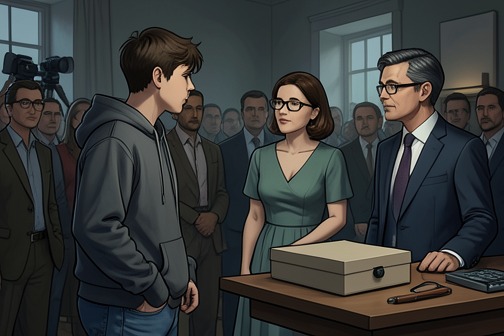
[The Family Discovers León Is a Popular YouTuber](entity:event-recall-event-33fa6fe95d1a) when [Teo](entity:character-recall-character-e789707df1fd) recognizes him by his online identity, revealing a career and income his relatives had barely imagined. The surprise first brings the family together around [León](entity:character-recall-character-le-n-72da7eaadacb)’s videos; the money behind his fame soon becomes a source of friction between him and [Jacobo](entity:character-recall-character-jacobo-9c63accf55d8), giving the discovery consequences beyond the initial astonishment.
## Recognition and a Hidden Identity
The revelation begins when Teo looks at León and recognizes a familiar face. He hesitates, then asks whether León is Leonem, the online creator he resembles. The family has no immediate context for the name: [Bea](entity:character-recall-character-bea-992cee8d7f81) asks who Leonem is, and León, embarrassed, acknowledges that it is his [YouTube](entity:organization-recall-organization-youtube-6640867f35fc) name. His brief explanation—that he uploads videos to the internet from time to time—makes the work sound casual, even as Teo supplies the scale León leaves out.
That difference in emphasis gives the scene its first turn. To León, posting videos is something he can mention without ceremony; to Teo, the channel is conspicuous enough to identify its creator on sight. The relatives had not known that this public persona belonged to someone they knew at home. His celebrity is therefore not introduced through a performance or a public appearance, but through a moment of recognition that makes his ordinary identity and his online reputation suddenly overlap.
## The Scale of León’s Audience
Teo describes an audience averaging four million visitors and places León among Europe’s top ten YouTubers. The claims initially sound so improbable to the family that even the question of whether such work pays draws surprise. Teo estimates León’s net monthly income at between 5,500 and 7,000 euros. The relatives fall silent, then laugh, assuming the estimate is fanciful. León confirms that he earns more, but declines to give a figure and brushes away the importance of the question.
The exchange changes what the family understands about León without making him eager to explain himself. Teo can quantify the audience and estimate the earnings; León, who is the person behind the channel, offers little more than confirmation. His response keeps the details of his success at a distance. The income is real, but the scene does not present it as a simple triumph: the family’s astonishment and laughter show how far his private circumstances were from their assumptions, while León’s reluctance to discuss the amount suggests that disclosure is not something he welcomes merely because relatives ask.
## Watching the Videos Together
Later, the family searches YouTube for León’s work after failing to find a video of [Fin](entity:character-recall-character-fin-d1a67c1fae30)’s accident. Bea turns to her brother’s uploads partly to distract herself from the elevator incident. León does not want the family to watch while he is present, and leaves the room when they insist on looking. Bea chooses the video with the most views from among hundreds of uploads, making the family’s first extended encounter with his work a selection made through popularity itself.
On screen, León sits in his room, faces the camera, greets his followers, and launches into a comic explanation of a video game. Bea cannot follow the jokes or the explanations, and realizes that the gap is not just one of fame: she feels that she belongs to another generation. Her attention is also divided by her conversation with [Diego](entity:character-recall-character-diego-619035ec498e) and by how much she misses him. Her parents and sister are equally bewildered by the video, so their confusion becomes a shared family response rather than Bea’s alone.
Fin, however, laughs from the twentieth second. He understands the video’s premise well enough to explain it to the others: León has equipped one of the game’s most harmless characters with powerful strategies and weapons, then set it against other users. The seemingly innocuous character defeats and humiliates them. Fin’s explanation makes the humor legible to Jacobo, who says he understands once the premise has been explained. The video’s reported total of 8,300,023 users gives this moment of family incomprehension a concrete counterpoint: what leaves most of León’s relatives baffled is entertainment that has reached millions.
## Money, Intimacy, and Independence
The discovery has a more personal afterlife in León and Jacobo’s disagreement. León says that Jacobo has just left after making his position clear, and describes money as something that makes everything more strained. He had deliberately avoided saying what he earned. Jacobo, knowing about the income, has asked why León does not move out and why they do not find a place together. León rejects the assumption that moving in with a partner would constitute independence: to him, leaving his family only to become tied to someone else is not freedom.
León is twenty-one and does not want to take that step, particularly because Jacobo had been reluctant even to call them boyfriends two months earlier. He cannot understand why earning enough to afford a home should create an obligation to share one. The exchange recasts the family’s earlier laughter over Teo’s estimate. Money had first seemed like an unbelievable detail about a hidden career; once it enters León and Jacobo’s relationship, it becomes an argument about who gets to define readiness, commitment, and independence. The discovery therefore joins public visibility to private boundaries: millions may watch León’s work, but that success does not mean he wants his income—or his next choices—to be managed by others.
Event 27
León and Jacobo Break Up over Moving in Together
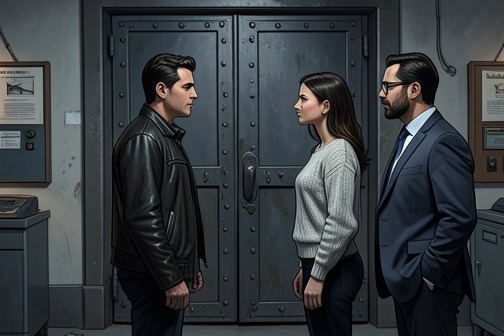
[León and Jacobo Break Up over Moving in Together](entity:event-recall-event-8de5b01646b3) marks the collapse of a relationship in which a practical question becomes a test of love. [Jacobo](entity:character-recall-character-jacobo-9c63accf55d8) wants them to share a home; [León](entity:character-recall-character-le-n-72da7eaadacb) sees that demand not as independence but as leaving his family in order to bind himself to someone else. When Jacobo makes cohabitation the condition for staying together, León refuses, and Jacobo leaves. The scene presents the breakup as both a clash over money and timing and a deeper disagreement about what commitment should require.
## Causes and Background
Before Jacobo arrives, León describes a disagreement with the [Guardia Civil](entity:organization-recall-organization-guardia-civil-268ba482c33f) officer, who has just left after making his position clear. León says that money has poisoned the discussion and explains why he had not disclosed how much he earned: he believes money changes how people relate to one another. The argument is not simply about whether the couple can afford a home. For Jacobo, León’s wealth makes moving in together possible and therefore makes León’s reluctance harder to accept; for León, financial capacity does not create an obligation to change the relationship.
León frames independence in terms that directly oppose Jacobo’s proposal. He does not regard leaving his family to live with a partner as becoming independent; he sees it as exchanging one attachment for another. He also objects to the assumption that having enough money means he must act on it. His objection is about choice and pace as much as the proposed arrangement itself. The conversation establishes the fault line that the confrontation will widen: Jacobo understands a shared home as a next step toward a future, while León insists that the possibility of taking that step does not mean it is the right moment.
## The Confrontation
The doorbell interrupts the discussion. [Bea](entity:character-recall-character-bea-992cee8d7f81) opens the door, and Jacobo comes in, greets her, and goes straight to León. He asks whether León is refusing to live with him because Jacobo is not good enough for someone wealthy, or because León is merely passing time with him while waiting for a more suitable partner. The accusation turns León’s financial circumstances into a measure of personal worth and gives his refusal a meaning León says he does not intend.
León rejects that interpretation. Jacobo’s discovery of his money is new to Jacobo, he points out, but León has had that money throughout their relationship. Nothing about León has changed, and he says that when he first became interested in Jacobo, he was already wealthy. He also pushes back against the scale Jacobo assigns to his fortune, saying that he does not even have that much. His response is an attempt to separate the relationship from a sudden change in status: the money did not create their attraction, and it should not dictate a new timetable.
Jacobo answers with an appeal to the life they could share, saying that living together would be beautiful and that León’s refusal means he does not love him. León counters that the issue is not whether he can imagine that life, but whether the time is right. He recalls that only two months earlier Jacobo had not even dared to say that he was León’s boyfriend. Bea intervenes to suggest that coming out so abruptly has given Jacobo momentum. The remark supplies a recent contrast within the relationship: Jacobo’s new insistence on a shared future follows a period in which naming the relationship itself had been difficult.
## The Ultimatum and Breakup
When Jacobo asks what they should do, León proposes continuing as they were. Jacobo refuses that option. Knowing that they could live together while León does not want to do so is no longer acceptable to him; he reads the refusal as evidence that León sees no future for them. León asks whether the present is not enough, but Jacobo says he is serious about the relationship and takes León’s hesitation to mean that León is not serious about him.
León challenges the idea that love must be made serious in this particular way. He questions why a relationship must be treated as a solemn project and argues that life is already serious enough. This does not resolve their difference: Jacobo says León’s argument confuses him and reduces the issue to a direct condition—if León loves him as much as he is loved, they should move in together. León recognizes the condition as an ultimatum. Bea explains its meaning, and Jacobo accepts her explanation: either León is truly with him or the relationship is over.
León chooses the second option. He says he will not move in with someone who does not understand what an ultimatum is. Jacobo calls the decision a low blow, is visibly hurt, struggles to hold back tears, turns around, and leaves the house. The decisive reversal is therefore not a new disclosure about the money or a change of affection; it is the moment when a proposed shared future becomes a demand for proof, and León refuses to prove his love by surrendering his own judgment about when to live together.
## Aftermath and Significance
León shakes his head as though the situation is impossible. He blames money for ruining things, while Bea replies that his own behavior toward Jacobo has also contributed. León insists that he is not responsible for Jacobo’s sudden change of mind and describes ending the relationship abruptly as better than prolonging it. He retreats to his room and closes the door. After a loud crash comes from inside, Bea opens it in alarm and checks whether he is all right; the account does not explain the noise, so the immediate aftermath remains unresolved.
Bea feels sorry for both men and recognizes that she will miss Jacobo. She has grown used to what she sees as his simplicity and to the unguarded way he loves León and the family. Her response complicates León’s dismissal of Jacobo as a seeker of seriousness and absolutes: the very directness that made Jacobo’s demand feel constraining also made his affection seem unusually free of cynicism, strategy, power games, fear, and half-truths. The breakup thus leaves two judgments in tension. León experiences the demand for commitment as an intolerable ultimatum; Bea can see in Jacobo’s wholehearted request for love a virtue as well as a limitation.
Event 28
Chestnut Grove Treehouse Clash Ends in Arrests
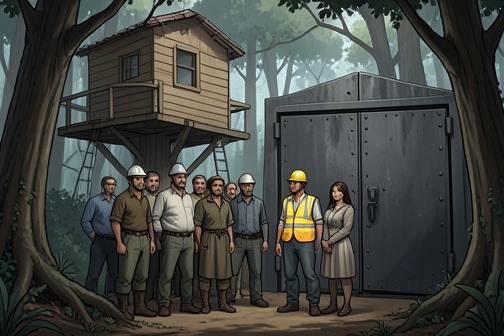
The [Chestnut Grove Treehouse Clash Ends in Arrests](entity:event-recall-event-0973e40b6b6e) turns a family’s attempt to defend a treehouse into a public dispute about property, forest use, and the legitimacy of a biomass project. [Bea](entity:character-recall-character-bea-992cee8d7f81) and her siblings confront workers at a grove they believe is theirs; the timber, however, has been sold to the sawmill, which claims the right to remove it. Their arrests later give the project’s opponents and its critics a vivid image around which to build competing accounts of what happened.
## Causes and Background
[San Esteban](entity:location-recall-location-san-esteban-1e61329cf8d0) is divided over the biomass plant. [Irene](entity:character-recall-character-irene-317f252d24ac), who supports the project through the municipal government, presents it as a source of clean, inexpensive energy, employment, and a use for forest material otherwise considered waste. She argues that the planned electricity-generating plant could supply power for 50,000 people and help the country move away from fossil fuels. Opponents, including Débora, see the project as a threat to the woods and object that biomass energy depends on stripping forests. The same forest is thus described either as neglected material that can be put to work or as a living resource at risk of being exploited.
The immediate confrontation arises from that divide over the forest’s value and control. At the grove, Bea insists that the chestnut trees belong to her family. A man consults a map and locates their position about 200 metres north of forest track seven. He tells them that the timber in the surrounding hectares belongs to the sawmill: some is intended for the biomass plant, and the usable wood will be made into planks. He says the timber was bought from its owners. Bea’s family has treated the grove as theirs, but the purchase and the claimed right to extract the wood overturn that assumption.
## The Confrontation and Arrests
Bea objects that the workers are on private property and in her territory without permission. The sawmill’s representative counters that the purchase included the right to remove the timber. For Bea, the treehouse makes the dispute immediate and personal: she calls for Débora to bring the members of her tree-protecting association and asks that they involve the press and make as much noise as possible. Débora hesitates, a small but telling pause between the sisters’ different positions on the project and on how to resist it.
The clash culminates in Bea and her siblings being detained by the [Guardia Civil](entity:organization-recall-organization-guardia-civil-268ba482c33f) while trying to prevent the factory’s workers from destroying the treehouse. The surviving account does not give a detailed sequence of the arrests, but later references make clear that the confrontation became a lasting point of vulnerability for the family. What Bea had treated as resistance to the destruction of a structure in a family grove could now be represented as an obstruction on land whose timber had been sold.
## Images, Blame, and Political Risk
The arrests acquire a second life through photographs and online posts. [León](entity:character-recall-character-le-n-72da7eaadacb) explains that, while he and the others believed the chestnuts still belonged to their family, he uploaded photographs to Facebook to denounce what had happened and also made a video. After Bea explained the circumstances, he deleted the material. He acknowledges that someone could have copied it while it was online. The images thus persist beyond León’s attempt to withdraw his accusation, converting a local confrontation into material that can be recirculated without its original context.
[Pacheco](entity:character-recall-character-pacheco-078b007135ff) later shows Bea a newspaper article alleging that Irene threatened two landowners with expropriation if they would not agree to sell their trees to the biomass factory. He tells Bea that he has sources within the Guardia Civil and possesses photographs of her siblings being arrested. His proposed follow-up would connect the family’s clash at the treehouse to the political controversy. Irene’s response to landowners further complicates the property dispute: she argues that the sawmill is paying well and offering to buy parcels for short-rotation forest cultivation, while also suggesting that the municipality could instead expropriate land and make it public, though it would not pay as much as the Andrada family. The competing claims are therefore not simply about whether trees should be cut, but about who controls the land, under what arrangement, and with what compensation.
The episode also produces conflict within Bea’s family. Irene fears that the arrest story will damage the project’s reputation and prompt [Emerge](entity:organization-recall-organization-emerge-6e0cf339a090) to withdraw, since a corporation of that scale would dislike negative publicity. She urges [Jacobo](entity:character-recall-character-jacobo-9c63accf55d8) to tell his colleague the account she considers accurate: the trees no longer belonged to their father, and she had made the mistake. Bea rejects the effort to place responsibility on her alone, distinguishing the treehouse confrontation from the separate allegation that Irene pressured landowners. The family’s differing accounts mirror the town’s larger struggle over which facts should define the controversy.
## From Local Incident to Public Spectacle
The treehouse arrests become one strand in a larger media campaign against Irene and the biomass project. Later, during a television interview, a presenter challenges Irene’s claims about green energy, raising questions about the fuel’s transport, emissions, waste, forest requirements, subsidies, and promised employment. The presenter then displays a copy of an agreement changing pollution-control parameters that Irene says she did not know about. That confrontation concerns the project more broadly, but the earlier clash helps make the public story legible as a conflict over the costs hidden behind its promise of clean energy.
At a later demonstration, Bea finds herself followed by television cameras and sees the presenter reporting from the protest. She connects the spectacle around the factory to the chain of events that began with her family’s conflict, reflecting that Irene is close to losing the mayoralty and [Diego](entity:character-recall-character-diego-619035ec498e) his fortune. The arrests do not settle who was right about the forest or the plant. Instead, they expose how a disputed claim to timber can become a family rupture, a political liability, and an image that competing sides use to define the meaning of environmental resistance.
Event 29
Pacheco’s Reporting Controversy over the Biomass Power Project
[Pacheco’s Reporting Controversy over the Biomass Power Project](entity:event-recall-event-7fe6fe6a4f18) turns a local dispute over energy and forests into a contest over who can define the facts. [Pacheco](entity:character-recall-character-pacheco-078b007135ff)’s claims about [Irene](entity:character-recall-character-irene-317f252d24ac) and the family’s protest threaten to turn real political tensions into a misleading story; [Bea](entity:character-recall-character-bea-992cee8d7f81) and Débora challenge him with documents and an appeal to journalistic accuracy. Later, a televised interview reveals that the project’s pollution specifications had been changed without Irene’s knowledge, giving the controversy a substantiated environmental dimension even as the reporting around it remains politically charged.
## The project and its competing claims
The reporting controversy grows out of an already divided [San Esteban](entity:location-recall-location-san-esteban-1e61329cf8d0). Irene supports the biomass plant through the municipal government, presenting it as clean, inexpensive energy that could create employment and make use of otherwise unwanted wood. The larger proposed facility would generate electricity for 50,000 people. Its plans also require the coordination of private forests, use of public woodland, and short-rotation plantations harvested every three years. For Irene, the project represents progress and the prospect of energy independence; opponents fear that it will consume the forests on which the region depends.
The physical scale of the development makes that disagreement difficult to keep abstract. When Bea visits the [Andrada Family Sawmill](entity:organization-recall-organization-930d69fe16da) with Débora, she sees the existing biomass factory towering beside the sawmill and an even larger plant under construction. Logs and heaps of wood chips fill the surrounding yard, where an enormous shredder processes timber. Bea, who loves wood and takes pleasure in recognizing different kinds, experiences the sawmill as an attraction; Débora sees the factory as a threat to the forests. Their opposed reactions reflect the argument that later appears in print: whether the project gives discarded woodland material a new use or encourages the depletion of the woods.
## Pacheco’s allegations and Bea’s response
After [Román](entity:character-recall-character-rom-n-c7194b2fba99) threatens to act against his former wife, Irene, Pacheco approaches Bea outside [Ingrid](entity:character-recall-character-ingrid-168d239eeb80)’s studio and points to a report in [El Diario Montañés](entity:organization-recall-organization-el-diario-monta-5c4851417f7c). It alleges that Irene threatened two landowners with expropriation if they would not agree to sell their trees to the biomass factory. Pacheco says Román, Irene’s former husband, is supplying him with information. He then warns Bea that another article will be more explosive and that she will be one of its central figures.
The promised story concerns the family’s attempt to stop work at the chestnut grove, where a treehouse stood. Pacheco says that the family was detained after trying to prevent the factory’s workers from destroying the structure, and presents the use of the Spanish National Guard as evidence of the project’s callousness. He further suggests Irene tried to suppress the episode to protect her interests. Bea objects that he is distorting what happened, but Pacheco insists that the story is unstoppable and rejects the idea that Irene could buy his silence.
The published report brings the conflict into Bea’s family home. Irene gathers the family, including a Spanish National Guard officer, after Pacheco’s first article appears. The published piece discusses the alleged expropriation threat; the more damaging account of the chestnut-grove confrontation, complete with photographs and purported sources in the Spanish National Guard, is still anticipated. Irene angrily asks how the information escaped. [Jacobo](entity:character-recall-character-jacobo-9c63accf55d8) had told her the officers involved would not speak, while [León](entity:character-recall-character-le-n-72da7eaadacb)’s opposition to Jacobo’s presence and their refusal to speak to each other make clear that the family is also dealing with an unresolved personal conflict. The political crisis and the family tension occupy the same room, though no one has time to investigate the latter.
## The attempt to correct the record
Bea and Débora go to [Bar Caribe](entity:location-recall-location-083419765cb7) to speak with Pacheco directly. Their discussion is long and detailed, and they bring the timber purchase contracts to show that the trees involved were no longer theirs. Débora remains opposed to the proposed electrical plant, but she objects to using a story that is not fully true to advance that cause. Bea makes the same distinction: opposing the project is a legitimate position, but knowingly publishing a false account would reproduce the very kind of underhanded conduct Pacheco attributes to Irene.
Bea urges Pacheco to investigate the matter fully and publish only what the facts support. She warns that the treehouse might make a potent symbol against corporate power, but a symbol built on a false account would not hold. Pacheco says he will consider their case. Bea and Débora leave without knowing his decision, and Bea opens the newspaper anxiously over the following days. The threatened article about the treehouse does not appear. Pacheco nevertheless continues publishing criticism of Irene’s project, alleging falsified environmental reports, purchased support, and pressure on agricultural engineers to approve the plant. His articles argue that the project chiefly benefits the Andrada family and Irene’s political career, and suggest she hopes to use it as a route to national office.
The writing is persuasive enough that Bea begins to doubt the project herself. Irene tells her the coverage is biased and manipulated, in part by information from Román. Bea comes to believe her sister, but the articles continue to affect the village: its divisions become sharper, and a large demonstration is expected. Débora still makes a protest banner opposing the plant, showing that the sisters’ successful intervention against a misleading story does not reconcile their positions on the project. Bea’s insistence on accuracy is not the same as support for Irene’s policy.
## The televised interview and a new revelation
The controversy takes another turn when a television presenter, having first approached Irene through flattery, attacks her on camera. In an interview for a program titled La verdad de la energía verde, the presenter questions whether biomass power is clean when forest material must be transported by trucks burning fossil fuels, what remains after combustion, how much carbon dioxide the process emits, and how many thousands of hectares of woodland a plant of this scale needs. She also cites other plants that closed, the heavy subsidies required to keep some operating, and employment figures that fell far short of promises. Irene has answers, but the presenter overwhelms them with data and questions that shift the discussion from the technology to the political bargains behind the project.
The decisive disclosure is not simply an environmental objection. The presenter says the chosen offer was four percent below the initial one and that the reduction affected pollution controls: a cheaper boiler and filters would increase contaminant emissions by twenty percent. Irene calls the claim false, but the presenter shows her a copy of the revised agreement on an iPad. Irene had not known that those parameters had been changed. The revelation exposes a gap between the project Irene has defended and the terms actually recorded in the agreement, while the presenter frames the plant as pursuing profit at the expense of local residents’ health. Irene loses her composure and is left struggling to respond.
## Public consequences and narrative significance
As the controversy moves toward a mass demonstration, its competing accounts converge in public. Bea, already followed by press and television cameras because of her private life, sees the presenter reporting from the demonstration. She links the present crisis to the chain of events that began with her relationship with [Víctor](entity:character-recall-character-v-ctor-3abf4a529848), and imagines the consequences for Irene’s mayoralty and [Diego](entity:character-recall-character-diego-619035ec498e)’s fortune. Rather than disappear into a bar or doorway, Bea decides to call out [Rebeca Ramos](entity:character-recall-character-rebeca-ramos-300b2dfb58e8). The episode ends on that act of recognition and confrontation, not on a resolution of the project’s future.
The reporting dispute distinguishes between allegations that Bea and Débora can rebut with contracts and a later change to pollution specifications supported by a document shown on camera. It also shows how political alliances and private sources shape the framing of public events: Pacheco’s reporting is connected to Román’s campaign against Irene, while the television interview’s challenge focuses on the plant’s emissions and the political means used to advance it. In San Esteban, the promised benefits of employment and electricity and the possible costs to woodland and residents’ health remain entangled. The controversy’s force comes from that unresolved conflict—and from the fact that a misleading story and a damaging documented revelation can coexist in the same public debate.
Event 30
Víctor Returns to Win Bea Back, and They Reunite for a Night
[Víctor Returns to Win Bea Back, and They Reunite for a Night](entity:event-recall-event-34144014ea0b) marks a sharp division between physical reunion and emotional reconciliation. [Víctor](entity:character-recall-character-v-ctor-3abf4a529848) arrives at [Bea](entity:character-recall-character-bea-992cee8d7f81)’s family home seeking forgiveness and another chance; later, Bea goes to his hotel room and kisses him. Their night together briefly revives their former intimacy, but it does not repair the breach between them: by morning, Bea questions why he came, admits she may no longer love him, and leaves.
## The Unexpected Return
At eight in the evening, the doorbell rings at Bea’s family home. Her father, [Jonás](entity:character-recall-character-jon-s-7c3b2ff2ccf0), answers and is so surprised by the visitor that he nearly freezes. It is Víctor, who greets him as an old acquaintance. Bea is in the sitting room eating her favorite low-fat yogurt with pieces of peach. Hearing Víctor’s name, she nearly spills it, sets it aside, and rushes to check herself in the mirror. She is in pajamas she does not consider her best; [Ángela](entity:character-recall-character-ngela-17b3a15ed0ce) and Débora, sitting on the sofa, watch her hurry toward the entrance without knowing what to say.
The familiar man at the door is carefully put together: Víctor wears his best jeans and the black leather motorcycle jacket Bea gave him for their second anniversary. Bea notices how well it suits him and how handsome he looks, even as she asks what he is doing there. The jacket makes the encounter more than an unexpected visit. It is a gift from their shared past, now worn as he asks to be admitted back into her life.
## An Apology and a Request
As they speak, Bea drinks orujo. She jokes that she needs to numb herself so she will not get up and hit him, then accepts the glass when Víctor passes it to her. She understands his visit as an attempt to tell her that he misses her and to ask for forgiveness. But she refuses to treat those declarations as sufficient. The drink, she explains, is mild beside what she felt watching him appear on television beside another woman and publicly call her the woman of his life. His polished clothes, familiar jacket, smile, and explanations cannot erase the hurt caused by those broadcasts.
Víctor says that coming in person was the only way he could think of to speak honestly and accept her anger. Asked what he feels, he tells Bea that he loves her. She experiences the declaration with repulsion rather than relief. He says he had to make a mess of things, lose her, and expose his narcissism publicly before recognizing that she is what matters most to him and that he is at his best when he is with her. His confession frames the visit as a belated recognition, but it cannot dictate how Bea receives it.
When his phone rings again, Víctor looks at the screen and turns it off. He describes the call as work and says it can wait: Bea matters more. He does not claim she should forgive him that evening or return with him to [Madrid](entity:location-recall-location-madrid-8acd4123f416) the next day. Instead, he asks her not to close the door forever and to consider giving him another chance when the hurt has eased, whether in a week, a month, or two. Bea answers no, though without the force she thinks the refusal deserves. He asks her not to say no, leaving the conversation suspended between her resistance and his insistence.
## The Night at Room 414
Later, Bea reaches the hotel room where Víctor is staying. The journey has left her breathless, and she has only one shoe: she has climbed the remaining two flights carrying the other, after calling at room 414 until Víctor finally opens the door. He is in his underwear, as he usually sleeps, and looks drowsy. He asks why she is there, why she is sweating, and where her other shoe is. Bea says it is a long story and that getting there took a great deal of effort. Rather than explain, she throws herself into his arms and kisses him.
That action reverses the direction of the earlier encounter. At home, Víctor came to Bea and asked for a chance; at the hotel, Bea crosses the distance herself, despite the anger and refusal she had voiced. The kiss produces a night together, but the scene does not establish that she has accepted his proposal to resume their relationship. In the morning, their intimacy is real, while its meaning remains contested.
## The Morning After
When Bea wakes, sunlight and unfamiliar, elaborately patterned curtains disorient her. She recognizes the room and the person sleeping beside her. Víctor speaks warmly of the previous night and of the two of them as a strong team, listing how well they fit together in drinking, sex, living together, and working. He even points out that their wedding is only a week away and suggests they could still keep the date. Bea’s startled response makes clear that the wedding he imagines is not a decision she has made.
Bea says she had come the previous day intending to talk. Víctor counters that, amid bottles of whisky and gin, they talked about their future and their compatibility. The difference is consequential: he treats the night as evidence of a continuing partnership, whereas she is still trying to understand what his return meant. She connects his talk of teamwork to his new architecture studio. Because he had asked for her advice on a problem involving pipes, she suspects he wants her beside him as an architect and partner, perhaps more for professional usefulness than for love. She even raises the possibility that he might keep a girlfriend while making Bea his lover. These are Bea’s suspicions, not confirmed facts; Víctor rejects her reading and says she has always been distrustful.
The encounter therefore ends not with a renewed engagement but with a boundary. Bea studies Víctor with detached, almost scientific interest and tells him she no longer knows whether she loves him. She says she is leaving. Víctor gets up, embraces her, and says he will wait for her, but Bea does not answer. She opens the hotel-room door and goes, limping because she has only one shoe. Her awkward exit leaves the reunion’s physical closeness intact as an event, but denies it the status of a settled return to their former life.
## Significance and Outcome
The sequence turns on the gap between a declaration and the proof Bea would need to trust it. Víctor’s apology, his decision to silence his phone, and his request that she take time all suggest that he wants to repair the relationship. Yet Bea measures those gestures against the public humiliation of seeing him celebrate another woman on television, and against the uncertainty of why he is now invoking their professional and personal compatibility. Her suspicion is not resolved by the night together; intimacy instead brings the question of motive into sharper focus.
The event’s central reversal is that the kiss does not deliver the reconciliation either character might have hoped for. Víctor reads their shared night as confirmation that their partnership still works, even imagining the wedding going ahead. Bea leaves without agreeing, uncertain of her own love and unconvinced that his reasons are purely romantic. The lost shoe gives the departure a concrete, unsettled finish: she has crossed the distance to him, but she still walks away.
Event 31
A Secret Hotel Recording Exposes Bea’s Private Life
A hidden-camera segment from [Hotel Cantábrico](entity:location-recall-location-084db7420b4f) turns [Bea](entity:character-recall-character-bea-992cee8d7f81)’s private, drunken encounter with [Víctor](entity:character-recall-character-v-ctor-3abf4a529848) into public entertainment and then into an entry point for reporting on her family. The recording does not establish what happened inside the room; instead, its suggestive account of Bea’s arrival and the night’s events gives gossip programs enough material to recast her as a celebrity and connect her private life to the political and business disputes dividing her hometown.
## From a private visit to a televised story
The exposure begins with footage of a hotel receptionist speaking to an unseen interviewer. The picture is blurred and oddly framed, cropping the man’s head while showing his black-and-gray uniform. Watching television with [Fin](entity:character-recall-character-fin-d1a67c1fae30) and her father, Bea recognizes the receptionist’s voice before the segment identifies her. He describes the [TV News Presenter](entity:character-recall-character-0642b18cf083) and Víctor as guests at the hotel, refuses to disclose whether they shared a room, and presents himself as a professional who will not reveal their arrangements. Then he recounts a different incident: two nights earlier, a woman named Beatriz had entered Víctor’s room claiming to be his ex-girlfriend. He says she threw a shoe at him to prevent him from going after her, and that they did not leave during his shift.
The story’s force depends on implication rather than confirmation. The receptionist’s account identifies Bea and makes her visit sound sensational, but it does not say that she and Víctor had sex or establish what took place in the room. The television package nevertheless converts a messy personal encounter into a public narrative about the ex of a famous presenter’s boyfriend. For Bea, the distinction between what the footage shows and what audiences may infer offers little protection: the receptionist has supplied enough detail for her to be recognized and discussed.
## Repetition and unwanted celebrity
The segment has already been broadcast three or four times when [Chavela](entity:character-recall-character-chavela-2f7412e5acfb) explains its reach to Bea by telephone. Gossip programs, she says, repeat material to fill airtime. The TV News Presenter’s relationship with Víctor had attracted attention from its beginning, and its apparent crisis makes the couple still more compelling to viewers. Reports now emphasize that Víctor went to see his ex and that the TV News Presenter followed him to Bea’s village. Chavela regards the resulting story as compelling television, even as Bea insists she has tried to stay out of it.
Bea rejects the idea that the footage has made her famous: she believes the camera has not recorded her and that the audience does not know she exists. Chavela points out the opposite. The receptionist has named her, described her intrusion into Víctor’s room, and supplied the premise for a reality-show-style story. The recording’s repetitions transform one visit into a recurring public image, while Bea’s own account of the event becomes less important than the role assigned to her: the ex who entered the hotel room of the TV News Presenter’s boyfriend.
The attention becomes tangible in the village. Television follows the TV News Presenter as she buys newspapers, has a drink on a terrace, and signs autographs; none of the images shows her with Víctor. Bea watches for journalists whenever a door sounds, though none comes to the family home that evening. The next day, [León](entity:character-recall-character-le-n-72da7eaadacb) reminds her that television is already repeating the story, and Bea protests that she is not famous. Her attempt to dismiss the attention does not stop the footage from turning her into a subject of public discussion.
## Private scandal meets family reporting
The hotel segment also prepares the ground for a broader account of Bea’s identity. A national newspaper later identifies her as the ex-girlfriend in the television story and publishes a profile that moves from her breakup into her family’s history and [San Esteban](entity:location-recall-location-san-esteban-1e61329cf8d0)’s divisions. It recounts that she studied architecture in [Madrid](entity:location-recall-location-madrid-8acd4123f416), met Víctor there, and had nearly married him before the TV News Presenter entered their relationship. It also describes Bea’s return to her family home as an attempt to recover from the separation.
The report then folds relatives and local controversy into the same portrait. It identifies her mother as a well-known local healer and [Irene](entity:character-recall-character-irene-317f252d24ac) as a controversial left-wing mayor presiding over a town divided by the [San Esteban Biomass Plant](entity:location-recall-location-cfa5b30d5dcf). It alleges that Irene used her influence to secure Bea a job with a favored business. It also brings in Débora’s separation from the firefighter [Juan](entity:character-recall-character-juan-08eb0a988bb3) after becoming pregnant by a dwarf stripper, and refers to a member of the [Guardia Civil](entity:organization-recall-organization-guardia-civil-268ba482c33f) doing unofficial work for the mayor and her family. By arranging private relationships, family tensions, and political allegations as one scandalous dossier, the newspaper makes Bea’s hotel visit seem like the revealing episode in a supposedly extraordinary family story.
That portrayal lands in a town already arguing over the biomass project. Irene supports the factory as a source of clean energy and employment, and argues that the project could provide electricity for fifty thousand people; opponents accuse her of betraying [Cantabria](entity:location-recall-location-cantabria-c21d914d3fc8) by backing it. Earlier reporting had also alleged that she threatened landowners with expropriation if they refused to sell trees for the plant. The hotel exposure does not cause these disputes, but the national report uses Bea’s sudden visibility to bring them into the same public frame.
## Escalation at the demonstration
The media’s attention eventually converges on a mass demonstration against the biomass plant. During an interview, [Rebeca Ramos](entity:character-recall-character-rebeca-ramos-300b2dfb58e8) challenges Irene about the environmental and economic claims made for biomass power, then presents a copy of an agreement changing pollution-control parameters—changes Irene says she did not know about. The confrontation leaves Irene struggling to defend herself and turns the project’s political costs into a television story of its own.
At the demonstration, [Pacheco](entity:character-recall-character-pacheco-078b007135ff) points Bea out to the cameras and journalists, who converge on her with questions about whether Irene arranged work for her at the biomass company. Bea finds herself caught between the reporters pursuing her and the TV News Presenter, who is covering the protest. She sees the collision of her personal scandal and her family’s crisis as a consequence of how far the coverage has travelled: a hotel receptionist’s account has helped make her recognizable, and her identity now draws questions about the mayor and the plant.
Bea responds by confronting Rebeca Ramos in front of the press, hoping that a sensational exchange will redirect attention from the demonstration. The outburst does make her a fixture on gossip programs for a week, but it does not displace the protest’s message. The demonstration remains news, and [Emerge](entity:organization-recall-organization-emerge-6e0cf339a090) ultimately breaks its contract with the Andrada family and chooses another plant. The resulting financial threat to [Diego](entity:character-recall-character-diego-619035ec498e) leaves Bea uncertain whether he deserves the consequences. The hotel recording’s significance therefore extends beyond embarrassment: it begins a chain in which private exposure, family reputation, political scrutiny, and economic fallout become inseparable, without Bea ever gaining control of the story that first made her visible.
Event 32
Víctor and Diego Fight at the Treehouse Site
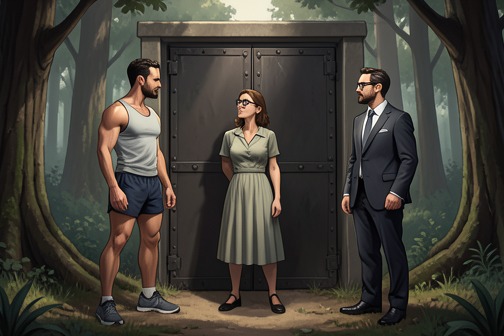
[Víctor](entity:character-recall-character-v-ctor-3abf4a529848) and [Diego](entity:character-recall-character-diego-619035ec498e)’s fight at the [Treehouse](entity:location-recall-location-3c45c993bef5) site turns a personal confrontation into a disorderly physical struggle, but its decisive outcome is [Bea](entity:character-recall-character-bea-992cee8d7f81)’s refusal to be treated as the prize between them. As the two men continue fighting, she states that she wants neither of them; when Diego makes her departure conditional on taking Víctor with her, she rejects responsibility for Víctor and confronts Diego about remaining fixed in his grief. She leaves with [Ingrid](entity:character-recall-character-ingrid-168d239eeb80) rather than staying to manage the men’s conflict.
## The Confrontation Escalates
The scene begins with Víctor speaking three words to Diego at extremely close range. The account emphasizes the cold, measured manner in which he says them, and suggests that he appears to take satisfaction in the moment. The words themselves are not given in the available account, so the confrontation’s escalation is conveyed through Víctor’s manner and what follows rather than through a disclosed verbal threat.
After a moment of surprise, Víctor goes at Diego with his full body rather than relying on his fists. The impact knocks Diego off balance, and both men end up on the ground. Their fight does not follow the clean, choreographed pattern of a movie brawl: as they roll across the ground, the struggle includes pushing and other improvised actions. The narrator’s observation that neither man has made a living by fighting punctures any heroic framing. This is not a contest governed by skill or formal rules; it is a messy escalation between two men.
The surrounding worksite becomes part of the confrontation. Víctor picks up a handful of earth and throws it toward Diego’s eyes. Later, he spots a hose on the grass, finds the tap, turns it on at full force, and directs the water at Diego until he is soaked. The objects and materials at the site do not remain neutral background: the soil, hose, and water alter the course of the struggle as Víctor reaches for whatever is available.
## The Treehouse as a Battleground
After using the hose, Víctor climbs the stairs of the Treehouse and takes up a position above Diego. He leaves the hose behind and tries to prevent Diego from climbing after him, throwing down loose boards and tools from the floor. The unfinished structure, with its stairs and scattered building materials, briefly gives Víctor a defensive position and supplies objects for the next phase of the quarrel. The scene’s setting therefore shapes the fight directly, without turning it into an orderly duel: the men use the site as they find it.
This shift does not settle the conflict between them. Víctor’s position above Diego offers a temporary advantage, but the account gives no final victory or reconciliation between the men. Instead, the scene’s clearest change comes through Bea’s response. She challenges the assumption that they are fighting over her, says she does not want to be with either of them, and tells them there is no need to continue on that premise. Her intervention breaks the romantic framing of the fight without resolving the men’s hostility.
## Bea Refuses the Role Assigned to Her
Diego responds by shouting that Bea should not return if she leaves without taking Víctor. His demand makes her departure into a test of whether she will accept responsibility for the other man. Bea rejects that demand directly: she insists that Víctor is neither her boyfriend nor anything of hers, and says that his situation is not her responsibility. The distinction matters because it denies both the supposed romantic contest and Diego’s attempt to make her answer for Víctor.
She then turns the confrontation back on Diego, describing him as comfortable in the role of a grieving widower and accusing him of staying in the past rather than risking exposure and hurt. Her words connect the immediate fight to Diego’s unresolved grief, but they do not present his grief as an excuse for the ultimatum. Instead, she frames his refusal to risk emotional vulnerability as a form of cowardice. The argument thus moves from the men’s physical contest to Bea’s judgment of the pattern she sees in Diego.
At the end, Bea pulls Ingrid with her and leaves the house. She refuses to look back and leaves the two men to handle the situation themselves. That departure is the scene’s firmest resolution: the fight remains unsettled, but Bea withdraws from the role of mediator and rejects the idea that either man’s actions oblige her to choose or care for him.
Event 33
National Newspaper Publishes Scandal about the Vilela Family
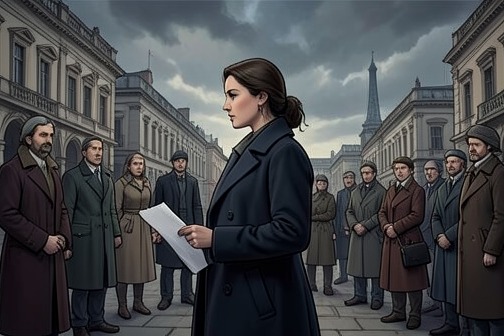
The [National Newspaper Publishes Scandal about the Vilela Family](entity:event-recall-event-0dfcca6c3831) is the moment [Bea](entity:character-recall-character-bea-992cee8d7f81)’s private humiliation becomes a public family spectacle. A society-page report identifies her as the woman connected to [Víctor](entity:character-recall-character-v-ctor-3abf4a529848) and the [TV News Presenter](entity:character-recall-character-0642b18cf083), then binds that romantic story to accusations about [Irene](entity:character-recall-character-irene-317f252d24ac)’s mayoralty, the biomass project, and the family’s other troubles. The article does more than expose personal details: it changes the scale and terms of the conflict, making a local political dispute legible to a national audience as celebrity gossip and family scandal.
## The report appears
Irene first learns that a newspaper story is circulating when a caller tells her that a television crew has arrived and asks about an article by [Pacheco](entity:character-recall-character-pacheco-078b007135ff). At the kiosk, the newsvendor recognizes the two sisters and warns them that the paper has given them a thorough public dressing-down. He says the report also pairs their youngest brother with a [Guardia Civil](entity:organization-recall-organization-guardia-civil-268ba482c33f) officer and describes [Ángela](entity:character-recall-character-ngela-17b3a15ed0ce) as a healer. Irene takes two papers, hands one to Bea, and they open them together to the society pages.
The report is accompanied by a photograph of Bea entering the Andrada family’s home. Its headline, «Una cántabra es la tercera en discordia», gives the story its governing frame: Bea is presented not primarily as a person returning home after a broken engagement, but as the third party in a romantic triangle involving the TV News Presenter. After only a few paragraphs, the account leaves Bea so shaken that she has to sit on the curb. The article has turned information about her life into an explanation for a public scandal, with a picture and a label that make her recognizable beyond [San Esteban](entity:location-recall-location-san-esteban-1e61329cf8d0).
## Private history recast as public scandal
The report identifies Bea as the former partner of the TV News Presenter’s boyfriend and connects her to the woman described in the hotel receptionist’s hidden-camera footage. That footage had described a woman entering Víctor’s hotel room and named her Beatriz; the newspaper now supplies the broader identity and backstory. It says Bea studied architecture in [Madrid](entity:location-recall-location-madrid-8acd4123f416), met Víctor there, and came close to marrying him before the TV News Presenter entered their relationship. It then presents her return to her family home as a retreat to recover from the breakup.
The article expands outward from Bea to her family. It identifies Ángela as a locally popular healer and Irene as a controversial mayor from [Izquierda Unida](entity:organization-recall-organization-izquierda-unida-4a96ba19ee22) whose support for the biomass plant has divided the town. It accuses Irene of presenting herself as an honest politician while arranging work for Bea with a business she had openly favored through the municipal government. The allegation turns Bea’s employment into a supposed instance of political favoritism, joining her personal story to the dispute over the plant.
Débora’s separation from [Juan](entity:character-recall-character-juan-08eb0a988bb3) is also drawn into the report. The paper links their marital crisis to Débora’s pregnancy after an encounter with a dwarf stripper. It further alleges that a Guardia Civil officer did unofficial work for Irene by cleaning up the mayor’s and her family’s problems, and points to his special friendship with the younger brother. Finally, it mentions the fight between Víctor and [Diego](entity:character-recall-character-diego-619035ec498e), presenting the clash with the biomass businessman as something local residents might welcome. In the article’s construction, romantic turmoil, family relationships, political influence, and a physical fight become parts of one lurid portrait.
## Pacheco and the competing accounts
Bea suspects Pacheco is behind the report because he has been seeking a platform for his hostility toward her and the family. The article itself says Irene’s former husband has been supplying him with information. That account connects the report to the political conflict surrounding Irene, although it does not make the article’s accusations equivalent to established fact. Earlier, Pacheco had shown Bea a separate story alleging that Irene threatened landowners with expropriation if they refused to sell trees to the biomass plant. The national report widens the same conflict by placing the mayor’s conduct beside the family’s private affairs.
The report’s framing contrasts sharply with Irene’s own account of the plant. She has defended it as a source of clean, inexpensive energy and employment, arguing that it could use otherwise unusable forest wood, generate electricity for fifty thousand people, and reduce dependence on fossil fuels. She has also insisted that support for energy and concern for trees need not be mutually exclusive. The article instead links the project to favoritism and political maneuvering. Rather than leaving the competing claims about energy, forestry, and local development in separate categories, it makes them part of the scandal attached to Bea’s family.
## From newspaper story to national spectacle
The article’s appearance precedes a much larger television confrontation. In a later interview, the TV News Presenter challenges Irene’s case for biomass energy, raising questions about combustion, transport fuel, waste, carbon emissions, the amount of forest needed to supply a plant, subsidies, and promised jobs. She also presents a copy of an agreement changing the plant’s pollution-control parameters, a change Irene says she did not know about. The interview turns the report’s insinuations into a direct public test of Irene’s political credibility, while leaving Bea to wonder whether Diego had concealed the change to protect his investment.
The family’s private consequences arrive alongside the political ones. Débora tells Bea that Juan has rejected her because the affair with the stripper is now public, and that she is ashamed to go outside. Irene fears that the interview will end her political career and says Diego will not answer her calls. The newspaper story is therefore not an isolated exposure: it is one stage in a cascade in which reporting, television, and the biomass dispute repeatedly magnify one another.
The cascade culminates in a demonstration that draws a crowd so large that Bea cannot approach the starting street until she is six hundred metres away. Television crews and mobile units are there. Pacheco points Bea out to reporters, who surround her with questions about whether Irene got her a job at the biomass company. Bea then spots the TV News Presenter reporting from the march and publicly confronts her. The newspaper’s personal scandal has helped make Bea a recognizable figure at the very event where the plant controversy is being contested.
## Consequences and significance
Bea’s confrontation earns her a week of attention on celebrity programmes and provokes heated, sometimes absurd studio debates. It does not, however, divert coverage from the demonstration’s message: the crowd is too large to ignore, and the protest appears across the news. [Emerge](entity:organization-recall-organization-emerge-6e0cf339a090) ultimately breaks its contract with the Andrada family and chooses the other power plant. That decision threatens Diego with financial ruin, leaving Bea uncertain whether he deserves the consequence for having betrayed Irene’s trust.
The report’s decisive effect is thus not simply that it reveals embarrassing details. It makes private identity a vehicle for public attention, drawing the biomass controversy into a form of coverage that readers and viewers might otherwise have ignored. Yet the resulting publicity does not obey Bea’s attempt to redirect the story, nor does it settle the dispute in Irene’s favor. Instead, the family becomes newly visible while the project loses its commercial support. The episode shows how a sensational frame can connect personal shame to political judgment—and how, once that frame has circulated, its consequences exceed the intentions of the people caught inside it.
Event 34
Rebeca Interviews Irene and Exposes Biomass Project Controversy
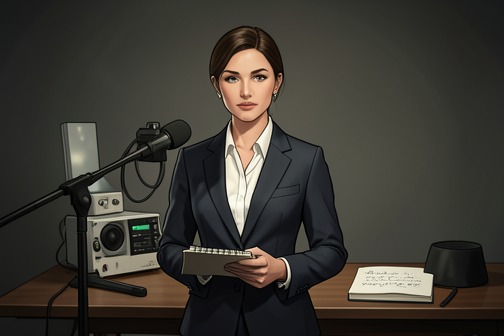
[Rebeca Interviews Irene and Exposes Biomass Project Controversy](entity:event-recall-event-acb03a349b47) is the turning point at which a local argument over renewable energy becomes a national political scandal. In a televised interview, [Rebeca Ramos](entity:character-recall-character-rebeca-ramos-300b2dfb58e8) challenges the promised benefits of the biomass power plant and reveals that its owners had accepted a revised agreement that would increase pollution. The disclosure leaves [Irene](entity:character-recall-character-irene-317f252d24ac) publicly exposed: the project she had defended as a route to clean energy and employment now appears compromised both environmentally and politically, while her own claim to know the agreement proves false.
## Background: A Divided Town and a Green Promise
The controversy had been building around a project presented by Irene as a way to convert forest waste into energy, generate employment, and make the region more self-sufficient. Supporters envisioned a large electrical plant beside the existing biomass operation; the wider plan depended on gathering privately owned woodland, using public forests, and establishing short-rotation plantations. Irene argued that trees and energy could coexist, and that the plant could supply electricity to tens of thousands of people. Opponents, including Débora, saw the same proposal as a threat to the forests, accusing the project of exhausting woodland rather than simply making use of discarded material.
The disagreement was not only about competing descriptions of the plant. It concerned what counted as environmental benefit, who would bear the ecological costs, and whose account of the project would be believed. Irene’s support had already made her a target in the town: she described being denounced as a traitor for failing to defend every tree. An earlier newspaper report, shown to [Bea](entity:character-recall-character-bea-992cee8d7f81) by [Pacheco](entity:character-recall-character-pacheco-078b007135ff), alleged that Irene had threatened two landowners with expropriation if they would not agree to sell their trees to the biomass company. The interview would widen this dispute by joining questions about forests and pollution to allegations of political favoritism and coercion.
## The Interview Reframes the Project
The interview was arranged for a new [Antena 3](entity:organization-recall-organization-antena-3-5f11f3cc5141) investigative program intended to examine the benefits of green energy and the plant’s status as a pioneering Spanish project. Rebeca’s approach changed once the cameras began recording. Rather than simply presenting the project’s promise, she questioned whether biomass electricity could fairly be called clean when transporting forest material by truck consumed fossil fuels, and pressed Irene about combustion emissions, the disposal of residues, and the quantity of woodland needed to supply a plant of that scale.
Rebeca also challenged the case for the project as a source of prosperity. She cited other plants that had closed, the extent to which some facilities depended on subsidies, and the shortfall between jobs promised and jobs actually created elsewhere. Irene had answers to many of the questions, but Rebeca’s rapid sequence of figures and challenges gave her little room to establish her own account. Through Bea’s narration, the interview comes across as an increasingly unequal contest: Irene is trying to defend a complex project while Rebeca controls the pace and the subjects brought into view.
From there, Rebeca shifted from the plant’s technical and economic claims to Irene’s conduct as mayor. She questioned how the many parties involved had been brought into agreement and suggested that political bargains, favoritism toward the area’s most powerful timber businessman, and pressure on Irene’s own councilors had helped secure the project. The interview thus fused two kinds of scrutiny: whether the plant was viable and whether the process that advanced it had been fair. The program’s framing presented the promised green development not as a neutral technical achievement but as a political choice with disputed beneficiaries and costs.
## The Agreement and Irene’s Reversal
The interview’s decisive disclosure concerned an agreement with one of the country’s largest energy companies. Rebeca asked Irene whether she knew its terms. Irene said that she knew the agreement in detail; Rebeca then stated that the company had chosen the [San Esteban Biomass Plant](entity:location-recall-location-cfa5b30d5dcf) over a competing Catalan plant after receiving a four-percent reduction on the initial offer. According to the information she presented, that reduction affected pollution controls: the cheaper boiler and filters would raise contaminant emissions by twenty percent.
Irene denied the claim. Rebeca produced a copy of the agreement on her iPad, showing revised parameters that Irene had not known about. The document transformed the interview from a debate over the general merits of biomass energy into a specific dispute about the plant’s terms and Irene’s knowledge. The mayor had publicly vouched for an agreement she believed she understood, yet the displayed revision suggested that the project’s owners had altered its environmental safeguards without informing her. Rebeca characterized the plant as pursuing profit at the expense of neighbors’ health, and Irene, caught off guard, responded with angry denial rather than a persuasive explanation.
Afterward, Irene arrived at Bea’s family home defeated and recounted the interview in detail. Her first concern was that, if Rebeca’s evidence was accurate, [Diego](entity:character-recall-character-diego-619035ec498e) had deceived her. Bea and the family initially tried to reassure Irene, expecting that her account of a disastrous interview might be exaggerated. The broadcast proved otherwise: its preview appeared on the evening news, and the four-minute extract presented Irene’s performance as a public collapse. It cast her as a left-wing mayor who had made the plant her cause while backing a powerful businessman and an environmentally damaging project. Irene’s defense of the plant had been overtaken by the evidence of the revised agreement and by questions about how the project had been secured.
## Public Fallout and Competing Stories
The interview also intersected with a separate media story about Bea. A hidden-camera recording from the [Hotel Cantábrico](entity:location-recall-location-084db7420b4f) had captured the receptionist describing Bea’s drunken entry into [Víctor](entity:character-recall-character-v-ctor-3abf4a529848)’s room; a subsequent newspaper profile identified her as Víctor’s former fiancée and connected her personal history to Irene’s disputed project. The article portrayed Bea’s family through a scandal-oriented account of the mayor, Débora’s separation, and other family troubles. This coverage made Bea’s private life part of the public narrative surrounding Irene, so the plant controversy and the family scandal began to circulate together.
At the demonstration against the plant, television crews and reporters pursued Bea after Pacheco identified her to them. When she saw Rebeca reporting from the crowd, Bea decided to confront her, hoping that a celebrity-style altercation might redirect attention from the environmental protest. The outburst did generate a week of attention and debate on entertainment programs, but it did not eclipse the demonstration’s message. The crowd was too large for the protest to be ignored, and it remained news even though it did not lead the television bulletins.
The project’s commercial consequences followed. [Emerge](entity:organization-recall-organization-emerge-6e0cf339a090) broke its contract with the Andrada family and chose the other power plant, the outcome Irene had feared. For Diego, whose finances depended on the project, the loss meant economic ruin. Bea was left uncertain whether he deserved that consequence for having deceived Irene. The interview therefore ends not with a settled verdict on biomass energy, but with the collapse of the project’s public defense, a revealed breach of trust, and material losses whose fairness remains unresolved.
Event 35
Massive Demonstration against the Biomass Power Plant
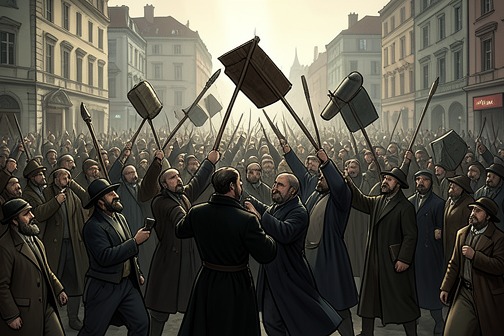
The **[Massive Demonstration against the Biomass Power Plant](entity:event-recall-event-0f4f8734d3bb)** transformed [San Esteban](entity:location-recall-location-san-esteban-1e61329cf8d0)’s divided debate over green energy, forest use, and political trust into a public spectacle with consequences for [Irene](entity:character-recall-character-irene-317f252d24ac)’s mayoralty and [Diego](entity:character-recall-character-diego-619035ec498e)’s business. The crowd was so large that [Bea](entity:character-recall-character-bea-992cee8d7f81) encountered it hundreds of metres from the planned starting point; her attempt to shift the cameras’ attention from the protest to a confrontation with [Rebeca Ramos](entity:character-recall-character-rebeca-ramos-300b2dfb58e8) generated celebrity-news coverage but could not obscure the demonstration itself.
## Causes and Background
The demonstration followed a dispute that had already divided the town between supporters of the plant and those opposed to it. Irene defended the project as clean, inexpensive energy that could use otherwise unwanted forest wood, create jobs, and supply electricity to tens of thousands of people. She argued that the town could preserve its trees while developing the plant, and saw the project as a chance for Spain to lead in renewable energy. Opponents, by contrast, accused her of betraying [Cantabria](entity:location-recall-location-cantabria-c21d914d3fc8) and questioned the costs to the forest. The dispute was not merely over the label of green energy: it concerned the plant’s fuel supply, transport, emissions, waste, and the extent of logging needed to keep it operating.
The immediate political crisis sharpened when Rebeca Ramos interviewed Irene for an investigative programme. Rebeca questioned whether transporting forest material by truck consumed fossil fuels, what remained after combustion, how much carbon dioxide the plant would emit, and how much woodland it would require. Irene tried to answer, but Rebeca overwhelmed her with examples of other plants’ closures, subsidy dependence, and employment falling short of promises. She then shifted from environmental and economic questions to the political arrangements behind the project. A newspaper story had already alleged that Irene threatened two landowners with expropriation unless they agreed to sell trees for the biomass plant. During the interview, Rebeca produced a copy of an agreement changing pollution-control parameters, a change Irene said she had not known about. The disclosure raised the possibility that Diego had altered the specifications without consulting her.
## The Demonstration and Its Participants
The television interview was so damaging that it was previewed on the evening news before the demonstration. The coverage presented Irene as a left-wing mayor backing an unscrupulous businessman and suggested that the project could be economically and ecologically disastrous. Bea, whose own return to her family home had become part of the media story, feared that the interview would strengthen the protest. The next morning, she found that fear borne out: the crowd blocked her approach roughly six hundred metres from the route’s starting point. She had never seen San Esteban so full, not even during its patronal festivities, and judged that the gathering extended far beyond the town into Cantabria.
Among the marchers Bea saw [Juan](entity:character-recall-character-juan-08eb0a988bb3) and his fellow firefighters in uniform. Their presence made their opposition to the plant unmistakable and surprised her; it was the first time she had learned that they, too, opposed it. The demonstration thus showed that resistance was not confined to environmental critics or a handful of people concerned about trees. Uniformed firefighters joined a crowd whose scale itself challenged the impression that the project retained broad local support. Bea suspected that Juan’s brother-in-law had persuaded the firefighters, but the scene establishes their visible participation rather than confirming how each had reached that position.
## Bea and the Television Cameras
The crowd was accompanied by television cameras and mobile broadcasting units, evidence that Rebeca’s interview had drawn attention well beyond the local dispute. [Pacheco](entity:character-recall-character-pacheco-078b007135ff), who had previously provoked Bea in a different setting, was among those near the cameras. He pointed her out to reporters and photographers, making her a subject of coverage in her own right. Questions about whether Irene had found her a job with the biomass company and whether she had returned to her former architect boyfriend tied Bea’s personal history directly to the mayor’s political and business associations.
As Bea struggled through the crowd, she saw Rebeca reporting on the demonstration with a microphone and camera crew. Bea connected the immediate spectacle to the earlier chain of events: her broken engagement, the television presenter’s relationship with [Víctor](entity:character-recall-character-v-ctor-3abf4a529848), the damage to Irene’s political position, and the danger to Diego’s fortune. In a desperate attempt to change the story, she called out Rebeca and confronted her publicly. Bea meant to give the entertainment press a more sensational subject than the environmental protest, hoping that coverage of her attack on the journalist would displace the plant controversy. Rebeca was jeered as she left, and [Jacobo](entity:character-recall-character-jacobo-9c63accf55d8) also shouted at her; Bea urged him to moderate himself because he was dressed as a [Guardia Civil](entity:organization-recall-organization-guardia-civil-268ba482c33f) officer and could get into trouble.
## Consequences and Significance
Bea achieved one part of her aim: programmes devoted to celebrity news replayed her insults to Rebeca for a week, prompting extended and heated discussion among their commentators. But the manoeuvre did not make the demonstration disappear. Its sheer size prevented the news media from ignoring it, and the protest remained a story across the television news as well as the entertainment programmes. The attempted diversion therefore revealed the limits of Bea’s influence over the public narrative: she could generate a competing spectacle, but not erase the political force of a mass gathering.
The continued coverage had a direct business consequence. Irene had feared that the public controversy would cause [Emerge](entity:organization-recall-organization-emerge-6e0cf339a090) to break its contract with the Andrada family and choose another power plant instead. That is what followed. The withdrawal threatened Diego with financial ruin, leaving Bea uncertain whether he deserved the consequences after apparently undermining Irene or whether the loss was too severe. The demonstration consequently joined environmental arguments to the fragile arrangements behind the project: public opposition, a damaging interview, an undisclosed change to pollution controls, and a withdrawn contract converged in the same crisis. It also completed a reversal in Bea’s role. Having arrived in Cantabria to escape her own upheaval, she tried to redirect attention away from her sister’s political emergency, only to become part of the media spectacle without changing its outcome.
Event 36
Demonstration against the Biomass Power Plant
The [Demonstration against the Biomass Power Plant](entity:event-recall-event-77c6da357619) brings [San Esteban](entity:location-recall-location-san-esteban-1e61329cf8d0)’s dispute over the promised benefits and costs of biomass energy into the streets, where political allegations, environmental questions, and celebrity journalism compete to define what the conflict means. [Bea](entity:character-recall-character-bea-992cee8d7f81)’s dramatic confrontation with [Rebeca Ramos](entity:character-recall-character-rebeca-ramos-300b2dfb58e8) draws attention, but cannot displace the protest’s message; the resulting loss of [Emerge](entity:organization-recall-organization-emerge-6e0cf339a090)’s agreement leaves [Diego](entity:character-recall-character-diego-619035ec498e) facing financial ruin.
## Causes and Competing Claims
The town was already divided between supporters and opponents of the plant. [Irene](entity:character-recall-character-irene-317f252d24ac), the mayor, backed the project through the municipal government. She presented it as a source of clean, inexpensive energy, employment, and a use for forest wood otherwise considered waste. In her account, the planned electricity production could serve 50,000 people and help the region move away from fossil fuels. She argued that protecting trees and producing energy could coexist, and described the project as a potential first for Spain.
That optimistic case met resistance from residents who saw the project as a threat to the forests. Irene had become a target of insults and graffiti, including accusations that she had betrayed [Cantabria](entity:location-recall-location-cantabria-c21d914d3fc8) by failing to defend its trees. The dispute was therefore not simply over whether biomass energy sounded green in principle, but over the forest resources, industrial expansion, and employment on which the project depended.
A newspaper report sharpened the political conflict by alleging that Irene had threatened two landowners with expropriation if they would not agree to sell their trees to the biomass plant. The report said the information came from Irene’s ex-husband. The allegation made the dispute about more than the project’s stated benefits: it raised the question of whether the mayor had used public authority to secure the plant’s supply of wood.
## The Case Against the Plant
The conflict also reached a television interview with Irene. Rebeca Ramos first approached the mayor with flattering attention, then confronted her on camera with a sustained critique of the project. The program, whose title was later revealed as La verdad de la energía verde, questioned the claim that the plant was clean: transporting forest material by truck required fossil fuels; burning biomass produced waste and carbon dioxide; and a plant of this scale would need vast areas of woodland to supply it each year.
The interview challenged the project’s economic promises as well as its environmental credentials. Rebeca cited other plants that had closed, the extent of subsidies required to keep some facilities operating, and employment outcomes that had fallen far short of promises. Irene had responses to many of the questions, but Rebeca pressed her with more figures and claims before she could make her case. The interview then moved from the plant’s viability to the political bargains involved in assembling the project’s supporters.
When Irene denied that the plant’s specifications had been changed, Rebeca showed her a copy of an agreement revising those parameters. Irene had not known about the change. The document undercut her defense and enabled the presenter to frame the plant as pursuing profit at the expense of residents’ health, while casting the mayor’s support as a political failure. The demonstration thus unfolded amid a widening crisis of confidence: the project’s environmental claims were contested, and Irene’s command of the agreement itself had been called into question.
## Bea Confronts the Cameras
As the demonstration continued, journalists and television cameras followed Bea through the street. The attention struck her as a startling reversal: only two months earlier, she had expected to marry privately, but now she was being pursued as a public figure. She saw the protest, Irene’s threatened mayoralty, and Diego’s endangered fortune as part of a chain of consequences connected to her own past, including her relationship with [Víctor](entity:character-recall-character-v-ctor-3abf4a529848).
Bea decided to use the celebrity press following her to redirect coverage. When she spotted Rebeca reporting on the demonstration, she called her out in front of the crowd. The chants fell quiet as people turned to listen. Rebeca suggested they speak somewhere else, but Bea insisted on confronting her publicly, accusing her of having taken Víctor from her and then following him when he returned to Bea.
The confrontation made Bea’s personal grievance part of the demonstration’s public spectacle. She then seized a megaphone and praised the biomass plant, declaring that it would bring prosperity and well-being to the town and Cantabria. Some protesters repeated her catchy slogan before recognizing that it opposed the cause they had gathered to support; they fell silent, and Bea noticed the crowd’s discomfort. The scene exposed the instability of her tactic: she could temporarily commandeer the protest’s sound and attention, but could not make its participants endorse her message.
## Consequences and Significance
Bea succeeded in becoming a subject of celebrity programming. For a week, her insults toward the famous presenter filled hours of gossip coverage and provoked heated, absurd studio debates. But she failed to divert attention from the demonstration’s central message. The crowd was too large to ignore; although the protest did not open the television news bulletins, it was reported on them.
The consequences extended beyond the media spectacle. Emerge, which had an agreement with the Andrada family, broke off the contract and chose another power plant. The loss threatened Diego with economic ruin. Bea was left uncertain whether he deserved the outcome because he had put Irene at risk, and her intended intervention had not produced the reversal she wanted. The episode makes the contest over framing consequential without making it decisive: Bea can turn herself into a headline, and Rebeca can expose weaknesses in the project, but neither media performance erases the town’s underlying conflict or shields those whose financial and political fortunes depend on the plant.
Event 37
Bea Publicly Confronts Rebeca Ramos at the Demonstration
[Bea Publicly Confronts Rebeca Ramos at the Demonstration](entity:event-recall-event-bea-rebeca-ramos-821cfd6e8123) is a collision between environmental protest, political scandal, and celebrity gossip. With cameras tracking [Bea](entity:character-recall-character-bea-992cee8d7f81) through a demonstration against a biomass power plant, she seizes a megaphone and accuses Rebeca of disguising personal vengeance as journalism. The outburst makes Bea a story in its own right, but does not displace the protest: its visibility helps drive [Emerge](entity:organization-recall-organization-emerge-6e0cf339a090) away from [Diego](entity:character-recall-character-diego-619035ec498e)’s project and toward another plant, leaving Diego facing financial ruin.
## Causes and Background
The demonstration takes place amid a deep division in [San Esteban](entity:location-recall-location-san-esteban-1e61329cf8d0) over the proposed biomass plant. [Irene](entity:character-recall-character-irene-317f252d24ac), the mayor, has supported the project through the municipal government, presenting it as a source of clean energy, employment, and a use for forest material considered waste. She argues that the plant could produce electricity for 50,000 people, reduce dependence on fossil fuels, and allow economic development alongside the preservation of trees. Opponents, by contrast, have accused her of betraying [Cantabria](entity:location-recall-location-cantabria-c21d914d3fc8) by backing the development.
The dispute has become more than a disagreement about energy. A report shown to Bea alleges that Irene threatened two landowners with expropriation if they would not sell their trees to the biomass plant. In a televised interview, Rebeca subjects Irene to questions about the plant’s emissions, the fossil fuels consumed in transporting forest material, the waste left by combustion, and the scale of forest needed to supply a power station. She also challenges the project’s economic claims and presses Irene over alleged political compromises. When Rebeca produces a copy of an agreement modifying pollution-control parameters—changes Irene says she did not know about—the mayor is left exposed. Bea sees the interview not simply as scrutiny of a contested project but as an attack that could cost her sister the mayoralty.
Bea arrives at the demonstration already under the attention of paparazzi. She connects the cameras following her to her broken relationship with [Víctor](entity:character-recall-character-v-ctor-3abf4a529848) and to the way her private life has become public material. From that position, she sees an opportunity to redirect the coverage: ecological news, she reasons, is less likely to command attention than a personal confrontation. The plan is impulsive, and its consequences reach beyond the argument she intends to stage.
## The Public Confrontation
As Bea tries to move through the street, she spots Rebeca reporting on the demonstration, with a television camera beside her. Journalists and paparazzi hem Bea in from behind; Rebeca stands in front of her. Bea then calls her out before the crowd and refuses Rebeca’s suggestion that they speak elsewhere, insisting she has nothing to hide. She accuses Rebeca of having taken Víctor from her and of following him to the village after he came back to Bea. Rebeca denies knowing what Bea is talking about and says she is there to work.
Bea escalates the charge. She claims that Rebeca resented Bea’s recent sexual encounter with Rebeca’s boyfriend, who, Bea alleges, continued to reject the journalist, and that Rebeca therefore turned her attention to Irene. Bea calls Rebeca’s pose of incisive objectivity a cover for malice. These remain Bea’s accusations, not independently established explanations for Rebeca’s reporting; Rebeca rejects the account and says she does not even know Bea’s sister.
The crowd falls quiet as Bea speaks, and people with megaphones take up her attack on Rebeca. What began as Bea’s personal denunciation becomes a chant, repeated by demonstrators who had come to oppose the plant. [Jacobo](entity:character-recall-character-jacobo-9c63accf55d8), wearing his Civil Guard uniform, helps clear a path for Rebeca to pass. Bea reads his smile and wink as support, and continues rather than letting the journalist leave without hearing her.
## Slogans, Cameras, and Reversal
Bea’s performance moves between romantic refusal and political defense of the project. She tells Rebeca that she does not want the architect Rebeca supposedly resents her for attracting, that she finds him repellent, and that she has already rejected him. The crowd repeats Bea’s declaration too, with some demonstrators jumping along. For a moment, the megaphone makes her personal grievance sound like a public rallying cry.
Bea then shifts abruptly to the plant, declaring it beneficial for San Esteban and Cantabria and presenting biomass electricity as a promise of prosperity. Some of the demonstrators repeat her pro-plant slogan before recognizing that it contradicts the cause they came to defend. Their chants falter; Bea notices discomfort and hands the megaphone back before the crowd might turn against her. The episode’s irony is immediate: in trying to commandeer the demonstration’s attention, she briefly gives the crowd a slogan that reverses its own message.
Rebeca retreats amid jeers. Jacobo joins the heckling, but Bea urges him to moderate because he is in uniform and could get into trouble. The paparazzi record the confrontation, including a moment when Rebeca angrily orders a production worker to turn off a camera. Bea’s attempt to control what the public sees thus produces still more footage, and the exchange she meant as a diversion becomes another spectacle.
## Consequences and Significance
Bea succeeds in one part of her plan: for a week, her confrontation with Rebeca fills hours of celebrity programming and fuels heated, absurd debates among television commentators. But the demonstration is too large to disappear behind gossip. Although the protest does not open the television news bulletins, it is reported in them. The environmental and political story Bea hoped to eclipse remains visible alongside the personal drama she has amplified.
The coverage has a material consequence. Emerge, which had been involved in the Andrada family’s project with Diego, breaks its contract and chooses another power plant. Diego’s financial ruin follows, and Bea is left uncertain whether he deserves the outcome because he had put her sister at risk. Her improvised attempt to protect Irene and seize control of the media narrative therefore brings no clean victory: it exposes the limits of celebrity spectacle as a diversion and attaches Bea’s public intervention to a worsening crisis for Diego. The scene turns on that failed redirection. Bea can command the megaphone for a few minutes, but neither she nor the crowd can dictate which parts of the conflict the cameras carry away.
Event 38
Emerge Abandons Diego’s Project
[Emerge Abandons Diego’s Project](entity:event-recall-event-emerge-diego-1d38c7fb70c1) is the commercial and personal fallout of the biomass controversy: after a mass protest makes the dispute impossible to ignore, [Emerge](entity:organization-recall-organization-emerge-6e0cf339a090) breaks its agreement with the Andrada family and selects another power plant. The decision turns a public argument over green energy and political conduct into an immediate threat to [Diego](entity:character-recall-character-diego-619035ec498e)’s fortune, his building plans, and the livelihoods connected to the family’s timber businesses.
## Causes and Competing Accounts
The project had divided the town well before Emerge withdrew. [Irene](entity:character-recall-character-irene-317f252d24ac) defended the proposed plant as a source of clean, inexpensive energy and employment, arguing that it could use otherwise unusable forest material and generate electricity for tens of thousands of people. In her account, forest protection and energy development were compatible; opponents, by contrast, treated the expansion of the timber business and the cutting of trees as grounds for suspicion. The dispute was therefore not simply over whether the project promised jobs, but over what counted as environmental progress and who would bear its costs.
Political allegations sharpened that disagreement. An article shown to [Bea](entity:character-recall-character-bea-992cee8d7f81) claimed that Irene had threatened two landowners with expropriation if they would not agree to sell their trees to the biomass factory. The report also suggested that information was reaching the journalist from Irene’s ex-husband. Later, during a televised interview, the presenter challenged the environmental and economic case for biomass power and questioned how the project’s supporters had assembled the necessary agreements. She then produced a copy of a document changing the plant’s pollution-control parameters—changes Irene said she did not know about. The interview framed the controversy not only as a debate about energy, but as a test of the mayor’s knowledge, judgment, and political responsibility.
## The Protest and Emerge’s Decision
The confrontation came amid a mass demonstration against the plant. Bea, already followed by entertainment journalists, saw the presenter reporting from the march and decided to confront her publicly. Bea hoped that the ensuing celebrity coverage would displace the environmental story. Her attack did attract sustained attention: for a week, her insults to the journalist supplied material for celebrity programs and heated studio discussions. But the size of the demonstration defeated the diversion. The protest’s slogan remained visible in news coverage, and the gathering itself was reported even when it did not lead the bulletins.
That continued attention had a consequence Bea had not achieved or intended. Emerge broke its contract with the Andrada family and chose the other power plant instead. The company’s withdrawal followed a controversy in which the project’s claims of clean energy and economic benefit had been challenged alongside allegations about land acquisition and undisclosed changes to pollution controls. The narrative does not reduce the decision to a single interview or to Bea’s intervention: the protest was too large to disappear behind celebrity coverage, while the reporting had already made the project’s political and environmental liabilities public.
## Financial and Local Consequences
For Diego, Emerge’s choice meant financial ruin. The consequences soon appeared in concrete form: he suspended the renovation and expansion of his house. The pause was more than an abandoned building project; it signaled that the loss of the agreement had reached beyond public debate and into his capacity to continue planned work. Bea, unsure whether Diego deserved the outcome because he had put Irene at risk, tried to reach him repeatedly, but he did not answer or return her calls. When she went to the Andrada home, she was first told he was not there and then told through the entry intercom that she was not welcome.
The business consequences extended beyond Diego’s personal finances. A visitor told Bea that Diego had not appeared for two days and that the family was worried both about him and about their own jobs. The concern was that the sawmill and factory might close and their workers be dismissed. Managers from other sawmills had already come to ask about the family’s operations; the visitor read this interest as a sign that Diego intended to dismantle everything. Closure and dismantling are presented as fears and inferences, not as completed outcomes, but they show how far the loss of Emerge’s commitment could reach through the local businesses.
## Significance
The withdrawal reverses the project’s promised story of progress. The plant had been promoted as a route to energy independence, employment, and productive use of forest material; after the protest and the reporting, the same project became a source of political exposure and financial risk. Emerge’s decision links the public scale of the demonstration to private consequences: news attention does not resolve the environmental dispute, but it helps make the contract untenable, with Diego and the workers around the timber businesses facing the cost. Bea’s attempted diversion adds a sharp irony. She succeeds in making herself a subject of celebrity coverage, yet cannot make the protest—or the project’s underlying controversy—vanish.
Event 39
Irene Ousted as Mayor in a No-Confidence Vote
[Irene Ousted as Mayor in a No-Confidence Vote](entity:event-recall-event-irene-a169fae93d1a) is the political reversal that ends [Irene](entity:character-recall-character-irene-317f252d24ac)’s mayoralty after a sustained dispute over the [San Esteban Biomass Plant](entity:location-recall-location-cfa5b30d5dcf). The vote turns a crisis of public confidence into a formal loss of office: although Irene had built her government around the project and remained determined to defend her record, five members of her own party voted with the opposition. For [Bea](entity:character-recall-character-bea-992cee8d7f81), watching her sister lose the position she had worked so hard to hold becomes inseparable from the guilt she feels about having returned to the village.
## Background: Irene’s leadership and the plant
Irene is portrayed as a practical, forceful leader who acts on problems rather than merely forming opinions about them. At home, she had long taken the lead, sometimes seeming to Bea to have occupied a mother’s place in the family. That instinct for command also shaped her public role: she became mayor, and she later worked intensely to justify the support she received. Irene’s election benefited from the affection villagers felt for her mother, whose unusual capacity for empathy had made her widely beloved. Irene understood that inheritance of goodwill and, once elected, devoted herself to serving the town.
The Biomass Plant became the central undertaking of Irene’s administration. She told Bea that for two years she had been bringing the forests together under the project, persuading people of the benefits of green energy, and making the plant the basis of her government’s work. That investment made opposition within her own family especially threatening. When Bea described events that risked exposing the family’s conflict, Irene feared the appearance of sabotage: if the story became public, she believed her political project could unravel, while opponents and her former husband waited for an opportunity to attack her.
## The interview and public crisis
The immediate political pressure intensified after a television presenter who had initially approached Irene with flattery challenged her on camera. The interview questioned whether biomass energy was as clean as its advocates claimed, raising the fuel consumed in transporting forest material, the waste left after combustion, carbon dioxide emissions, and the scale of woodland needed to supply a plant. Irene had answers, but the presenter overwhelmed her with further examples and statistics, including plants that had closed, heavy dependence on subsidies, and promised jobs that had failed to materialize in the numbers expected.
The questioning then shifted from the project’s environmental and economic claims to Irene’s conduct in office. The presenter portrayed her as a conventional, domineering politician who would make whatever compromises were necessary to get her way. The allegations included buying support, favoring the area’s most powerful businessman over other competitors, and pressuring councilors from her own party. The account establishes these as accusations advanced in the interview, not as independently confirmed findings. Their force lay in tying the fate of the plant to Irene’s political legitimacy: a project presented as a public ambition was recast as evidence of personal power and questionable dealings.
The interview took place against a swelling public dispute. Bea, who had hoped the broadcast would not draw much attention or strengthen the call for a demonstration, found [San Esteban](entity:location-recall-location-san-esteban-1e61329cf8d0) crowded before the march had even begun. She could not approach the starting street from six hundred meters away because the gathering blocked her path. The crowd included people from across the region, not merely the village. [Juan](entity:character-recall-character-juan-08eb0a988bb3) and his fellow firefighters were there in uniform, making their opposition visible to Bea and revealing that her brother-in-law’s position extended into his professional circle. The demonstration showed the scale of the conflict surrounding Irene’s flagship policy, though the evidence does not establish that it directly determined the later vote.
## Irene chooses to face the motion
After the opposition announced a no-confidence motion, Irene believed they had secured enough votes to remove her. Bea asked whether resignation might be preferable to being forced out. Irene rejected the idea, questioning what wrongdoing resignation would admit: she had set herself an objective and tried to make the town a European leader in energy. She briefly invited Bea’s view, but remained clear that she did not want to leave office by choice merely to avoid the contest.
Irene said she intended to face the motion so that nobody could claim she had slipped away through the back door. She insisted that she was not attached to the office, while her decision to remain for the vote made her commitment to confronting the accusation visible. [Bea’s father](entity:character-recall-character-bea-1586b04f1949) suggested that the opposition might not have the necessary votes. They did. The contrast between his hope and the result makes the outcome a sharp reversal rather than a negotiated departure: Irene stayed to defend her record, and the council delivered its judgment through the formal procedure she had chosen to meet.
## The vote and its aftermath
The motion passed by an overwhelming majority. Five councilors from Irene’s own party crossed over to vote with the opposition, and Irene lost the mayoralty. Her fear of being removed came true through a particularly painful form of repudiation: representatives of the town she had fought for, including members of her political camp, withdrew their support. She tried to accept the result with composure, but the defeat was a severe ordeal, leaving her feeling like a failure and humiliated.
The consequences also sharpened Bea’s sense of responsibility. Irene did not directly blame her, but Bea could not look her sister in the face and felt that her presence had worsened Irene’s distress. Débora made no effort to conceal her hatred of Bea, reinforcing Bea’s belief that her return from [Madrid](entity:location-recall-location-madrid-8acd4123f416) had brought disorder into the lives of those she loved. She concluded that there was little place for her in the family home and began planning to leave for Madrid, find work and an apartment, and start again. The political defeat therefore marks both the end of Irene’s tenure and a turning point in Bea’s decision to depart.
## Significance
The removal distinguishes electoral and personal support from the institutional backing required to govern. Irene’s reputation, her mother’s standing in the town, and her energy as a leader had helped establish her authority; the plant, however, exposed that authority to public scrutiny, protest, opposition, and finally defections within her own party. The vote does not resolve the environmental questions raised about biomass, nor does the account establish every charge made against Irene. It does show that her ambitious project could no longer hold together the political coalition on which her office depended.
The episode also binds public conflict to family rupture. Irene experiences the vote as abandonment by the town she served, while Bea interprets the same period through self-reproach, believing that her return compounded her sisters’ troubles. Her conclusion that she should leave is not the formal consequence of the motion, but it is one of its emotional aftershocks. In this way, Irene’s ousting closes a political chapter while deepening the family crisis that has accompanied the dispute over the plant.
Event 40
Ángela Dies
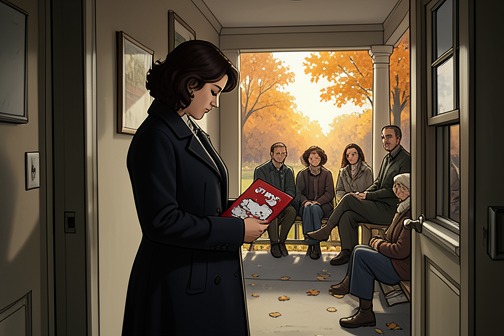
[Ángela](entity:character-recall-character-ngela-17b3a15ed0ce)’s death breaks the ordinary rhythm of her family’s life and makes absence a presence at once: [Bea](entity:character-recall-character-bea-992cee8d7f81) sees the village carrying on beneath an autumn sun while, for her, the world has stopped. The loss is sudden to the family, though Ángela had known for months that her heart would not hold out for long. In the days that follow, her red Hello Kitty notebook becomes a final act of care, guiding the family through grief and toward one another.
## The death and its discovery
The news reaches Bea by telephone from [Irene](entity:character-recall-character-irene-317f252d24ac): their mother has just died. Bea is on her way back through the village, where children play in the square and people sit on terraces as if nothing has changed. The contrast between that public ease and her private shock makes the death feel almost impossible to accept. She had not found suitable black clothes in the small apartment where she was staying, so she travels in the most sober dark outfit she can find. After three months without speaking to Irene, she is also anxious not to provoke her sister.
At the family home, Bea cannot bring herself to put her key in the lock. Irene opens the door, looking exhausted, and embraces her in tears. Bea is still too shocked to cry. When Irene asks what the family will do without their mother, Bea holds on rather than letting her sister pull away. [Fin](entity:character-recall-character-fin-d1a67c1fae30), [León](entity:character-recall-character-le-n-72da7eaadacb), [Jacobo](entity:character-recall-character-jacobo-9c63accf55d8), Débora, and finally [Bea’s father](entity:character-recall-character-bea-1586b04f1949) arrive. Her father looks consumed by grief; when Bea reaches him, his embrace breaks through her numbness and she weeps uncontrollably. His arms offer a brief reprieve from the emptiness she has felt since the previous day.
León and Bea’s father had found Ángela unconscious over the kitchen table. They called an ambulance, but she was already dead and no longer breathing. Bea is relieved, with guilt at her own relief, that she was not the one to find her mother that way. She cannot imagine having been able to face the sight. The detail places a stark limit on what the family can do: they can summon help, gather around one another, and remember, but they cannot change the fact that Ángela is gone.
## The illness kept private
During the family’s conversations after the death, Bea explains that Ángela had known for several months. Medical tests had shown that her heart would not last much longer, though they had not told her exactly how much time remained. The others had not known; Bea’s father says he had noticed that Ángela was sometimes more tired or worried about losing her empathy, but had understood neither as a sign of impending death.
Ángela had not kept the diagnosis from them simply to preserve a secret. As Bea reads in her mother’s notes, Ángela hoped that if she did not say the prognosis aloud, it might never happen. The notes were her way of preparing for the possibility she could not bear to announce. Her silence therefore carries both fear and tenderness: she shields the family from a future she herself cannot avoid, while writing down what she wants them to know when she is no longer there to say it.
## The notebook as a final message
After the wake, cremation, condolences, and long hours spent with people who came to support the family, Bea retreats to her childhood room with Ángela’s red Hello Kitty notebook. She learns that her mother had been writing at the kitchen table when she died, and that the notebook was intended for Bea. Its familiar cover connects this final message to the months Bea had spent back at home the previous spring, when her own troubles had filled her attention. In the face of her mother’s death, those earlier worries seem small. Bea is grateful that the end of her relationship with [Víctor](entity:character-recall-character-v-ctor-3abf4a529848) and the revelation involving the [TV News Presenter](entity:character-recall-character-0642b18cf083) had brought her home in time to share that period with Ángela.
The notebook extends beyond Bea. Reading from it to the family, she shares Ángela’s message to Débora: their mother believed Débora had inherited her gift of empathy, though she would not demand that Débora continue her consultation work. Ángela recognizes how Débora had searched for a place in the world through different studies and jobs, and accepts that photography may be the vocation she has found. She praises Débora’s photograph of [Teo](entity:character-recall-character-e789707df1fd) and the child, and sees art as another way to empathize with others and give form to pain. If Débora ever wants to help people as her mother did, Ángela leaves the consultation to her; if not, she is free to choose her own life.
Another note addresses the strained relationships among the sisters. Ángela urges them, through the words Bea reads aloud, to make peace with one another, while suggesting that her death may already have brought them back together. The family’s grief is not resolved by the notebook, but it gives them something to do with it: listen, recognize what Ángela understood about each of them, and remain in the same room. When a reference to the theatrical device of a god arriving to settle everything prompts León’s answer and a [Guardia Civil](entity:organization-recall-organization-guardia-civil-268ba482c33f) officer’s response, the exchange sparks the family’s first laugh of the day. The laughter does not undo the loss; it marks a small return of shared life within it.
## The ashes and the family’s farewell
Ángela’s notes also specify where she wants her ashes scattered: at the cliff where Irene had arranged for the [Romanesque Chapel](entity:location-recall-location-bd0281a6ffef) to be relocated. It was one of Ángela’s favorite places. She had joked that the chapel had turned the spot into a pilgrimage destination, and that choir friends, the priest, and her patients might take the scattering as evidence that she had finally entered the religious fold. Her humor remains part of the instruction, even as the family follows it in earnest.
They plan to go two days later and hope to keep the farewell private, but word spreads and many people want to accompany them. The family does not refuse them; Ángela would have liked their presence, and the warmth of others helps the bereaved keep going. The scene thus expands from a family ritual into a communal farewell without losing its intimate purpose. In October the sky is clear and the sea calm. Bea had imagined the north wind blowing the ashes back onto them, but no wind scatters them on the mourners. They fall into the water and disappear over the waves, giving the family a final, shared image of Ángela’s departure.
Event 41
The Family Reads Ángela’s Notes Together
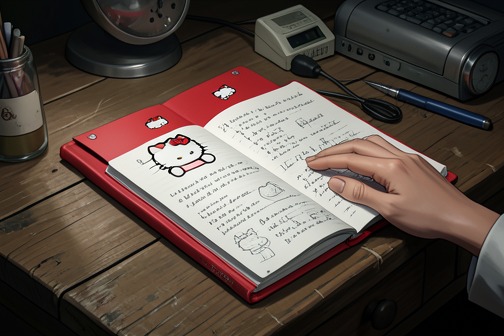
[The Family Reads Ángela’s Notes Together](entity:event-recall-event-ngela-746707da3a16) is the family’s first shared encounter with the private instructions [Ángela](entity:character-recall-character-ngela-17b3a15ed0ce) wrote before her death. In a red Hello Kitty notebook, she had left messages for her loved ones, transforming an object [Bea](entity:character-recall-character-bea-992cee8d7f81) initially believed was meant for her alone into a guide for the whole family. As the notes reveal what Ángela knew and what she understood about each of them, grief becomes a setting for disclosure, reconciliation, and decisions about the future.
## The Notebook and the Gathering
Ángela had been writing when she died. [León](entity:character-recall-character-le-n-72da7eaadacb) and [Bea’s father](entity:character-recall-character-bea-1586b04f1949) found her unconscious on the kitchen table and called an ambulance, but there was nothing more to be done. Bea was relieved not to have been there, unable to imagine herself coping with finding her mother already dead. After the funeral, cremation, condolences, and embraces, she withdrew to her old bedroom with the notebook. She had returned home during the spring, when Ángela had been closely concerned with her troubles; in the shock of bereavement, those former troubles seemed small beside the loss. Bea also recognized the painful irony that her breakup with [Víctor](entity:character-recall-character-v-ctor-3abf4a529848) and his public relationship with the girl on the news had brought her home and given her those months with her mother.
Before opening the notebook, Bea hugged it. The red cover and its Hello Kitty design made it an intimate keepsake, but its contents altered its meaning: Ángela had written Bea’s name on the cover, yet the notes were for the family. Bea spent about half an hour alone with it, then called everyone into the living room. Bea’s father, Débora, [Irene](entity:character-recall-character-irene-317f252d24ac), León, [Fin](entity:character-recall-character-fin-d1a67c1fae30), [Jacobo](entity:character-recall-character-jacobo-9c63accf55d8), and [Teo](entity:character-recall-character-e789707df1fd), holding a child, settled on the sofa and chairs. Bea explained that Ángela had regarded the pages as a kind of instruction book for the time when she would no longer be there. The act of reading aloud made the notebook communal: each message was addressed to one person, but its meaning was received by the gathered family.
## What Ángela Had Known
The first major revelation was that Ángela had known she was dying. Her family had not understood the extent of her condition. Bea’s father had sometimes noticed that Ángela seemed more tired or worried that she was losing her empathy, but none of them knew she had undergone tests. The notebook disclosed that, months earlier, she had learned her heart would not hold out much longer. She had not told them because she hoped that keeping the knowledge unspoken might keep it from coming true; she also did not know how much time remained.
Bea’s father described Ángela as someone who absorbed everyone else’s worry and pain while keeping her own hidden. He framed her heart’s failure in terms of that lifelong burden. The family had to sit with the force of his account, not because they rejected it, but because grief had stripped away the usual reserve and made such open speech possible. The notes thus reveal both a concealed fact about Ángela’s final months and a pattern her family recognizes in the way she cared for them.
## Notes for Débora, Fin, and Irene
Ángela’s message to Débora confirmed that she had inherited her mother’s empathic gift. Ángela did not demand that Débora continue her consultation or take up the same work. She accepted that Débora might have found her vocation in photography, praising a photograph of Teo and the child as beautiful and presenting art as another way of empathizing with others and channeling pain. The consultation would be available to Débora if she ever wanted it, but the choice of how to live remained hers. When Irene asked whether the gift was real, Débora eventually acknowledged that it was.
Fin’s note, in contrast, offered a deliberately brisk instruction to stop dwelling on death and live. In the room, the words initially felt almost impossible to accept: Ángela’s death had left the family feeling emptied and bereft. Teo helped them understand the note by explaining the concrete fear beneath Fin’s abstract anxiety about dying. Fin wanted to keep racing, improve, and compete at the highest level. Doing so required training in [Bélgica](entity:location-recall-location-b-lgica-9c680defb509), where the best team was based, and he would need to move abroad with a parent while still a minor. His father had never supported his racing, while Irene’s commitment to the mayoralty had previously made such a move impossible. Unable to blame anyone for the obstacle, Fin had withdrawn and recast his fear of losing the life he wanted as a more general fear of death.
Irene then announced that she and Fin would try their luck in Bélgica in a month. She had already begun studying Dutch and expected to use English while seeking work as a lawyer. Ángela’s note to Irene made the decision legible as more than a change of country: it urged her to listen to her son, describing him as a champion on his motorcycle and a thoughtful, intelligent adolescent who still needed her more than she realized. The family’s understanding of Fin’s distress therefore leads directly to a change in Irene’s plans.
## Bea’s Note and the Family’s Response
The note for Bea addressed the sisters’ relationship. Ángela believed that Bea and her sisters would make peace with one another without being instructed to do so, and suggested that her death might already have brought about that reconciliation. She compared death to the deus ex machina of Golden Age theatre, the sudden arrival that resolves the action. León supplied the theatrical term; Ángela’s note then turned the idea into a reflection on bereavement, arguing that death can make other problems seem ridiculous. The three sisters looked at one another and needed no words to acknowledge the truth they found in it.
Their response did not erase the loss. Jacobo wept openly, while Bea’s father tried to tease León about crying and could not finish without tears of his own. That exchange prompted the first laugh of the day. The shift from shared crying to laughter was small but decisive: Ángela’s absence remained, yet the family could still recognize one another, tease, and respond together. The notebook does not replace its writer; it allows her understanding of the family to keep shaping the way they meet one another.
## The Ashes and the Continuing Bond
Ángela’s notebook also specified where she wanted her ashes scattered: at the cliff where Irene had arranged for the [Romanesque Chapel](entity:location-recall-location-bd0281a6ffef) to be moved. It was one of Ángela’s favorite places, although she had joked that Irene’s chapel project had turned it into a place of pilgrimage. She imagined that her choir friends, the priest, and her patients might interpret the scattering as evidence that she had finally entered the fold and would pray for her; she was willing to let them believe it, reasoning that a mass or two would do her no harm.
The family went to the cliff two days later. They had intended to keep the ceremony private, but many people heard about it and wanted to accompany them. They did not turn anyone away: Ángela would have liked the company, and in those days the family also needed the warmth of other people. In October the sky was clear and the sea calm. Bea had feared that a northerly wind might blow the ashes back over them, but the wind did not interfere. The ashes fell into the sea and disappeared among the waves. The final act carries the notebook’s movement from private writing to shared life into a public farewell: the family follows Ángela’s instructions, gathers around her chosen place, and continues to hold her through memory and ritual.
Event 42
Diego’s Daughter Begins to Speak
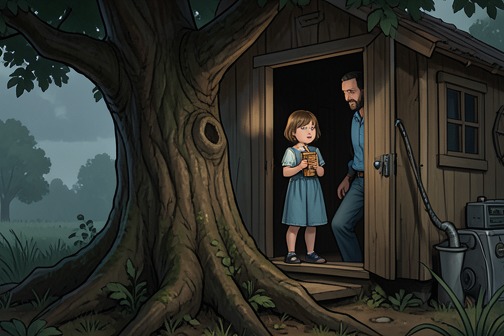
[Diego](entity:character-recall-character-diego-619035ec498e)’s revelation that his four-year-old daughter has begun speaking turns a practical conversation about a treehouse into a moment of recovery and renewed possibility. Her recorded request is both a condition on [Bea](entity:character-recall-character-bea-992cee8d7f81)’s work and proof of a change Diego has long hoped for: after her mother’s death, his daughter is speaking again. The scene connects that breakthrough to the family’s altered home, Diego’s quiet actions, and Bea’s own grief.
## Background and the [Treehouse](entity:location-recall-location-3c45c993bef5) Request
Diego introduces the request as a condition. His daughter wants Bea to finish the treehouse she began at her grandparents’ house, so that the child will have a special place when she visits them. The unfinished structure is therefore not simply an item on Bea’s design agenda: in the daughter’s understanding, it is a place made for her, associated with visits to her grandparents and with the work Bea has already begun.
The request arrives alongside news that Bea did not know. Diego and his daughter no longer live at the estate; they have moved to [Santander](entity:location-recall-location-santander-e0c5d79ea8af). Diego says that he managed to save the estate and its house, but the family’s move means that the girl will visit rather than live there. The treehouse is imagined within that changed arrangement: it will give her a place of her own when she returns to her grandparents’ home.
For Bea, Diego’s explanation also clarifies the meaning of his actions. She understands that he is no longer living with his in-laws and that he wants her in his life, or at least wants her to work as the architect for his hotel. The distinction matters: his intentions are being communicated less through eloquence than through practical steps. The daughter’s condition seems at first to be another such step, until Bea notices that the way it was conveyed does not quite fit what she had assumed.
## The Voice Recording
Bea asks how Diego’s daughter could have told him what she wanted. Diego answers that she said it in full words, then takes out his phone and plays a voice recording. The child says, “Bea, quiero mi casa del árbol.” Her short request gives a voice to the change Diego has just described and makes it immediate for Bea: this is not merely Diego reporting progress, but the child herself speaking.
The recording also binds the emotional revelation to the practical condition. The daughter does not speak in the abstract; she asks for the treehouse, addressing Bea by name and claiming it as her own. The words make the child an active participant in the project. What had been an unfinished design now carries a specific personal meaning for its intended occupant, and the request supplies Diego’s condition with a force that goes beyond negotiation between adults.
Diego’s response shows how much the sound means to him. Tears appear in his eyes, and he quickly wipes them away with the back of his hand. He apologizes and calls himself silly for still being unaccustomed to it. Bea rejects that self-description in her thoughts: she sees his tears not as foolishness but as the response of a father who has, on his own and without anyone’s help, watched his four-year-old daughter overcome the death of her mother and begin to speak.
## Grief and Recognition
The daughter’s speech is presented as a consequence of bereavement, not as an isolated milestone. Bea understands the change through the loss of the child’s mother, and Diego’s emotion makes visible the weight of the silence she has overcome. The scene does not explain the process in detail; instead, it concentrates the change in a voice recording and in Diego’s attempt to compose himself after hearing it. The modest scale of these details keeps the achievement intimate: a phone, a child’s request, and a father wiping away tears.
Bea’s response then turns the revelation toward her own loss. As she considers what Diego has accomplished for his daughter, she wonders whether he could help her overcome the death of her mother. The question links two distinct experiences of grief without treating them as identical: the daughter has begun to speak after losing her mother, while Bea is still confronting her own bereavement. Diego’s tenderness offers Bea a possible source of support, but the scene does not present her grief as already resolved.
## Consequence for Bea
When Diego asks what she says, Bea does not need much time to answer. Her decision is framed through her mother’s teaching about mistakes: they must be accepted and taken responsibility for, and they can lead people to unexpected places. Bea recognizes that her own errors, missteps, and entanglements have brought her to this point. The exchange thus makes the daughter’s voice more than welcome news for Diego. It becomes part of the circumstance in which Bea can choose to move forward.
The scene’s emotional turn rests on the difference between what people say and what their actions show. Bea has been reading Diego’s practical choices as evidence that he wants her involved in his life; the recording supplies an answer of a different kind, one that makes his family’s changing circumstances and his daughter’s recovery unmistakable. At the same time, the treehouse joins the child’s need for a special place to Bea’s professional work and to the possibility of a renewed relationship with Diego. The request does not settle the future of either relationship, but it gives the conversation a concrete point of connection: a place the child wants Bea to finish, and words she can now say aloud.
Event 43
Ángela’s Ashes Are Scattered at Sea

[Ángela](entity:character-recall-character-ngela-17b3a15ed0ce)’s ashes are scattered at sea two days after her cremation, at a cliff associated with the [Romanesque Chapel](entity:location-recall-location-bd0281a6ffef) that [Irene](entity:character-recall-character-irene-317f252d24ac) had moved there. The family follows Ángela’s written wishes, while the gathering turns a private farewell into a shared act of mourning. Its quiet ritual also becomes the setting for an unexpected reunion: [Diego](entity:character-recall-character-diego-619035ec498e) arrives as [Bea](entity:character-recall-character-bea-992cee8d7f81) is still struggling with the four months she has spent trying to put him out of her mind.
## The Notebook and Ángela’s Wishes
The scattering is guided by the Hello Kitty Red Notebook Ángela left behind. She had been writing when she died, and the notebook was addressed to Bea. After the wake and cremation, Bea withdrew to her old bedroom with it, aware that her recent worries now seemed small beside her mother’s death. She embraced the notebook before opening it, finding in the object a remaining connection to Ángela and to the months they had shared at home.
The notebook also disclosed how much Ángela had kept to herself. She had learned months earlier, after medical tests, that her heart would not last much longer, though she did not know exactly how much time remained. Bea explained to the family that Ángela had avoided saying this aloud because she hoped that keeping it unspoken might prevent it from happening. She had nevertheless been writing notes, leaving her family words they could encounter after her death rather than confronting them with the prognosis beforehand.
Those notes carried Ángela’s attention beyond the arrangements for her ashes. In a message to Débora, she acknowledged that her daughter had inherited her gift of empathy, while making clear that Débora did not have to continue her mother’s consultation work. She also praised Débora’s photographs, including one of [Teo](entity:character-recall-character-e789707df1fd) and the child, and allowed that art could be a way to empathize with others and channel pain. In another note, Ángela urged Bea and her sisters to make peace, suggesting that her death might already have brought them closer. The family therefore approached the farewell with Ángela’s own understanding of their relationships still active among them.
## The Gathering at the Cliff
Ángela had chosen the cliff as the place where she wanted her ashes scattered. It was one of her favorite places, although she used to tease Irene that moving the Romanesque Chapel there had turned it into a pilgrimage site. In the notebook, Ángela treated that change with characteristic humor: she anticipated that her choir friends, the priest, and many of her patients might interpret the scattering as a sign that she had finally joined their religious fold. She was willing to let them believe it, even joking that a mass or two would not harm her.
The family planned to go two days after the cremation and initially hoped to keep the occasion private. News spread, however, and many people wanted to accompany them. They could not bring themselves to turn anyone away; Bea believed Ángela would have welcomed their presence. The visitors’ support mattered to the family as well. In the days after the death, being surrounded by other people helped them continue through a loss they could not carry alone.
## The Scattering and Its Aftermath
The October day was clear, with no clouds and a calm sea. The weather spared the family the mishap Bea had imagined the night before: she had repeatedly pictured a treacherous northerly wind blowing Ángela’s ashes back over them. Instead, the ashes fell into the water and disappeared over the waves. Bea’s farewell marked the moment without softening its finality; the family watched the remains vanish into the sea at the place Ángela had chosen.
Afterward, [Bea’s father](entity:character-recall-character-bea-1586b04f1949) asked what they should do with the empty urn. The family considered keeping it as a memento, then wondered what people usually did with one. A voice from behind offered an ordinary, gently comic possibility: the speaker had left an empty urn in the attic and later found his daughter using it as a bathtub for her Barbies. That practical anecdote loosened the solemnity without undoing the grief. The urn, once the container for Ángela’s remains, was now simply an object whose future the family could decide for themselves.
## Diego’s Arrival
The speaker was Diego. He had come to the area on business and stopped by, dressed in a fitted black suit and dark shirt without a tie. When he removed his sunglasses, Bea recognized him; the afternoon sun made his hair look redder than she remembered. His arrival shifted the scene from a collective farewell to a private emotional encounter unfolding in front of her family.
Bea began to tremble. She wanted Diego to embrace her, or wanted to throw herself into his arms, but held back. Inwardly, she registered the contradiction of having spent four months denying him, trying not to remember their life together and learning to ignore him, while feeling glad that he had come. Her father, apparently reading her distress, suggested that Diego take her for a walk so she could get away from the family for a while. Bea protested, though she recognized that he had understood what she needed. The scattering thus closes not with a resolution of her relationship with Diego, but with his return at the moment of her bereavement and the possibility of a conversation beyond the family gathering.
Event 44
Treehouse Hotel Project and Bea’s Return
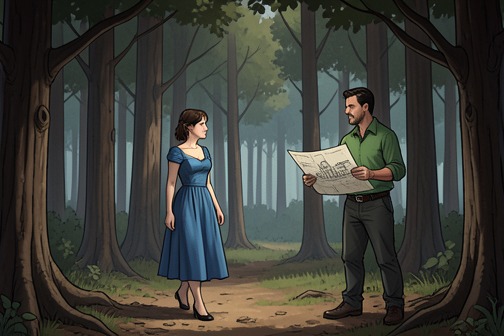
The [Treehouse Hotel Project and Bea’s Return](entity:event-recall-event-bea-9a601fcfd50b) is the novel’s closing event, turning [Bea](entity:character-recall-character-bea-992cee8d7f81)’s longing to help [Diego](entity:character-recall-character-diego-619035ec498e) into a concrete invitation to work together. Among the chestnut trees, Diego offers her the role of architect for a new hotel, and Bea accepts after agreeing first to finish a treehouse for his daughter. The project gives her a way back to architecture while making their renewed closeness visible through practical choices rather than declarations alone.
## The invitation in the chestnut grove
The scene begins with Bea recognizing that she wants to help Diego, and that the desire matters to her as more than a passing impulse: it is something she hopes may help her continue. She follows him from the car into the forest, between the chestnut trees, where he stops in a clearing and reveals that the parcel belongs to him and [León](entity:character-recall-character-le-n-72da7eaadacb). They are going to start a business together. The location is therefore not simply a backdrop to a romantic reunion; it is the site of a shared undertaking with a defined ownership and a partner beyond the couple.
Bea does not immediately understand what kind of business Diego has in mind. Her first possibilities are another sawmill or another biomass plant, a question that recalls the kinds of enterprise associated with the family’s recent conflicts. Diego sets those expectations aside: the land is already in order, and what the venture needs is an architect. His answer narrows the uncertainty from a potentially contentious development to a specific professional invitation, though it does not erase the importance of what will be built in the forest.
## A hotel among the trees
When Bea asks what the business is, Diego describes a hotel in the trees. The plan is to build one small house in each tree, with fifteen treehouses in total and accommodation for thirty-eight to forty people. He hopes it will become the first treehouse hotel in [Cantabria](entity:location-recall-location-cantabria-c21d914d3fc8). The scale and ambition are precise: the proposal is not just an extension of Bea’s earlier work on a single treehouse, but a substantial design project intended to make the place a destination.
Diego presents the hotel as something that should be beautiful and notes that such places are becoming fashionable. Yet the offer depends on more than a trend or a scenic site. He tells Bea that they need the best architect and asks her to be theirs; he then makes the invitation personal by saying the project would have no meaning without her. The professional role and the emotional appeal are deliberately joined. Bea is being asked not merely to return to her former occupation, but to contribute her judgment and presence to a venture Diego is building with León.
## The treehouse that comes first
The hotel is not the only design commitment in Diego’s proposal. He sets a condition: Bea must first finish the treehouse she began for his daughter, so that she will have a special place when she visits her grandparents. The request comes from the child herself. It makes the smaller, earlier project the first obligation in the larger plan and gives Bea’s work a direct personal meaning within Diego’s family life.
Diego also tells Bea that he saved the estate and its house, but that he and his daughter no longer live there; they have moved to [Santander](entity:location-recall-location-santander-e0c5d79ea8af). Bea did not know about the move. In her understanding of the moment, this change matters because Diego is no longer living with his in-laws, and because his offer places her in the future he is making for himself and his daughter. The sequence is significant: before asking Bea to design the hotel, he has already acted to change the circumstances of their home life, and his daughter’s request makes her place in that future specific rather than abstract.
## Acceptance and a shared future
Bea sees Diego become tearful and recognizes why: he has, on his own, helped his four-year-old daughter move beyond the death of her mother and begin speaking. His emotion turns the scene briefly away from the hotel and toward the family grief that continues to shape their lives. Bea wonders whether Diego might also help her move through the death of her own mother. The question remains open, but the scene places her loss beside his without suggesting that either is simply resolved by the new relationship.
When Diego asks again for her answer, Bea thinks of her mother’s belief that mistakes should be accepted and owned, and that they can lead people somewhere unexpected. She understands her own missteps and the trouble they caused as part of the path that brought her to Diego. She says yes: she will build the treehouse for his daughter quickly, then take on what she calls the wildest project of her life, constructing a treehouse hotel with a red-haired man. Diego embraces her from behind, and she responds that it will certainly be fun.
The ending binds work, family, and intimacy without collapsing them into one thing. Bea returns to architecture through a project whose first task is for Diego’s daughter; Diego’s partnership with León gives the hotel a broader basis than romance alone; and the embrace closes the scene on mutual anticipation. Rather than presenting a finished outcome for either the hotel or Bea and Diego’s relationship, the event ends with their decision to begin.